
When Your Motorcycle Feels Different
Learn how to recognise meaningful changes in your motorcycle and respond with calm observation instead of assumptions.
Every experienced rider has had the same moment.
Nothing looks obviously wrong, yet something does not feel quite right.
Perhaps the engine feels slightly rougher than usual. Maybe the handlebars carry a vibration you do not remember feeling before. The clutch engagement seems different. Braking feels less reassuring than it did last week. None of these changes necessarily mean something is broken, but they deserve your attention.
One of the most valuable habits a motorcycle owner can develop is recognising when their motorcycle feels different without immediately jumping to conclusions.
That habit begins with observation rather than diagnosis.
Small Changes Often Arrive First
Motorcycles rarely develop serious problems without giving small clues along the way.
Those clues are not always dramatic.
Sometimes they are simply small changes that are easy to dismiss.
Perhaps:
- the engine sounds slightly different at idle
- the clutch engages a little earlier
- the steering feels heavier at low speeds
- braking requires slightly more lever pressure
- fuel economy seems lower than usual
- a new vibration appears at a particular speed
Individually, none of these automatically indicate a fault.
Together, they remind us that motorcycles communicate gradually.
Good owners learn to notice those conversations.
They do not immediately assume the answer.
Not Every Change Means Something Is Wrong
One of the easiest mistakes to make is connecting every unusual feeling with mechanical failure.
Motorcycles respond to many changing conditions.
A colder morning.
A heavily loaded touring setup.
Different road surfaces.
Lower tyre pressures.
Strong crosswinds.
Even rider fatigue after a long day can subtly change how a motorcycle feels.
Recently, many riders across India have also discussed how their motorcycles seem to behave differently after the wider availability of E20 petrol. Some describe subtle changes in throttle response or fuel economy, while others notice little or no difference at all.
Whether the cause is fuel, weather, riding conditions or simply perception, the important lesson remains the same.
Avoid assuming.
Instead, pause and ask yourself:
What has actually changed today?

Observe Before You React
The temptation is often to search the internet immediately.
A quick search for almost any symptom usually produces dozens of possible causes, many of them expensive or alarming.
Instead, spend a few moments observing.
Ask yourself:
- Does it happen only when the engine is cold?
- Does it disappear after warming up?
- Does it occur only at certain speeds?
- Did today’s riding conditions differ from normal?
- Has the motorcycle been parked for several weeks?
- Have I recently changed fuel, luggage or tyre pressures?
These simple questions often provide more useful information than guessing at mechanical faults.
Even if professional servicing eventually becomes necessary, careful observations help explain the situation much more clearly.
Know When To Stop Riding
Observation does not mean ignoring obvious warning signs.
Some changes deserve immediate attention.
For example:
- brakes that suddenly feel ineffective
- steering that becomes unstable
- severe vibration that develops unexpectedly
- warning lights accompanied by unusual behaviour
- leaking fluids
- strong burning smells
In these situations, continuing to ride may not be the safest choice.
Good judgement sometimes means deciding that the ride should end early.
That decision is never a sign of weakness.
It is part of responsible ownership.
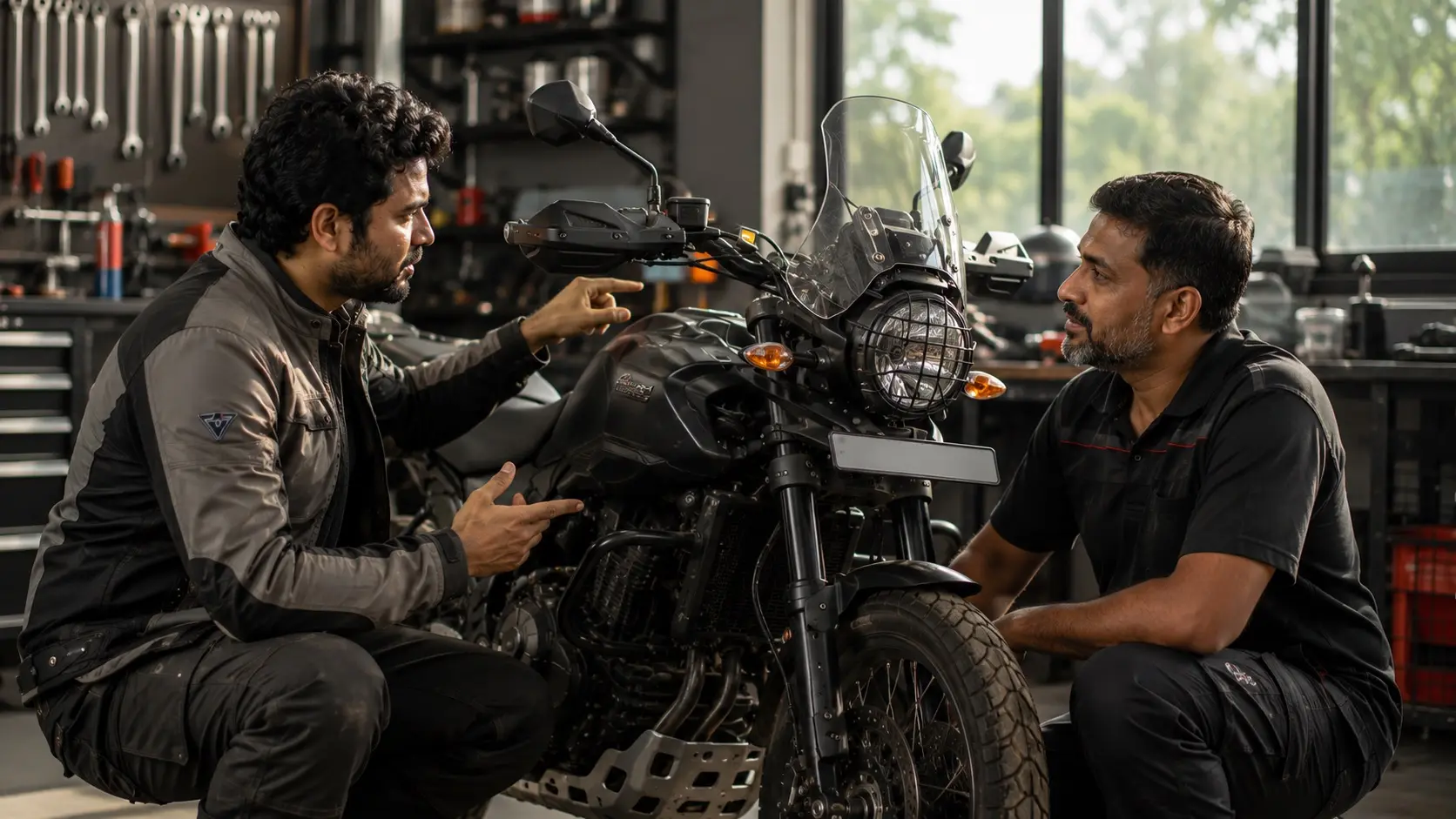
A Better Conversation With Your Mechanic
Eventually, you may decide that something deserves professional attention.
This is where careful observation becomes incredibly valuable.
Rather than saying,
“My motorcycle feels strange,”
you can explain,
“I noticed a light vibration between 70 and 80 kilometres per hour that only appears after riding for about thirty minutes.”
That single observation provides far more useful information than trying to diagnose the cause yourself.
Good mechanics appreciate riders who pay attention.
Not because they expect technical expertise, but because accurate observations often lead to faster and more reliable diagnosis.
Final Thoughts
Motorcycles change gradually.
The best owners are rarely the people who understand every mechanical system in detail.
They are the people who notice when something no longer feels quite the same.
That awareness does not come from studying workshop manuals.
It comes from spending time with your motorcycle, riding it regularly and becoming familiar with its normal behaviour.
Sometimes you will discover there was nothing wrong at all.
Sometimes your observations will prevent a small issue from becoming a larger one.
Either way, the habit is worth developing.
Because good motorcycle ownership is not about having all the answers.
It is about recognising when it is time to start asking the right questions.