Building a Maintenance Routine That Fits the Way You Ride
Build a realistic motorcycle maintenance routine around your riding habits, local conditions and the kind of ownership that works for you.
There is an appealing version of motorcycle ownership in which every rider spends Sunday morning checking tyre pressures, cleaning the chain, inspecting fasteners and carefully looking over every part of the motorcycle.
Real life is usually less organised.
Some riders enjoy working on their motorcycles. Others barely have enough time to ride them. Some commute every day, while another motorcycle may cover most of its annual kilometres during a handful of long journeys.
That is why a useful maintenance routine should not simply copy what another rider does.
Your owners manual provides the servicing schedule. Your riding life determines the habits you build around it.
The best maintenance routine is not necessarily the most comprehensive one. It is the one that gives your motorcycle the attention it needs and is realistic enough that you will actually continue doing it.
Start With How You Actually Ride
Two identical motorcycles can experience very different lives.
One might spend five days a week negotiating traffic, potholes and monsoon rain. Another may leave the garage twice a month for relaxed Sunday rides. A third could spend weeks doing very little before suddenly covering 2,000 kilometres on a tour.
The maintenance schedule supplied by the manufacturer remains the foundation for all three. But the things each owner encounters between scheduled services will be different.
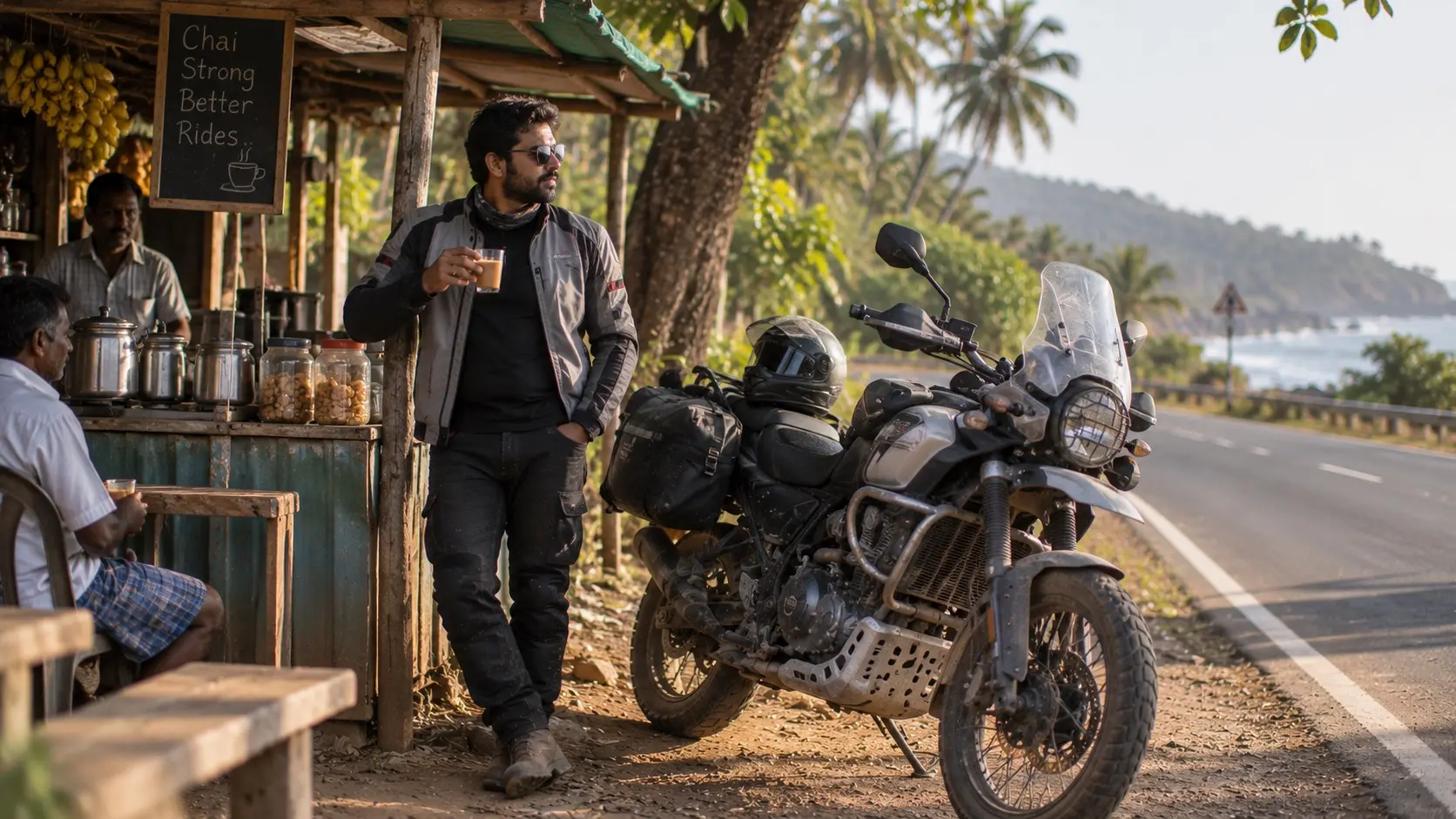
A commuter repeatedly experiences stop and go traffic, frequent braking and countless heat cycles. A touring motorcycle may carry luggage, spend long hours at highway speeds and encounter rain, dust or broken roads in a single journey. A motorcycle ridden occasionally spends more time standing, making battery condition and tyre pressures particularly noticeable when it returns to use.
Your routine should reflect that reality.
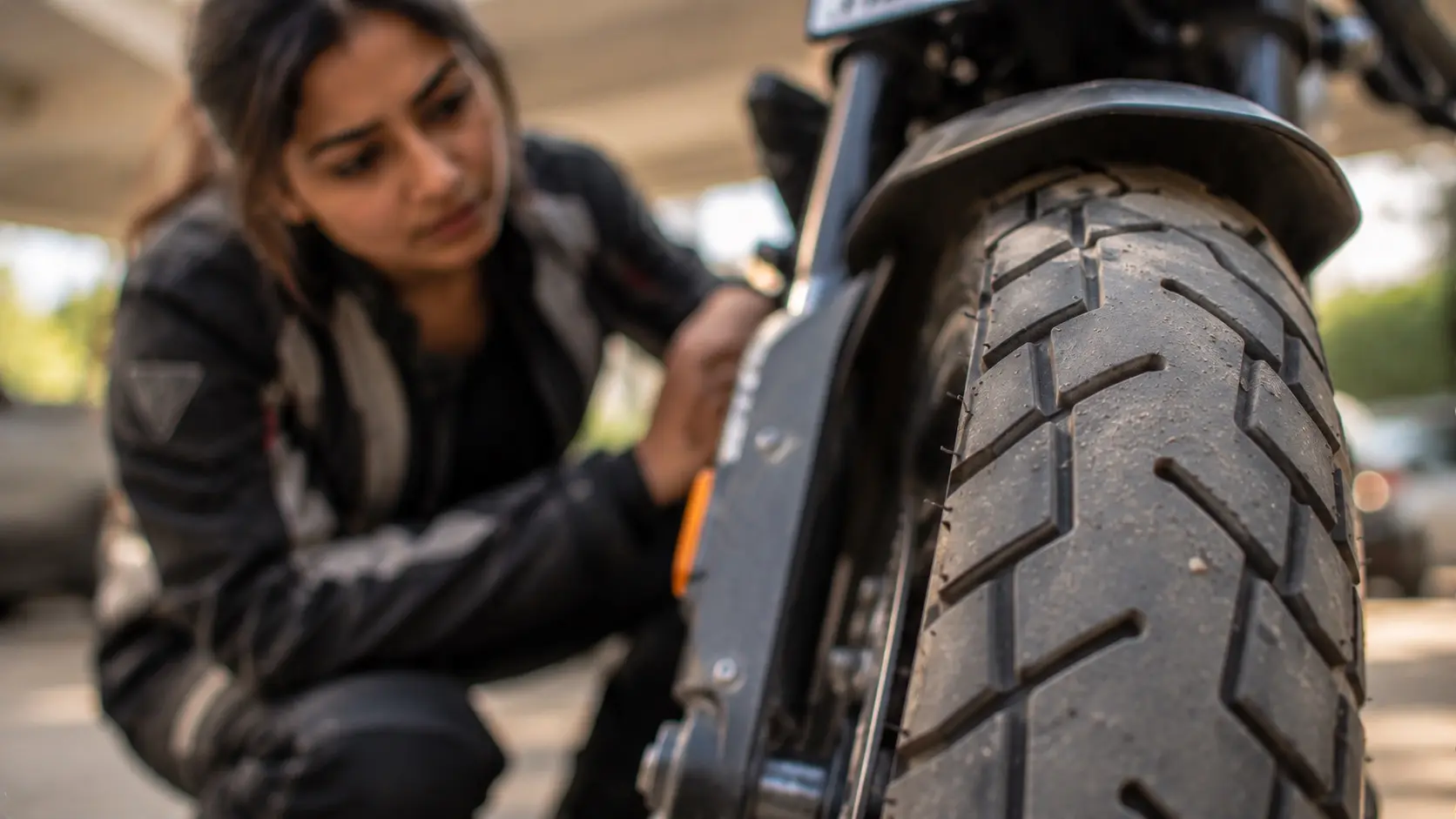
This does not mean inventing your own service intervals. It means paying attention to what happens between them.
A Routine Does Not Have To Be Complicated
The word maintenance can make ordinary ownership sound like a workshop activity.
It does not have to be.
A useful routine might begin with things you already do almost unconsciously. You notice whether a tyre looks unusually low when approaching the motorcycle. You feel the brakes as you leave the parking area. You hear the engine settling into its familiar rhythm. You notice whether the steering feels normal and whether the controls operate as expected.
None of this requires dismantling anything.
Over time, these small observations become part of riding the motorcycle rather than separate maintenance jobs.
That is important because complicated routines are easy to create and surprisingly difficult to sustain.
A rider who promises to conduct an elaborate inspection every weekend may eventually stop doing it altogether. Someone who develops three or four simple habits may continue them for years.
Consistency usually matters more than ambition.
Let Conditions Change The Routine
Kilometres are useful, but they do not tell the entire story of what a motorcycle has experienced.
Imagine two riders who have each covered 500 kilometres.
One has ridden through several days of heavy monsoon rain and standing water. The other has completed relaxed rides in dry weather.
The odometers may tell the same story. The motorcycles have experienced something quite different.
After prolonged wet riding, for example, the drive chain and exposed metal surfaces may deserve additional attention. A dusty journey can leave different areas worth observing. A heavily loaded tour can make luggage mounts, tyres and other regularly stressed components more noticeable afterwards.
This is where a personal routine becomes useful.
You are not replacing the manufacturers maintenance schedule. You are responding to the life the motorcycle has experienced since somebody last looked at it.
Sometimes that means doing something.
Sometimes it simply means noticing.
You Do Not Have To Do Everything Yourself
There is another assumption worth challenging.
Being a responsible motorcycle owner does not require becoming a home mechanic.
Some riders genuinely enjoy maintaining their motorcycles. Cleaning and lubricating a chain, checking pressures and spending time in the garage become part of the pleasure of ownership.
Others do not have the time, confidence, tools or interest.
For those riders, professional help can become part of the routine.
Perhaps you know that you are unlikely to inspect the motorcycle thoroughly yourself, so you periodically ask a trusted service centre or technician to look it over. That may happen alongside the manufacturers scheduled servicing rather than replacing it.
There is nothing inherently inferior about that approach.
The important part is understanding what professional maintenance cannot provide.
A technician sees your motorcycle for a short period. You experience it across hundreds or thousands of kilometres.
You know how it normally starts in the morning. You know how the clutch usually feels. You know the familiar vibration through the handlebars and how quickly the tyres normally lose pressure. You are the person most likely to notice that something has changed between workshop visits.
Professional expertise and owner observation therefore work best together.
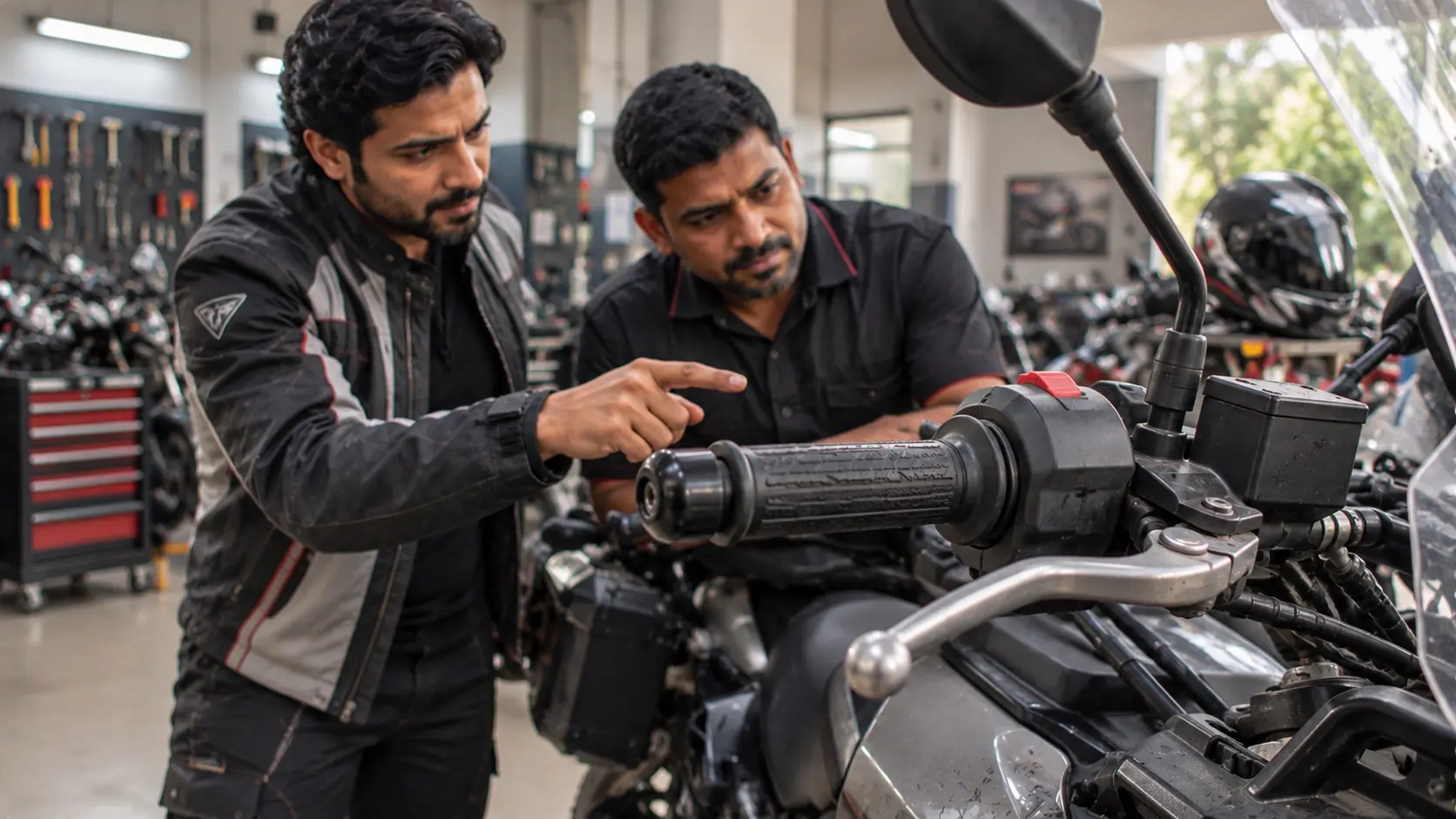
You do not need to diagnose the problem.
Being able to say, “This started feeling different after the last long ride” can already be useful information.
Build The Routine Around Your Weaknesses Too
A realistic maintenance routine should account for the owner as much as the motorcycle.
If you routinely forget tyre pressures, create a reminder.
If you know you will not maintain the chain consistently during the monsoon, make a deliberate habit of checking it after particularly wet rides or arrange for someone else to do so.
If the motorcycle sometimes sits unused for long periods, build your routine around returning it to regular use.
And if you know that detailed home maintenance simply is not going to happen, acknowledge that rather than pretending otherwise.
A modest routine that genuinely happens is better than an impressive one that exists only in your intentions.
This is not an excuse for neglect. It is the opposite.
It is recognising where neglect is most likely to happen and designing your ownership habits around it.
Do Not Turn Maintenance Into The Hobby Unless You Want To
Motorcycle enthusiasts can sometimes make ownership sound like an endless list of jobs.
There is always something that could be cleaned, checked, adjusted or polished.
For some people, that is part of the hobby.
It does not have to be part of yours.
Maintenance should support riding rather than create anxiety about whether you have performed enough maintenance. Follow the servicing requirements for your motorcycle, respond to unusual conditions, learn to notice meaningful changes and seek professional help when appropriate.
Then use the motorcycle.
The objective is not to create the most elaborate maintenance ritual among your riding friends.
It is to have a motorcycle that remains dependable when you want to go somewhere.
Final Thoughts
There is no single maintenance routine that suits every rider.
The daily commuter, occasional Sunday rider and long distance tourer experience motorcycle ownership differently. Their habits should reflect those differences while remaining anchored to the manufacturers recommended servicing.
Start with the motorcycle you own and the riding you actually do.
Notice how it normally behaves. Pay attention after unusual conditions. Deal with things that need attention rather than postponing them. Use professional expertise where it makes sense. Most importantly, build habits simple enough to survive busy weeks, forgotten weekends and the realities of everyday life.
Good maintenance is not measured by how much time you spend working on your motorcycle.
It is measured by whether the motorcycle receives the care it needs to remain healthy, dependable and ready for the next ride.