When Should You Replace Motorcycle Riding Gear
Learn when motorcycle helmets, jackets, gloves, boots and impact protectors need replacing and how to recognise damage that matters.
A riding jacket can become a familiar companion. The sleeves soften, the boots develop creases, and the helmet feels like it has always belonged on your head. Over time, those small changes become part of the equipment’s character.
But familiarity is not the same as protection.
A scuff on a jacket may be nothing more than evidence of use. A damaged seam on that same jacket is a different story. One tells you the garment has been worn. The other may tell you that it can no longer do its job.
Knowing the difference is what makes replacing riding gear less of a guessing game.
Age Is Only Part of the Answer
There is no single replacement date that applies to every piece of motorcycle equipment. A helmet, textile jacket, leather glove and riding boot are made from different materials and experience different kinds of wear.
How often you ride matters. So do heat, sunlight, sweat, rain, storage and the way the equipment has been treated. A jacket worn through daily Indian commutes may age differently from one used for occasional weekend rides.
The useful question is not simply, “How old is it?” It is, “Can this equipment still perform the job it was designed to do?”
That means considering its condition, its history and the manufacturer’s guidance together. Appearance alone cannot always give you the answer.
Helmets Need Particular Attention
Helmets deserve a more cautious approach because their impact-absorbing structure can be damaged without obvious external evidence.
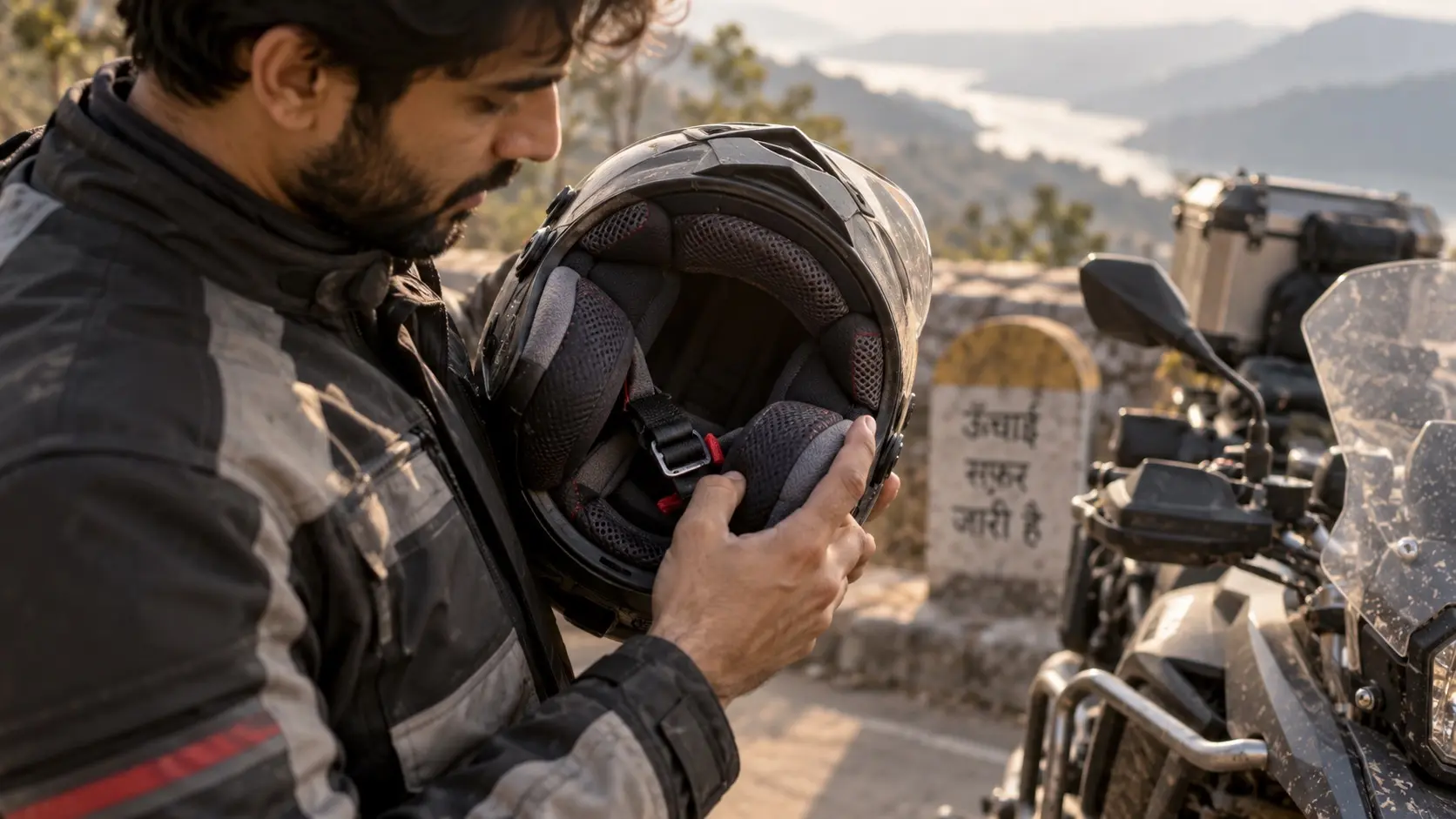
If a helmet has taken a significant impact while being worn, do not assume it is safe because the shell looks intact. The energy-absorbing liner may have been compressed, and that damage may not be visible. Follow the manufacturer’s replacement guidance rather than trying to judge the impact by the size of the scuff.
A minor drop and a crash are not automatically the same event. A helmet rolling onto a soft surface is different from one striking hard pavement. If you are uncertain about a drop, stop using the helmet until you have checked the manufacturer’s advice or obtained an appropriate assessment.
Age matters too. Around five years is a commonly used planning interval, but it is not a universal expiry date. Manufacturers specify different replacement periods, and some measure them from manufacture while others use first use or purchase. Check the guidance for your particular helmet and replace it sooner if its condition requires it.
Fit is another warning sign. If the interior has compressed enough that the helmet no longer holds your head securely, its original fit has changed. Damaged straps, loose fastening hardware and deteriorating liners also deserve attention.
A scratched visor may be replaceable without replacing the entire helmet. Damage to the helmet’s protective structure is a different matter.
A Worn Jacket Is Not Necessarily a Worn-Out Jacket
A faded jacket is not automatically an unsafe jacket. Cosmetic ageing and structural deterioration are different things.
What matters is whether the garment can still resist abrasion, hold its seams together and keep its protectors in the correct positions.
Look closely at high-wear areas such as elbows, shoulders, knees and the seat of riding trousers. Fabric that has worn thin, leather that has become damaged, or stitching that is opening along a protective seam deserves attention. A small mark on the surface is less concerning than damage that has weakened the material beneath it.
Fastenings matter as well. A zip that repeatedly opens, a failed closure or an adjustment system that no longer holds the garment securely can affect how it behaves during a fall.
After a crash, inspect more than the obvious scuff marks. Torn seams, worn-through material and displaced armour may reveal damage that is easy to overlook when the garment is still wearable.
Do Not Forget the Armour Inside
The impact protectors inside a jacket or pair of trousers are easy to forget because they are normally hidden beneath the outer fabric.
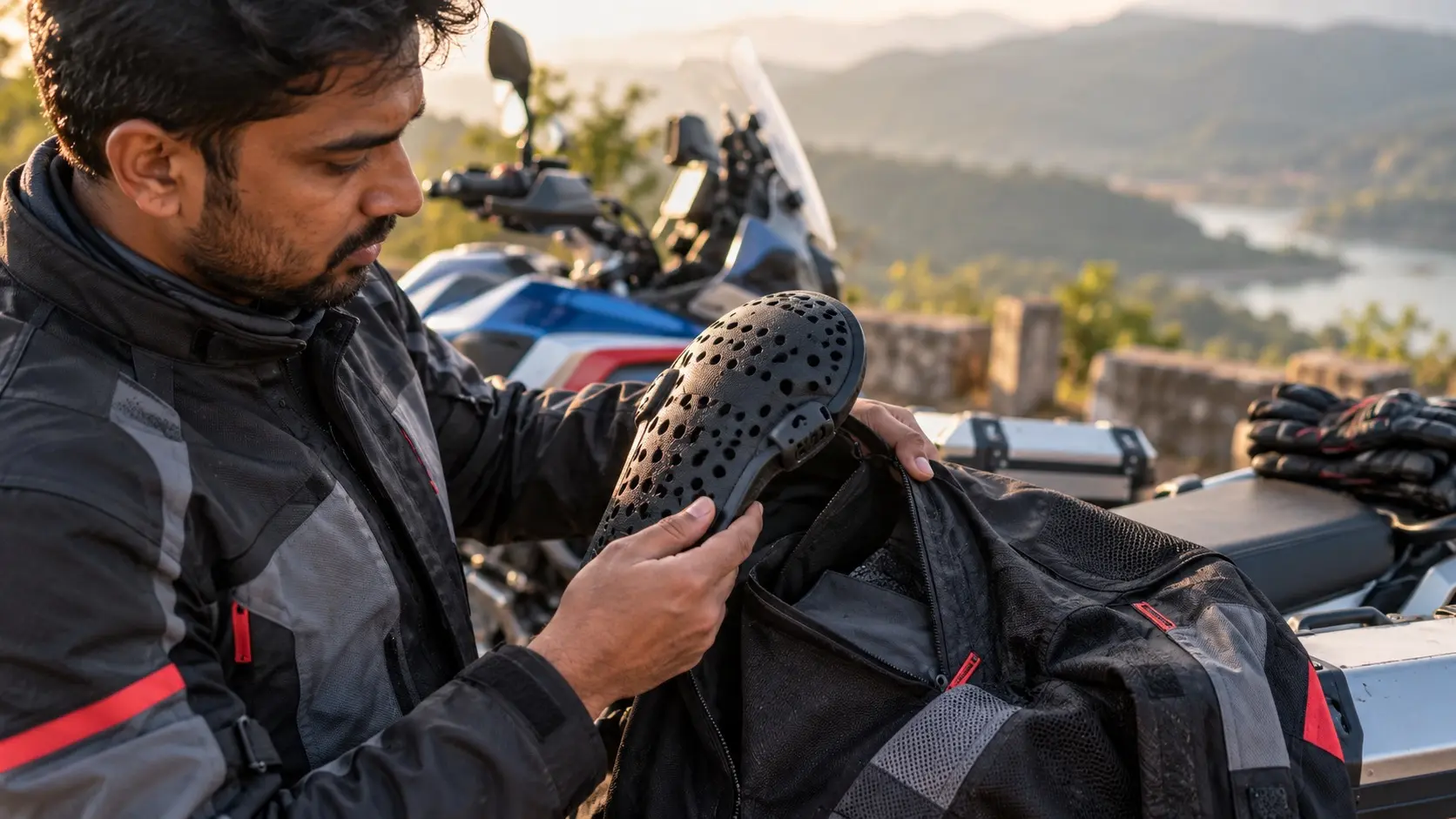
Remove them for inspection when the garment’s instructions allow. Check for cracks, tears, permanent deformation or material that has become brittle or otherwise deteriorated. Do not cut, reshape or attempt to repair a damaged protector.
A protector that has experienced a significant impact deserves particular attention. Follow its manufacturer’s instructions on inspection and replacement rather than assuming that its appearance proves it remains effective.
Also check the pockets and retention systems that hold the armour. A sound protector cannot protect the intended joint if the garment no longer keeps it in position.
Sometimes the protector can be replaced while the garment remains serviceable. Sometimes the garment itself is the problem. The important thing is to assess both.
Gloves and Boots Have Different Warning Signs
Gloves experience constant movement and friction. The palms, fingertips and seams are particularly important because they must remain intact while allowing you to operate the controls.
A little surface wear may be harmless, but a hole through the protective material, failing stitching or a closure that no longer secures the glove is more serious. If the glove has become so loose or distorted that it interferes with control, its fit is no longer doing its job.
Boots should be assessed for structural support as well as surface condition. Look for sole separation, damaged protective panels, failed buckles or zips, and deterioration that allows the boot to twist or move in ways it previously resisted.
Worn tread can also affect footing on wet or uneven surfaces. A boot does not need to look new, but it should still support the foot and remain securely fastened.
Some components may be repairable or replaceable. The question is whether the repair restores the intended function, not simply whether it makes the equipment look better.
Do Not Confuse Waterproofing with Protection
A jacket that begins leaking in the rain has not necessarily lost its abrasion or impact protection. Waterproofing, comfort and crash protection are related but separate functions.
A worn water-repellent finish may be restorable through the care process specified by the manufacturer. A damaged waterproof membrane may require a different solution.
The same applies to removable liners and other serviceable components. Not every problem means the entire garment has reached the end of its life.
However, restoring waterproofing should never be confused with repairing damaged protective fabric or armour.
Make Replacement a Practical Decision
When equipment begins showing its age, consider three things together. Does it still fit and remain securely positioned? Is its protective structure intact? Has it experienced an impact or deterioration that the manufacturer identifies as a reason for replacement?
If the answer is uncertain, seek a competent assessment rather than continuing to ride on an assumption. Do not attempt improvised repairs to safety-critical components.
There is no need to replace perfectly serviceable equipment simply because a newer version exists. Equally, there is little value in keeping damaged equipment because it was expensive or has accompanied you on memorable journeys.
Final Thoughts
Riding gear is meant to be used, and ordinary signs of use are not automatically signs of failure. The aim is not to keep every item looking new, but to recognise when wear, ageing or damage has begun to affect the protection it was designed to provide.
A little attention to fit, structure and impact history can help you make that judgement with greater confidence.
Good equipment deserves to be used. Equipment that can no longer do its job deserves to be retired.