How to Ride With a Pillion Without Upsetting the Motorcycle
Learn how smoother inputs, better communication and earlier decisions make two up motorcycle riding calmer and more controlled.
Adding a pillion does more than place another person on the back of the motorcycle.
The extra weight changes how the bike accelerates, brakes, turns and responds to bumps. It also introduces something no suspension adjustment can completely account for: another person who can move independently.
That does not make two up riding difficult. It simply means that techniques which feel acceptable when riding alone need to become smoother and more deliberate.
The best pillion rides often look uneventful. The rider accelerates without snapping the passenger backwards, brakes without pushing them into the rider, and changes direction without making the motorcycle feel unsettled.
The secret is not strength. It is anticipation.
Understand That The Motorcycle Has Changed
Before moving away, recognise that the motorcycle will not behave exactly as it does when you ride alone.
The additional weight usually sits relatively high and towards the rear. Steering can feel slightly heavier, acceleration may be slower and the motorcycle may take longer to stop.
Suspension movement can also become more noticeable over bumps.
None of this should be alarming.
It simply means that the margins you normally use need to become larger.
Leave more space.
Begin braking earlier.
Allow more time for overtakes.
Make direction changes progressively.
The motorcycle is carrying more mass, so asking it to do several things suddenly becomes less comfortable for both rider and passenger.
Brief The Pillion Before You Start
A few minutes of conversation before the ride can prevent a surprising amount of confusion later.
Explain where the pillion should hold.
Show them where the footpegs are.
Agree that they should mount and dismount only after you have confirmed that you are ready.
If they are inexperienced, explain that they do not need to actively lean the motorcycle into corners.
A useful starting point is simply to remain relaxed and move naturally with the rider and motorcycle.
Sudden movements create more problems than imperfect technique.
A passenger turning around sharply, adjusting clothing mid-corner or shifting position unexpectedly can be felt immediately through the motorcycle.
Good communication removes much of that uncertainty.
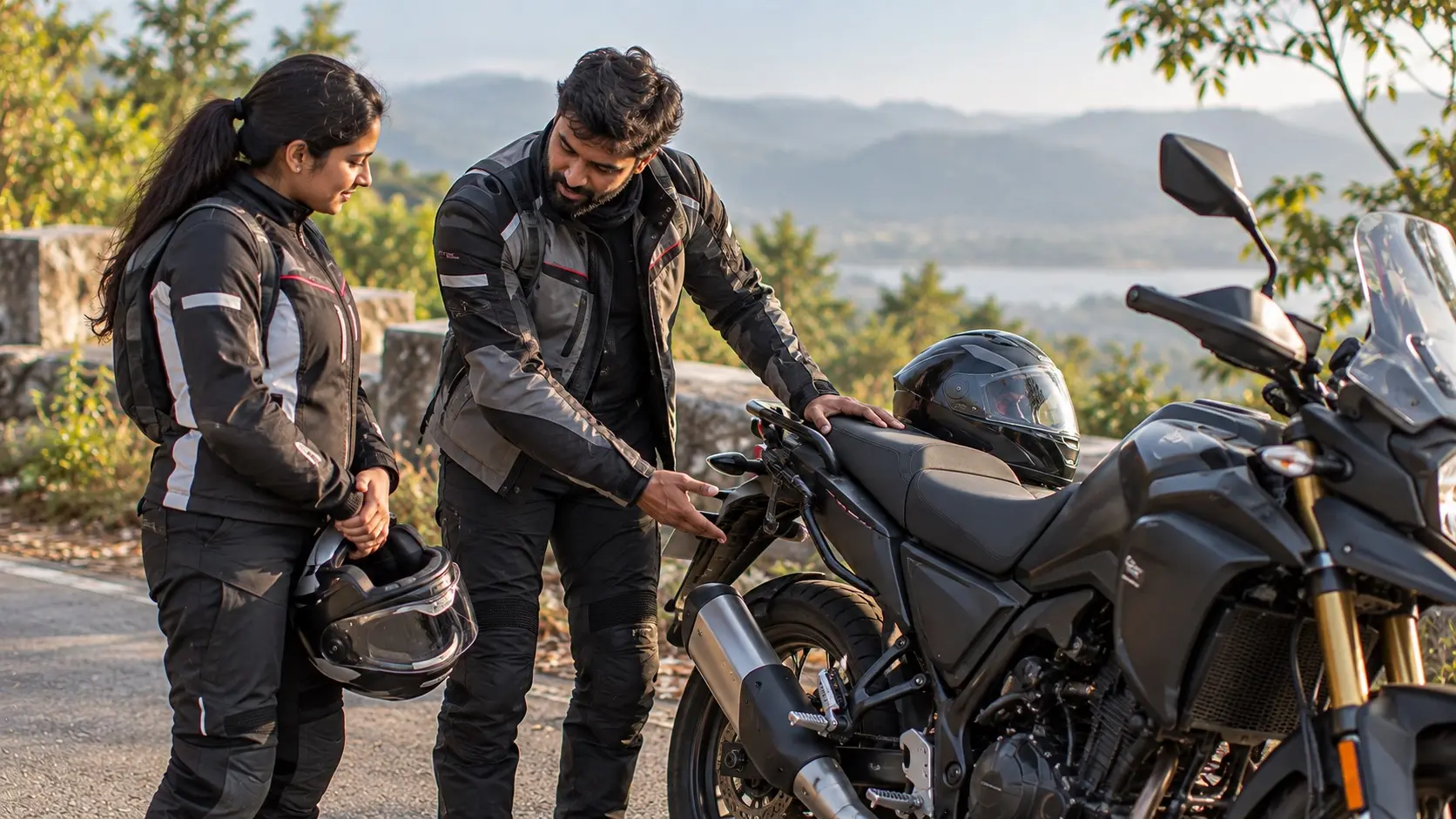
Mounting Should Be A Coordinated Movement
Even getting onto the motorcycle deserves a little attention.
The rider should be seated securely with both feet firmly planted and the front brake applied before inviting the pillion to climb aboard.
The pillion can then place one foot on the passenger peg and mount smoothly without jumping or pulling heavily on the rider.
The important thing is that both people know when the movement is about to happen.
The same principle applies when dismounting.
A motorcycle that feels perfectly stable with one person can suddenly become awkward when another person shifts their full weight without warning.
Coordination turns what could be an unstable moment into an ordinary one.
Smooth Throttle Matters More With A Passenger
An abrupt throttle opening that feels exciting when riding alone can feel uncomfortable from the pillion seat.
The passenger is not holding the controls and therefore cannot anticipate every acceleration.
If the rider suddenly opens the throttle, the pillion naturally moves backwards.
The same thing happens in reverse when the throttle is closed abruptly.
Smooth throttle use reduces this constant forward and backward movement.
Roll the throttle on progressively.
Allow the motorcycle to build speed.
When slowing, close the throttle smoothly rather than snapping it shut.
The rider benefits too. With less movement from the passenger, the motorcycle remains calmer underneath both people.
Start Braking Earlier
Braking is probably where the difference between solo and two up riding becomes most obvious.
There is more mass to slow down.
Starting earlier allows braking pressure to build progressively rather than suddenly.
It also gives the pillion time to respond naturally to deceleration instead of being thrown forward against the rider.
Smooth braking does not mean weak braking. If an emergency requires maximum braking, use the braking performance available.
During normal riding, however, early observation should allow most stops and speed changes to happen progressively.
The more you can see ahead, the easier this becomes.
Traffic lights, junctions, slowing vehicles and bends should all trigger decisions slightly earlier than they might when riding alone.
Give Corners More Time
There is no need to develop a completely new cornering technique simply because someone is sitting behind you.
The fundamentals remain the same.
Look through the corner.
Choose an appropriate speed before entering.
Make smooth steering inputs.
Avoid sudden corrections.
What changes is the motorcycle response.
The additional weight may make direction changes feel slower, and abrupt mid-corner inputs can be more noticeable.
The solution is preparation rather than aggression.
Complete most of your speed adjustment before the bend and allow the motorcycle to settle.
Then steer deliberately and let the bike follow the chosen line.
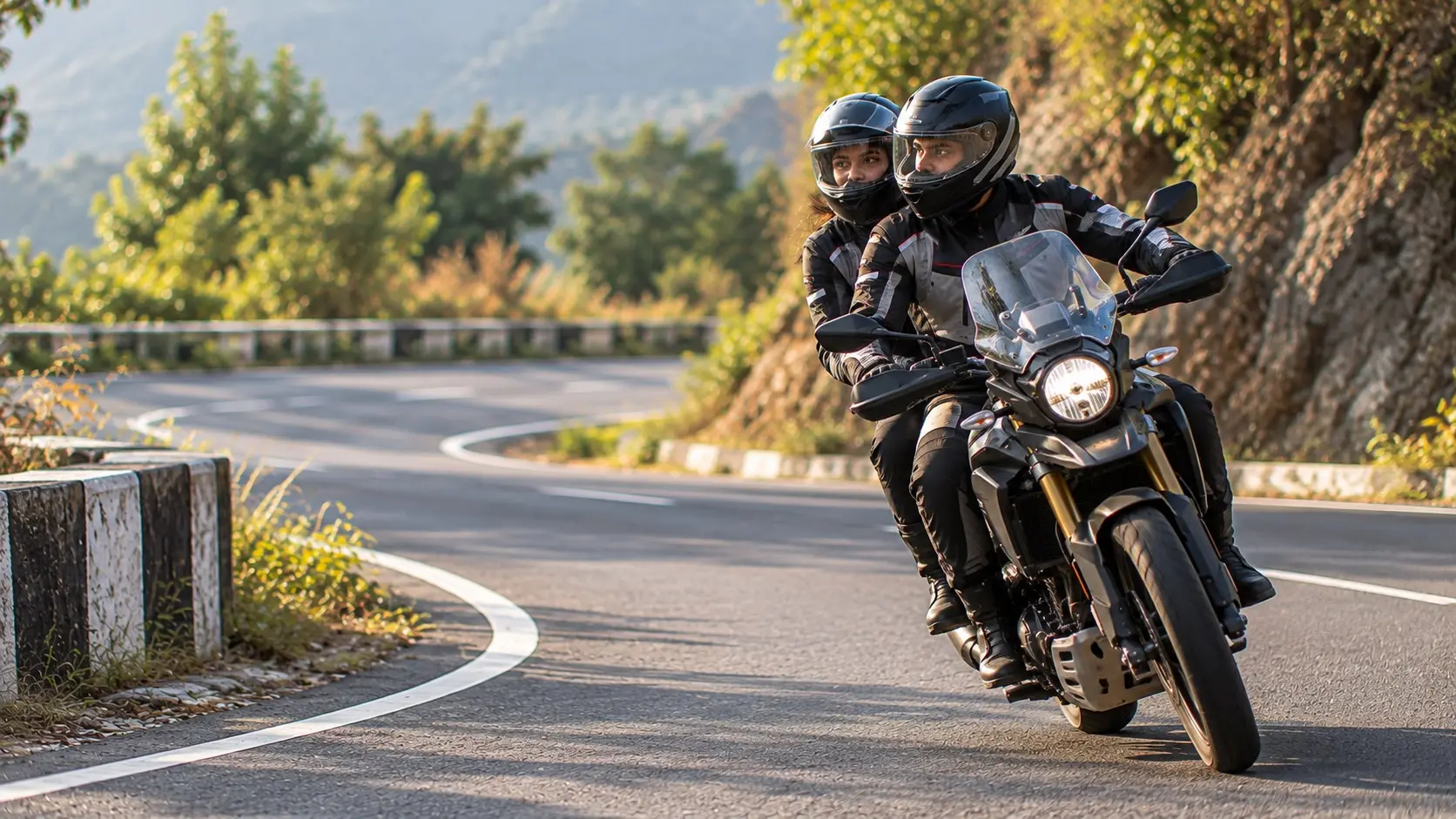
The Pillion Should Follow Rather Than Lead
New passengers sometimes believe they need to help the motorcycle turn.
They may deliberately lean into a corner or, more commonly, become nervous and lean away from it.
Both can make the motorcycle feel unfamiliar.
For ordinary road riding, the simplest advice is usually the best.
Stay relaxed.
Keep feet on the passenger pegs.
Avoid sudden movements.
Look naturally in the direction of travel and allow the body to follow the rider and motorcycle.
An experienced pillion eventually becomes almost invisible to the rider because both people begin moving together.
Slow Speed Riding Needs Extra Attention
Two up riding can feel most awkward at walking pace.
The motorcycle is heavier, balance corrections happen slowly and a pillion shifting unexpectedly can have a large effect.
Keep your head up.
Look where you want to go.
Use smooth clutch and throttle control.
Avoid turning the handlebars sharply while stopping.
At junctions or parking areas, take an extra moment rather than trying to save one.
If a manoeuvre feels unnecessarily tight, there is no prize for forcing it. Stop, reposition and try again.
Final Thoughts
Riding with a pillion does not require a completely different set of motorcycle skills.
It requires the skills you already use to become more deliberate.
Accelerate more progressively.
Brake earlier.
Plan corners before reaching them.
Leave larger margins.
Communicate.
Most importantly, remember that your passenger experiences every input without controlling any of them.
The better you anticipate what comes next, the less they have to react to what you just did.
That is what good two up riding ultimately feels like.
Not two people fighting for balance on one motorcycle.
Two people moving together.