Understanding Normal Motorcycle Wear Instead of Chasing Perfection
Learn the difference between normal motorcycle wear and the changes that deserve attention as kilometres and years begin to leave their mark.
There is something strangely memorable about the first scratch on a new motorcycle.
For the first few weeks of ownership, every painted panel seems perfect. Then comes a small stone chip on the tank, a faint mark where luggage has rubbed against a panel, or the first scuff on a footpeg. Suddenly your eyes seem drawn to that tiny imperfection every time you approach the motorcycle.
A few years and thousands of kilometres later, things usually look different. Some of those marks become almost invisible to you. Others remind you of journeys, weather and ordinary use.
Motorcycles age when they are ridden. That is not the same thing as being neglected.
Learning to distinguish normal wear from deterioration is an important part of becoming a confident owner. Good maintenance should preserve the motorcycle and keep it dependable. It does not have to preserve the illusion that the motorcycle has never left the showroom.
A Used Motorcycle Should Look Used
A motorcycle that regularly commutes through Indian traffic, spends weekends on highways or carries luggage on longer journeys will accumulate evidence of that life.
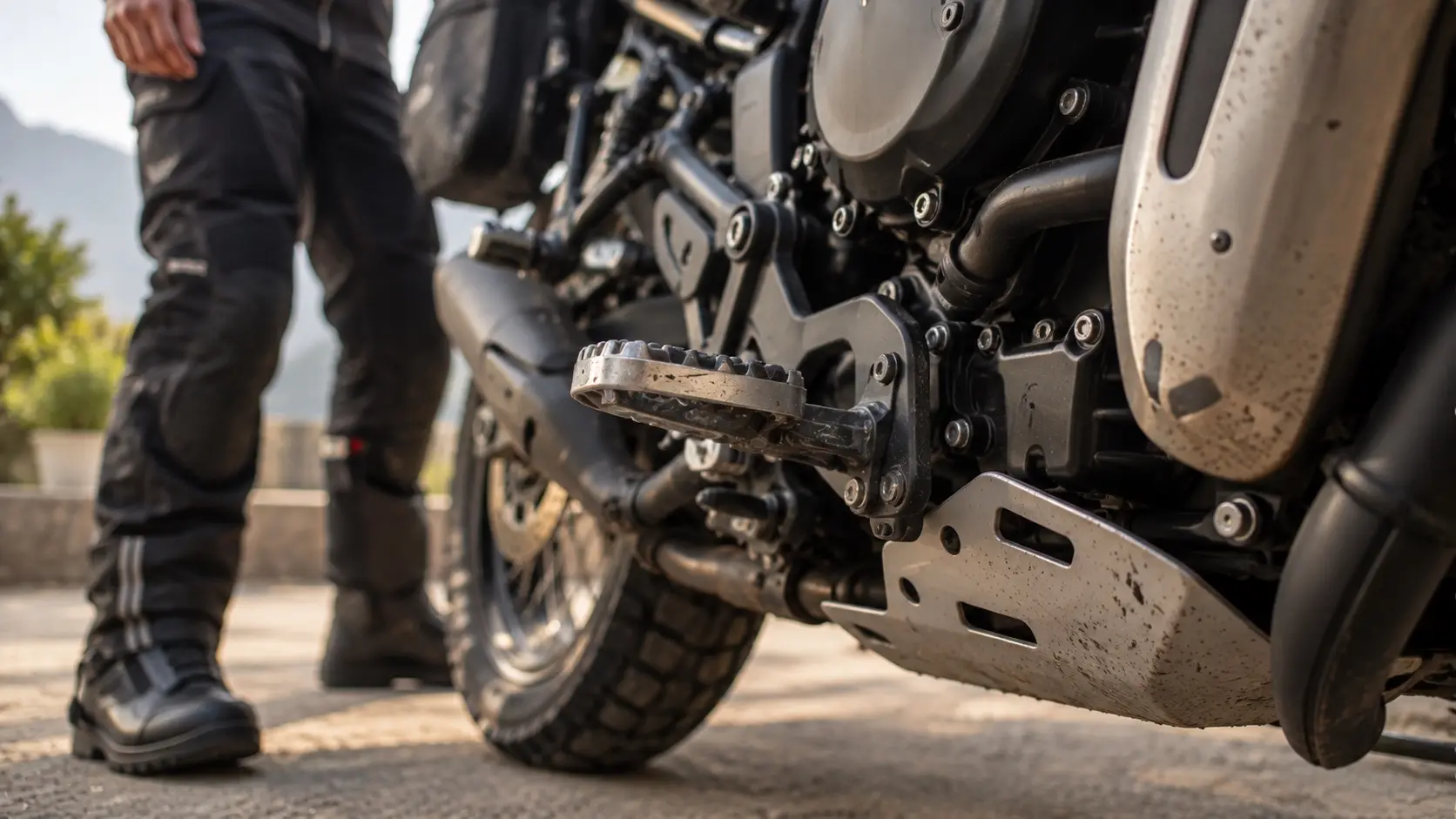
Paint may develop tiny stone chips. Boots can polish the surfaces around foot controls. Luggage straps may leave faint marks. Seats develop creases. Black finishes can lose some of their original uniformity. Fasteners and exposed metal surfaces may begin to look less pristine than they did when new.
None of these automatically indicates poor ownership.
There is satisfaction in keeping a motorcycle clean and well presented, and careful owners often notice problems earlier because they regularly look at their machines. But there is a difference between caring for a motorcycle and trying to prevent it from ever looking ridden.
If protecting resale condition begins to discourage you from riding in the rain, taking a weekend trip or using the motorcycle for the journeys you bought it for, preservation may have started competing with ownership.
A well cared for motorcycle does not have to be a perfect motorcycle.
Cosmetic Wear And Functional Wear Are Different
The useful question is not simply whether something has changed.
It is whether that change affects how the motorcycle works, how safely it can be ridden, or whether further deterioration is likely.
A small scratch on a painted panel is very different from a tyre that is becoming worn. A polished mark on a footpeg is different from a control that has developed excessive movement. Slight discolouration on an exposed surface is different from corrosion that continues to spread.
This is where observation matters more than perfection.
Owners gradually learn which changes are simply evidence of age and which deserve investigation. Tyres, brakes, chains, bearings, controls and other working components should never be dismissed as having developed character when their condition is actually deteriorating.
Accept ageing. Do not normalise problems.
Rust Deserves A Different Response
Indian riding conditions make corrosion particularly relevant.
Humidity, monsoon rain, repeated wetting and drying, muddy roads and coastal air can all make rust more likely. Even motorcycles that are carefully maintained can develop corrosion in vulnerable areas.
The realistic goal is therefore not necessarily to guarantee that rust never appears. It is to reduce the conditions that encourage it and respond when it does.
Drying a motorcycle properly after washing or heavy rain helps. So does paying attention to exposed metal, keeping the drive chain appropriately lubricated, and following the corrosion protection recommendations in the motorcycle manufacturer manual. Riders living near the coast or regularly riding through monsoon conditions may need to be particularly observant.
The important distinction is that corrosion is progressive. A stone chip may remain a stone chip. Rust can continue developing if the conditions that caused it remain.
That makes it something worth noticing rather than simply accepting as cosmetic ageing.
What If The Chain Starts Showing Rust
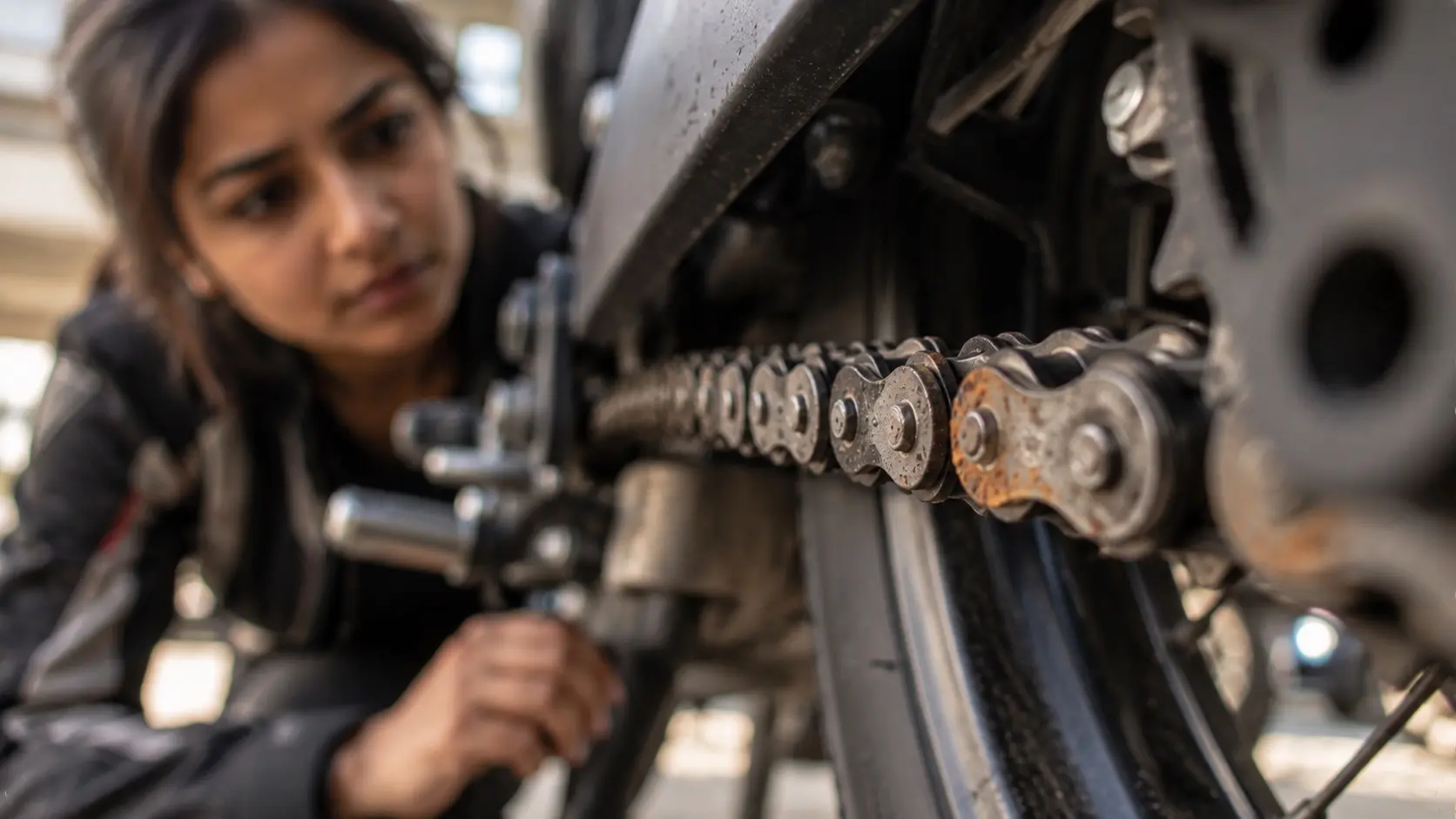
A few rusty spots on a drive chain can be alarming, particularly on a motorcycle that otherwise looks well maintained.
The first response should not be panic, but neither should it be indifference.
Light surface rust does not automatically mean that the entire chain and sprocket set needs replacing. It does mean the chain deserves attention.
Follow the cleaning and lubrication guidance specified for your motorcycle and chain type, then inspect the chain rather than simply hiding the discolouration beneath another layer of lubricant. If the corrosion appears superficial and the chain otherwise moves freely and remains in good condition, regular care may be all that is required.
The judgement changes when corrosion becomes substantial or appears alongside other warning signs. Stiff links, damaged seals, abnormal noise, excessive wear or a chain that cannot be maintained correctly deserve professional assessment. At that point the question is no longer whether the chain looks untidy. It is whether it remains serviceable.
Wet conditions also change the ownership routine. A chain exposed repeatedly to monsoon rain, standing water or mud may need attention more frequently than one living through months of dry weather.
The calendar cannot see what your motorcycle rode through yesterday. You can.
Do Not Repair Every Sign Of Age
There is another side to responsible ownership that receives less attention.
Restraint.
Not every imperfection needs replacing, repainting or restoring. Sometimes repeatedly chasing cosmetic perfection creates expense without improving the motorcycle in any meaningful way.
The small mark from touring luggage may simply remain. A few stone chips may become part of the motorcycle. A surface that has gently polished where your boot touches it thousands of times may be evidence of use rather than a maintenance problem.
Patina tells you where a motorcycle has been. Corrosion tells you where it may need attention.
Understanding that difference allows maintenance to become calmer. Instead of reacting to every visual change, you begin asking better questions.
Is this merely cosmetic?
Is it getting worse?
Could it affect reliability or safety?
Does it require attention now, monitoring over time, or simply acceptance?
Those questions develop ownership judgement far more effectively than trying to keep every component looking new.
Look After The Motorcycle You Actually Ride
The healthiest relationship with motorcycle maintenance probably sits somewhere between neglect and obsession.
Clean it. Inspect it. Notice changes. Protect vulnerable areas. Address deterioration before small problems become larger ones. Ask a professional when something exceeds your knowledge or confidence.
Then ride it.
Kilometres inevitably leave traces. A motorcycle that has crossed mountain roads, endured monsoon commutes, carried luggage and spent countless Sunday mornings on the road should not necessarily look identical to one that has spent its life beneath a cover.
What matters is that beneath those signs of use sits a motorcycle that remains mechanically healthy, responsibly maintained and ready to go again.
Final Thoughts
There is nothing wrong with wanting your motorcycle to look beautiful. Taking pride in its appearance is part of ownership for many riders.
But perfection is a difficult maintenance standard because riding itself eventually defeats it.
Responsible ownership asks for something more useful.
Learn what normal ageing looks like. Notice deterioration before it becomes serious. Treat corrosion as something worth addressing. Understand which marks matter mechanically and which simply record the kilometres you have travelled.
The purpose of maintenance is not to erase the evidence that your motorcycle has been ridden.
It is to make sure it can keep collecting that evidence for many years to come.