How to Look After Riding Gear So It Lasts Longer
Learn how to clean, dry and store motorcycle riding gear so it stays comfortable and performs as intended.
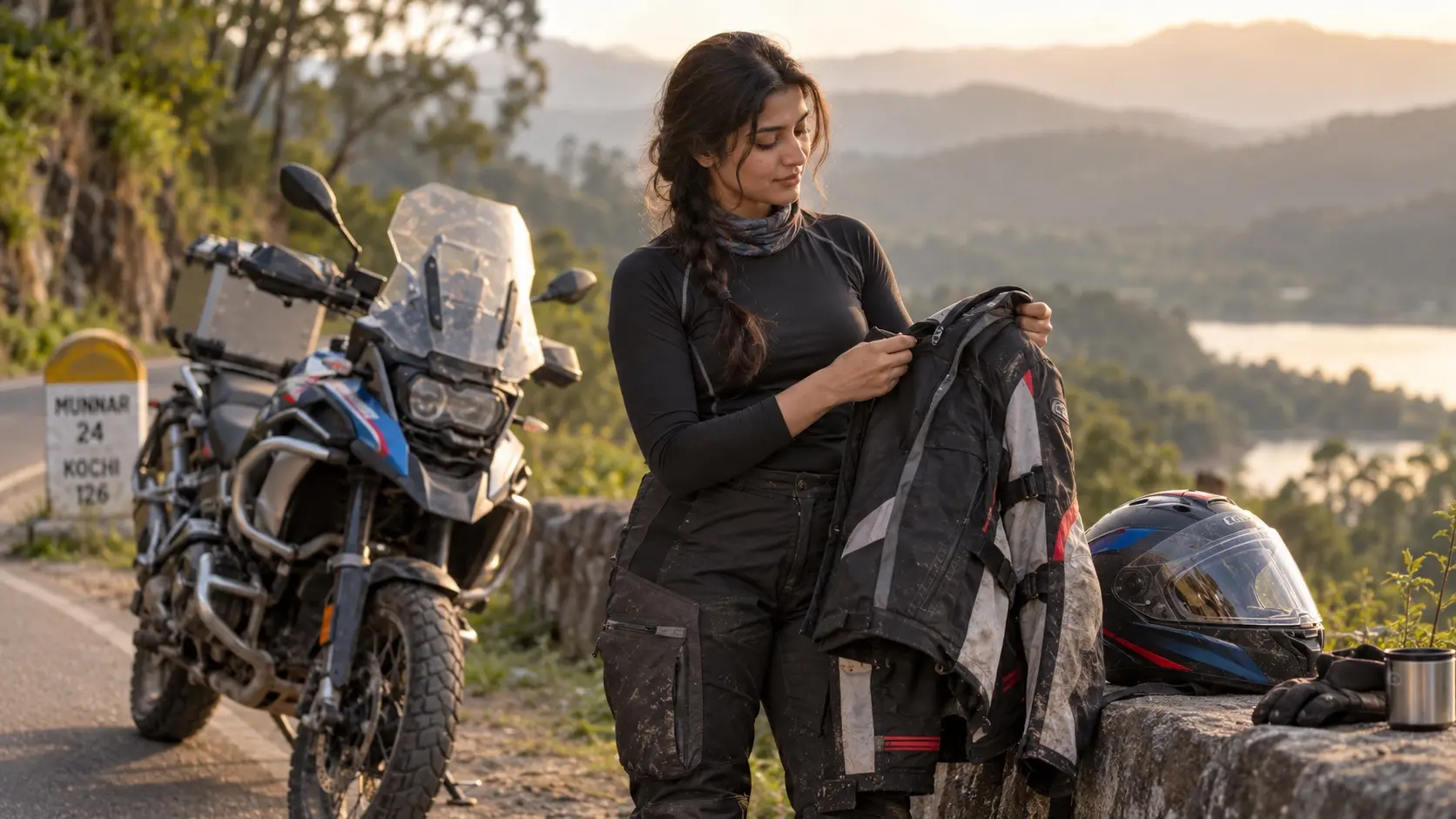
You return from a long ride, park the motorcycle, remove your helmet and finally get out of your jacket. The gear has done its job for the day. Now all you want is a shower and something to eat.
So the jacket goes over a chair, the gloves disappear into a cupboard, and the helmet is left wherever there is space.
It is an understandable routine. But the few minutes after a ride are often the best opportunity to look after the equipment you rely on.
Sweat, rain, road grime and poor storage do not necessarily cause immediate damage. Over time, however, they can make gear uncomfortable, affect its materials and shorten its useful life.
The good news is that caring for riding gear does not require a complicated routine. It requires understanding what each material needs and, just as importantly, what it does not.
Start with the Care Label
Before washing anything, check the instructions supplied with the garment or helmet. Different materials can require very different treatment, even when they are part of the same piece of equipment.
A textile jacket may contain a removable thermal liner, a waterproof membrane and impact protectors. Those components do not necessarily share the same washing instructions.
Some textile garments can be machine washed. Others require hand cleaning. Some waterproof garments permit carefully controlled tumble drying, while others must be air dried.
That is why a universal instruction such as “wash all riding gear in cold water” is not particularly useful.
The manufacturer’s guidance should always take priority. If the label is missing or unclear, look up the instructions for the specific product before experimenting with a cleaning method.
Give Wet Gear Time to Dry
The first useful habit is also the simplest. Do not put damp riding gear straight into a closed cupboard or luggage bag.
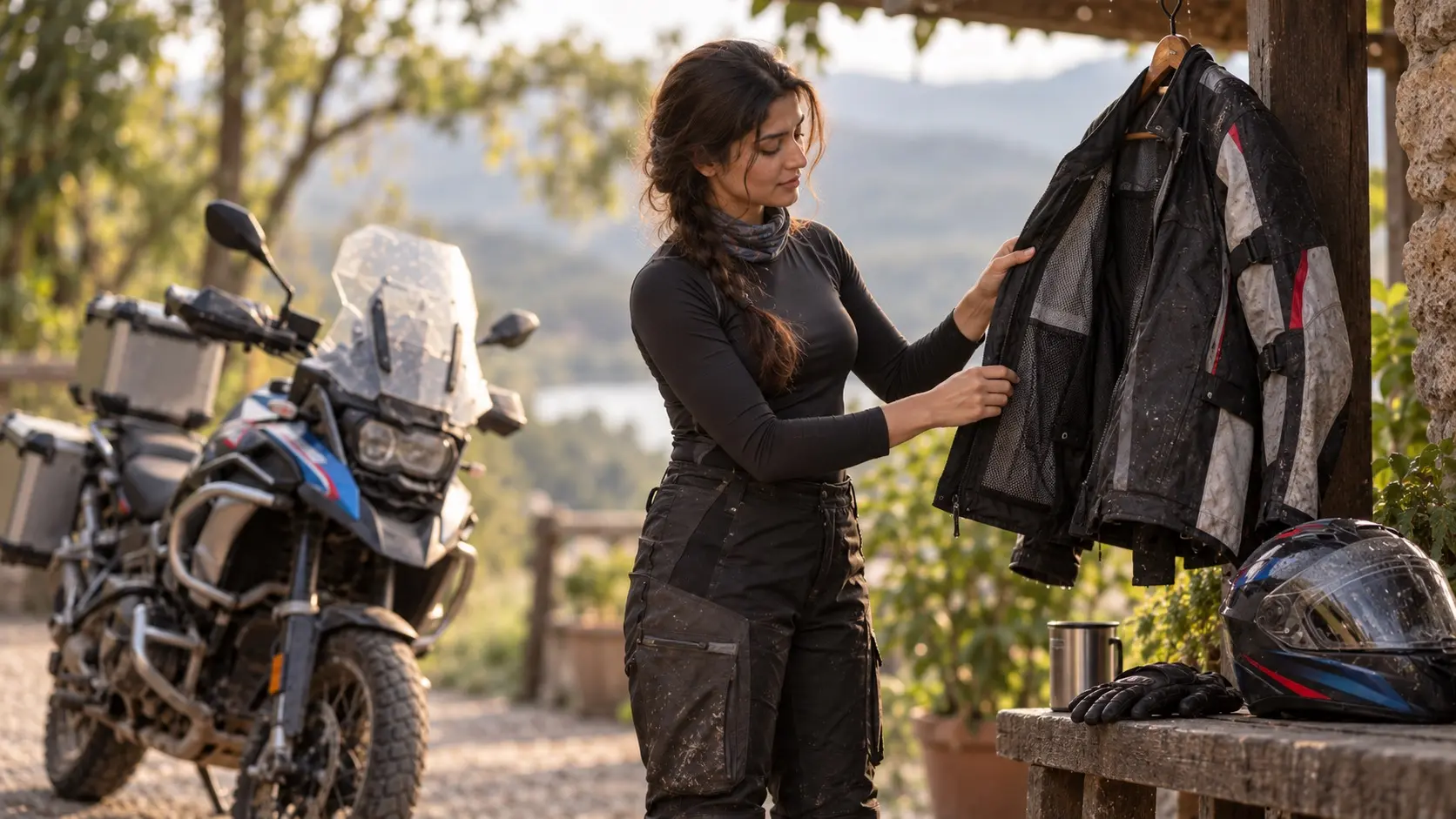
After a rainy ride, open the jacket, separate removable layers where permitted, and allow air to circulate around them. Gloves and boots deserve the same attention, particularly when moisture has reached the inside.
A shaded, well-ventilated place is usually a better drying environment than direct sunlight or a source of intense heat.
Avoid placing gear against a heater, using a hot hair dryer or leaving it in a closed vehicle to dry. Excessive heat can affect adhesives, protective materials, leather and waterproof components.
There is no need to rush the process. Let the equipment dry thoroughly before putting it away.
Cleaning Textile Jackets and Trousers
Textile riding gear collects more than visible dirt. Dust, sweat and road grime can settle into the fabric, especially around collars, cuffs and ventilation panels.
Begin by removing loose dirt with a soft brush or damp cloth. If the garment needs washing, follow its care label and use a cleaner suitable for the material.
Where the instructions permit machine washing, remove the armour and detachable liners as directed, close the fastenings and use the specified gentle cycle. Wash removable layers separately when their instructions differ.
Avoid bleach, aggressive solvents and fabric softeners unless the manufacturer specifically permits a product. These can affect technical fabrics and waterproof treatments.
After washing, allow the garment to dry as instructed. Do not assume that a washing machine or tumble dryer is safe simply because the jacket looks like ordinary clothing.
The aim is to remove dirt without changing the properties that make the garment useful on a motorcycle.
Helmets Need Gentle Cleaning
A helmet deserves its own approach because it combines an outer shell, impact-absorbing liner, comfort padding and a visor.
For routine cleaning, use the method recommended by the helmet manufacturer. Removable comfort pads may be washable, but the instructions for the fixed interior and impact-absorbing liner can be different.
Do not soak the helmet or use strong household solvents on its protective structure. The impact-absorbing liner should be handled carefully rather than scrubbed, compressed or treated with chemicals.
A soft cloth and an appropriate cleaner are usually enough for ordinary exterior dirt. For the visor, use the recommended cleaning method and avoid abrasive materials that could scratch the surface.
Once cleaned, allow the helmet and any removable padding to dry completely before reassembly. Make sure every component is refitted correctly.
A clean helmet is more pleasant to wear, but cleaning should never become an excuse to dismantle or modify parts that were not designed to be removed.
Leather Needs a Different Approach
Leather riding gear should not be treated like a textile jacket.
Its care depends on the type of leather, its finish and any waterproof or protective construction. A cleaner or conditioner suitable for one leather may not be appropriate for another.
Remove loose dirt gently and follow the manufacturer’s instructions for cleaning and conditioning. If a care product is permitted, test it on an inconspicuous area first.
Avoid soaking leather, using harsh detergents or applying excessive oils and waxes. Over-treatment can change the feel of the material and may interfere with the performance of certain components.
Allow leather to dry naturally after cleaning or rain exposure. Direct heat can make the material stiff and uncomfortable.
The objective is not to make every leather garment look freshly polished. It is to preserve the material and keep it comfortable for continued use.
Gloves and Boots Deserve Attention Too
Gloves are easy to overlook because they are small, but they spend every ride in contact with sweat, controls and road dust.
Clean them according to their material and care instructions. Avoid wringing them out or forcing them to dry with heat. If they have become wet inside, allow enough time for the moisture to escape before storing them.
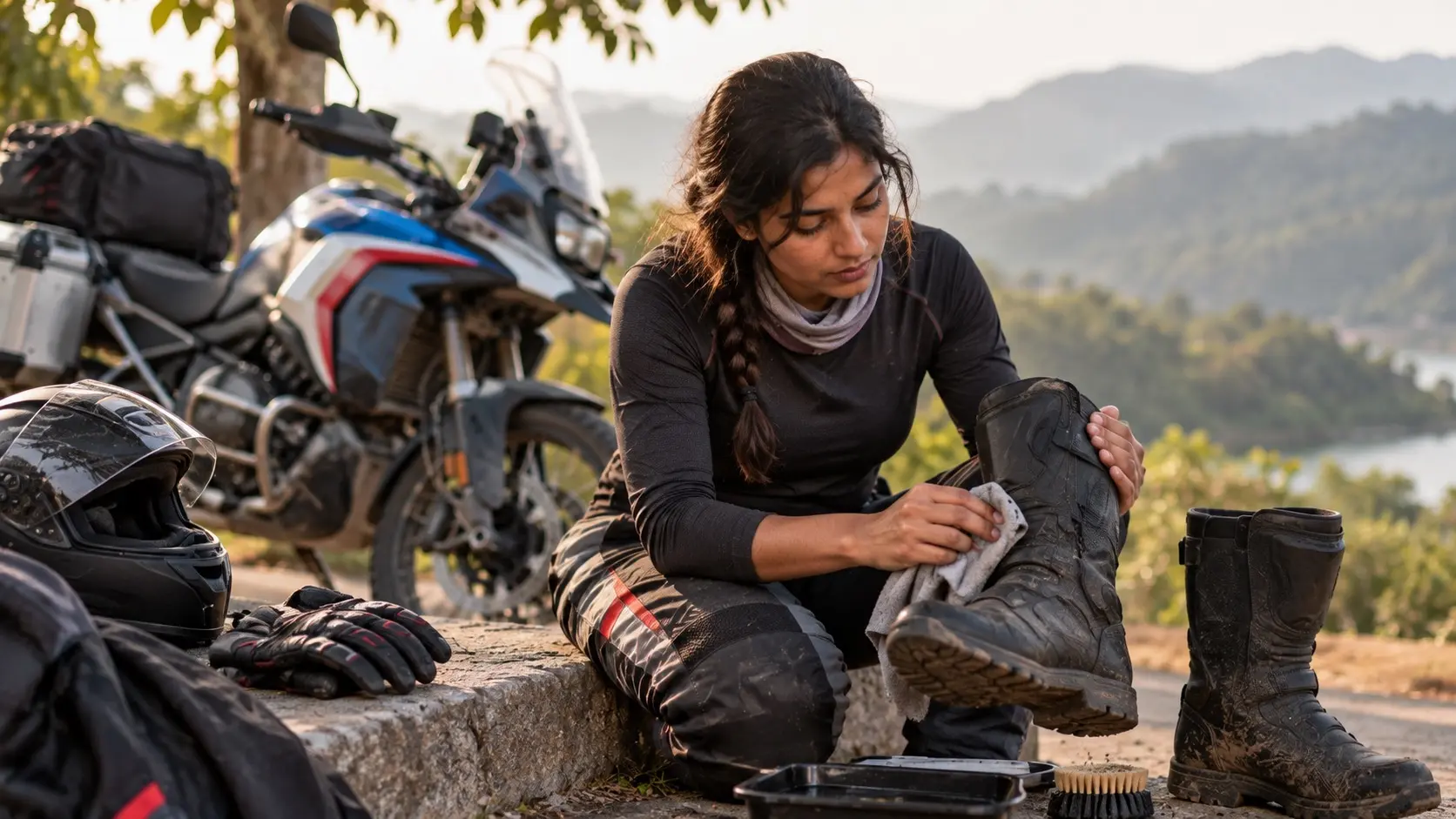
Boots benefit from having dried mud and grit removed before it works into seams, closures and moving parts. Use a soft brush or damp cloth, then allow the footwear to dry at room temperature.
Removable footbeds may be taken out for drying when the manufacturer permits it. Leather, textile and waterproof sections may each require different care.
Do not apply oils or conditioners indiscriminately, particularly to soles, protective panels or materials that were not designed to receive them.
These small habits help preserve comfort and function without turning routine care into a complicated workshop exercise.
Waterproofing Is Not the Same as Cleaning
A waterproof jacket can begin to absorb water into its outer fabric even when the membrane beneath it remains intact. This is often described as wetting out.
The result can feel unpleasant because the outer layer becomes heavy and breathability may be reduced.
Cleaning the garment and restoring its water-repellent finish, when recommended by the manufacturer, can help restore its intended performance.
However, a water-repellent treatment is not a repair for a torn membrane, damaged seam or worn-through protective fabric.
Use only treatments compatible with the garment and apply them as instructed. More product does not necessarily mean better protection.
Store Gear So It Is Ready for the Next Ride
Once everything is clean and dry, storage becomes straightforward.
Keep gear in a dry, ventilated place away from excessive heat and prolonged direct sunlight. Hang jackets and trousers in a way that does not distort their shape, and avoid crushing protectors beneath heavy objects.
Helmets should be stored securely where they cannot easily fall. Gloves and boots should have enough space to retain their shape rather than being compressed into a crowded bag.
If you use a storage bag or cover, make sure the equipment is completely dry first.
A little organisation also makes the next ride easier. You are less likely to discover damp gloves or a misplaced liner when you are already preparing to leave.
Care Cannot Repair Everything
Cleaning and storage help preserve equipment, but they cannot restore protection that has been lost through significant damage.
A torn protective seam, cracked impact protector or helmet that has experienced a serious impact needs to be assessed according to the manufacturer’s guidance.
That is the distinction between this article and our previous discussion about replacement. Care helps equipment remain in good condition. It does not make damaged equipment safe again.
Final Thoughts
Looking after riding gear is less about keeping it looking new and more about preserving the qualities that make it useful.
A few minutes spent drying a jacket, cleaning a visor or removing grit from boots can make the next ride more comfortable and help the equipment remain in good condition.
You do not need an elaborate routine. You need the right care for the right material, a little patience, and the habit of putting gear away properly.
The equipment looks after you while you ride. Looking after it when you return is simply part of owning it.