When Not to DIY Your Motorcycle
Learn which motorcycle maintenance tasks are suitable at home and which should be left to professionals
When Not to DIY Your Motorcycle
There is something deeply satisfying about maintaining your own motorcycle. Cleaning and lubricating a chain, checking tyre pressures, or changing engine oil can help riders better understand their machines while saving money and building confidence.
However, not every maintenance task belongs in a home garage.
One of the most valuable skills a motorcycle owner can develop is knowing the difference between a task that can be safely handled at home and one that should be entrusted to a qualified technician.
DIY maintenance should increase reliability, not introduce new risks.
The Difference Between Maintenance and Repair
Many riders start with simple maintenance tasks and gradually become more confident. This progression is healthy and often leads to a better understanding of motorcycle ownership.
Routine maintenance generally includes:
- Chain cleaning and lubrication
- Tyre pressure checks
- Fluid inspections
- Battery maintenance
- Basic cleaning and detailing
Repairs, however, are different.
Once a job involves safety critical systems, specialized tools, or complex diagnostics, the consequences of mistakes become much more serious.
The question should never be “Can I do this?”
The better question is “Should I do this?”
Brake Systems Deserve Special Respect
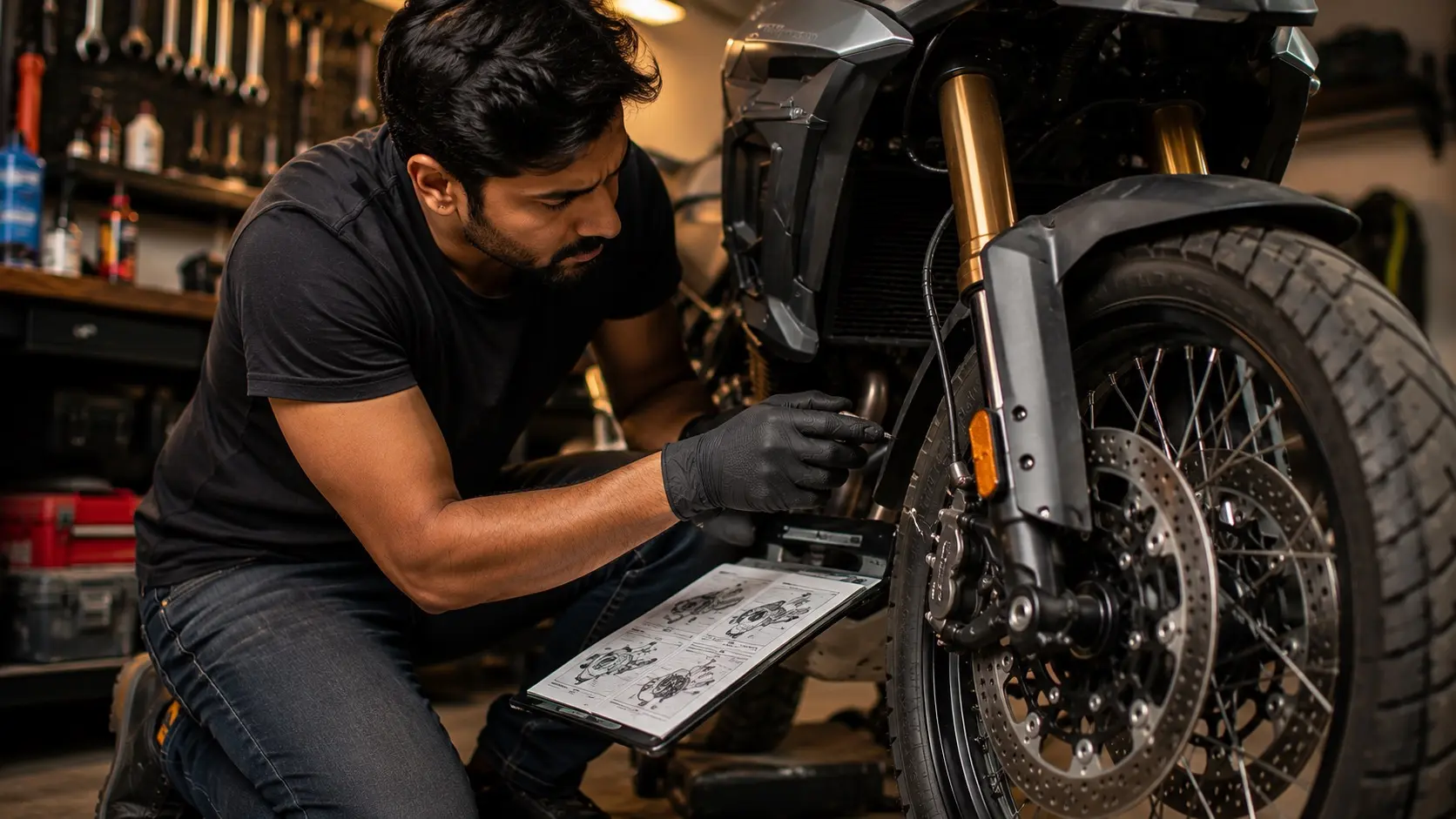
Modern motorcycle braking systems are remarkably effective, but they are also among the most important safety systems on the motorcycle.
Replacing brake pads may be within the capability of experienced owners, but jobs involving:
- Brake fluid bleeding
- ABS components
- Brake line replacement
- Master cylinder repairs
often require specific procedures and specialized knowledge.
A small mistake may not become apparent until an emergency braking situation occurs.
When rider safety is directly involved, professional assistance is usually the wiser choice.
Engine Internals Are Not Beginner Projects
Modern motorcycle engines operate with extremely tight tolerances.
Tasks involving:
- Valve adjustments
- Timing systems
- Internal engine repairs
- Cylinder head work
- Clutch basket replacement
can quickly become expensive if performed incorrectly.
Many home mechanics underestimate the importance of precise measurements, torque specifications, and diagnostic procedures.
A simple error during reassembly can create problems that are far more costly than the original repair.
Unless you have proper training, documentation, and tools, internal engine work is often best left to experienced technicians.
Electronics Are More Complex Than Ever
Today’s motorcycles are increasingly dependent on electronics.
Fuel injection systems, ride modes, traction control systems, sensors, and electronic rider aids have transformed modern motorcycles.
Unfortunately, they have also increased diagnostic complexity.
Electrical troubleshooting often requires:
- Diagnostic scanners
- Multimeters
- Wiring diagrams
- Manufacturer specific procedures
Randomly replacing components based on internet advice can quickly become expensive.
If an issue involves electronic fault codes or complex wiring systems, professional diagnosis usually saves time and money.
Suspension Work Can Affect Handling
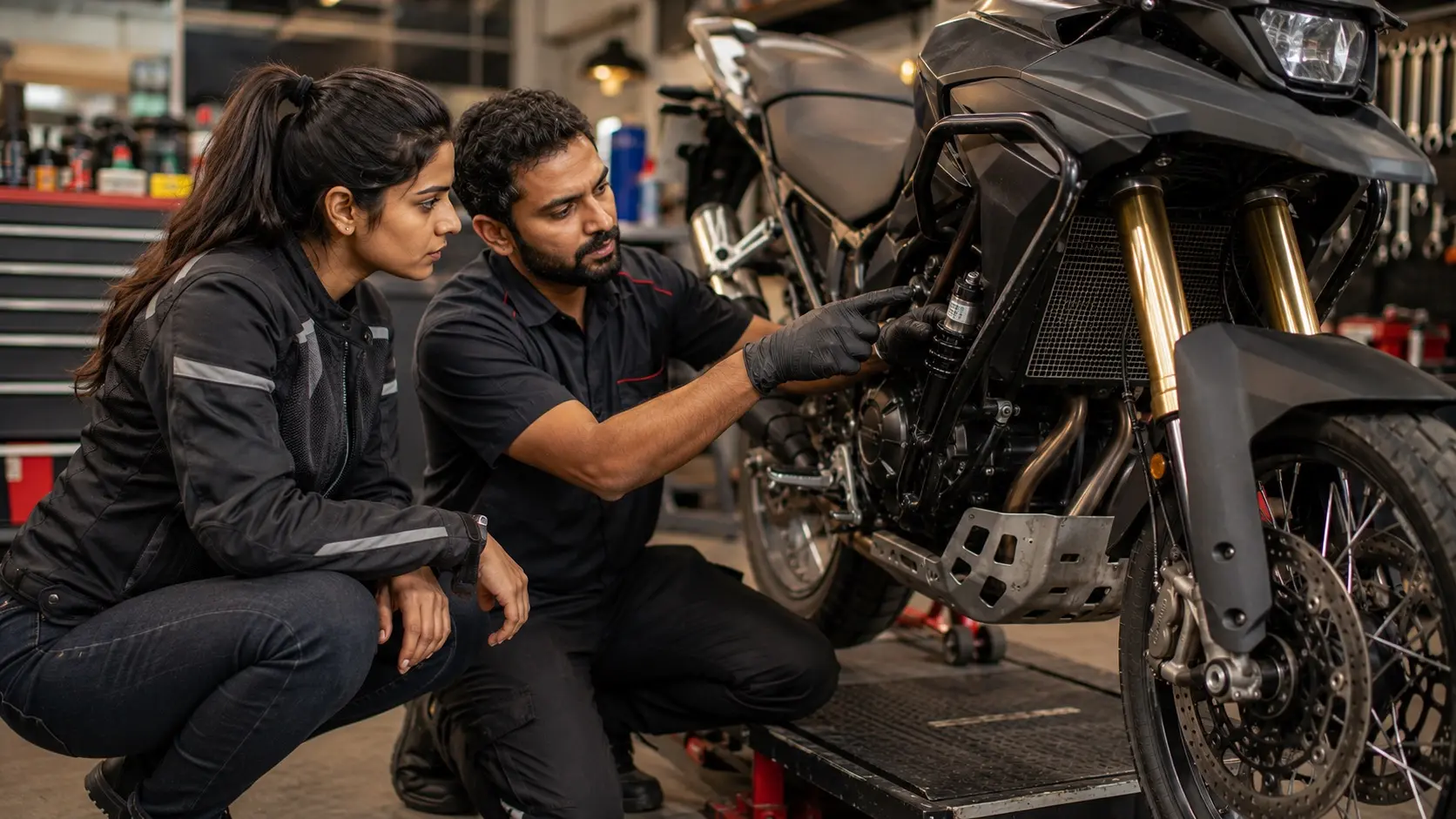
Suspension affects every aspect of motorcycle behavior.
While basic suspension adjustments are often straightforward, internal suspension servicing is considerably more complex.
Fork rebuilds, seal replacements, and shock servicing frequently require:
- Specialized tools
- Precise measurements
- Knowledge of suspension setup
Improper suspension work can negatively affect handling, braking, tyre wear, and rider confidence.
For many riders, suspension specialists provide excellent value compared to the risks of attempting complex repairs at home.
Be Honest About Your Experience Level
There is no shame in seeking professional help.
In fact, experienced mechanics often know their limitations better than beginners do.
Before starting any repair, ask yourself:
- Do I have the correct tools?
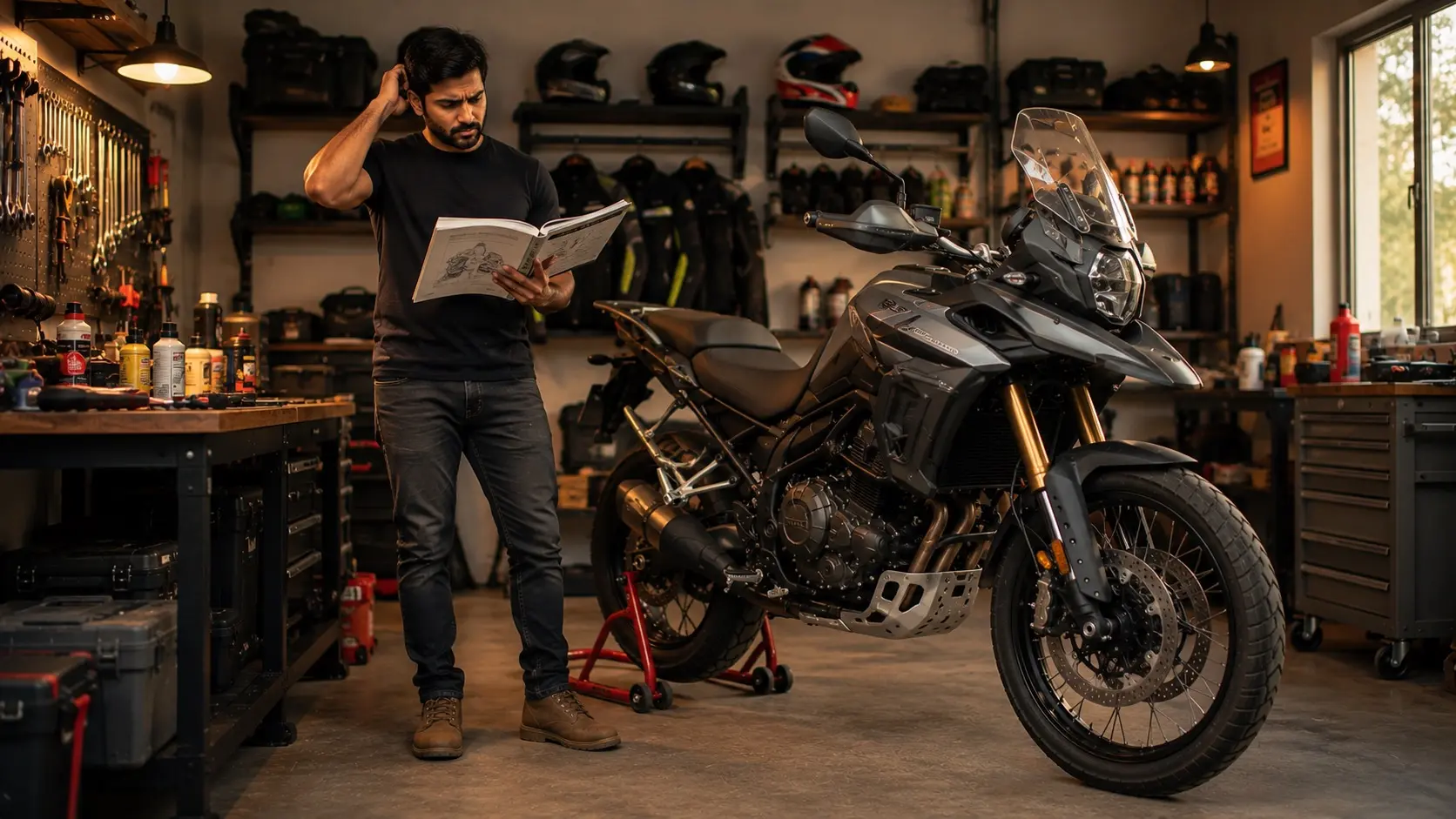
- Do I have reliable service information?
- Do I understand the procedure completely?
- Can I verify the repair was completed correctly?
If the answer to any of these questions is no, it may be worth reconsidering the project.
Confidence should come from preparation and knowledge, not optimism.
The Best DIY Skill Is Good Judgment
The goal of motorcycle maintenance is not to do everything yourself.
The goal is to keep your motorcycle safe, reliable, and enjoyable to ride.
For many riders, the ideal approach is a combination of home maintenance and professional service. Routine inspections, cleaning, chain care, and basic maintenance can be handled confidently at home, while more complex systems receive expert attention when necessary.
Final Thoughts
DIY maintenance can be one of the most rewarding aspects of motorcycle ownership. It creates a deeper connection with the machine and builds valuable mechanical understanding.
But wisdom is just as important as skill.
Knowing when to pick up a wrench and knowing when to call a professional are equally important parts of becoming a responsible motorcycle owner.
The best maintained motorcycles are not necessarily worked on entirely at home. They are cared for by owners who understand both their abilities and their limits.