Understanding CE Armour and Why It Matters
Learn how CE armour protects riders during an impact and why correct fit and placement are just as important as the armour itself.
There is a moment before almost every ride that most riders barely notice.
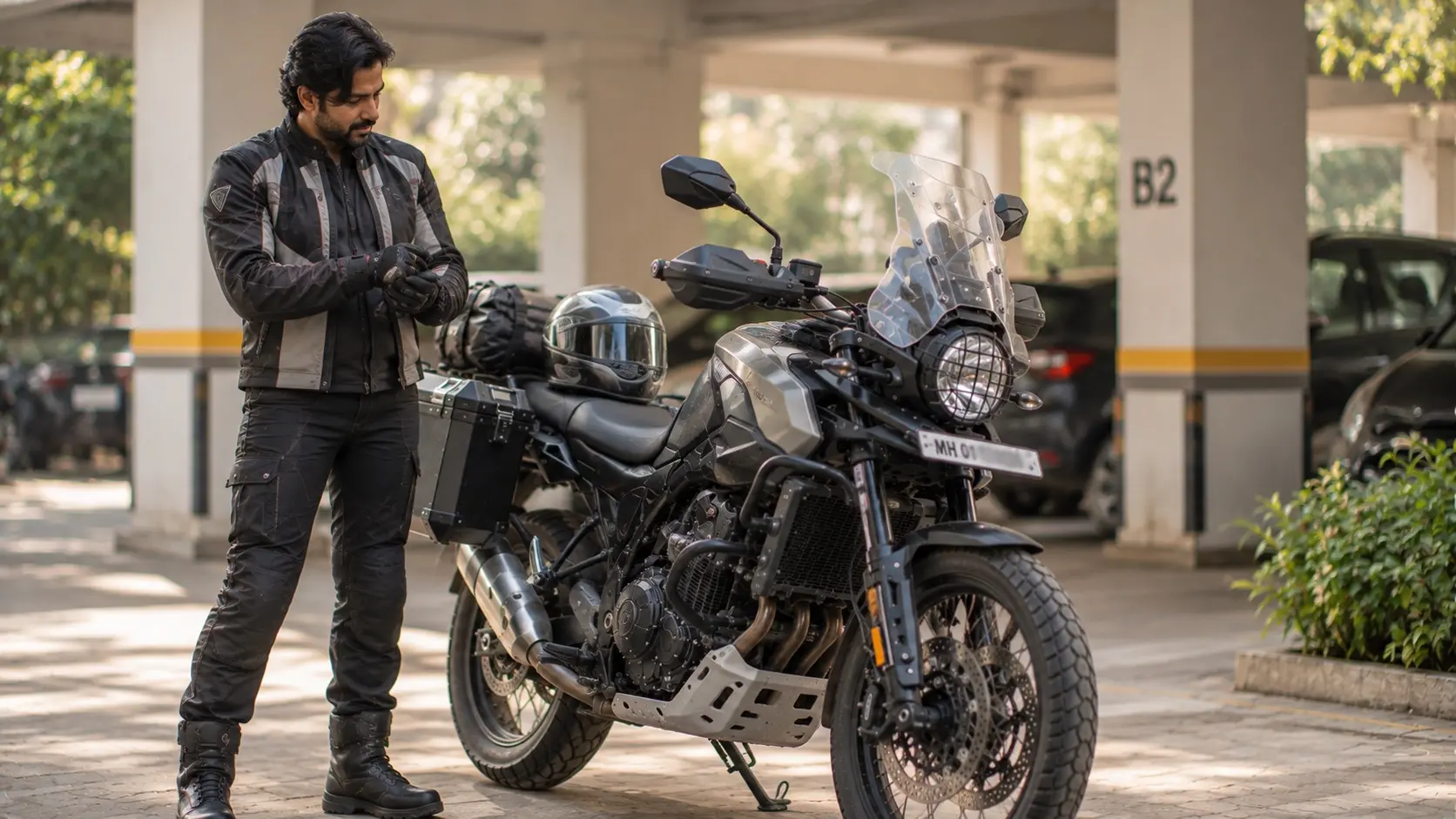
The helmet goes on. Gloves are tightened. The jacket zip comes up. Perhaps you tug the sleeves into place before swinging a leg over the motorcycle.
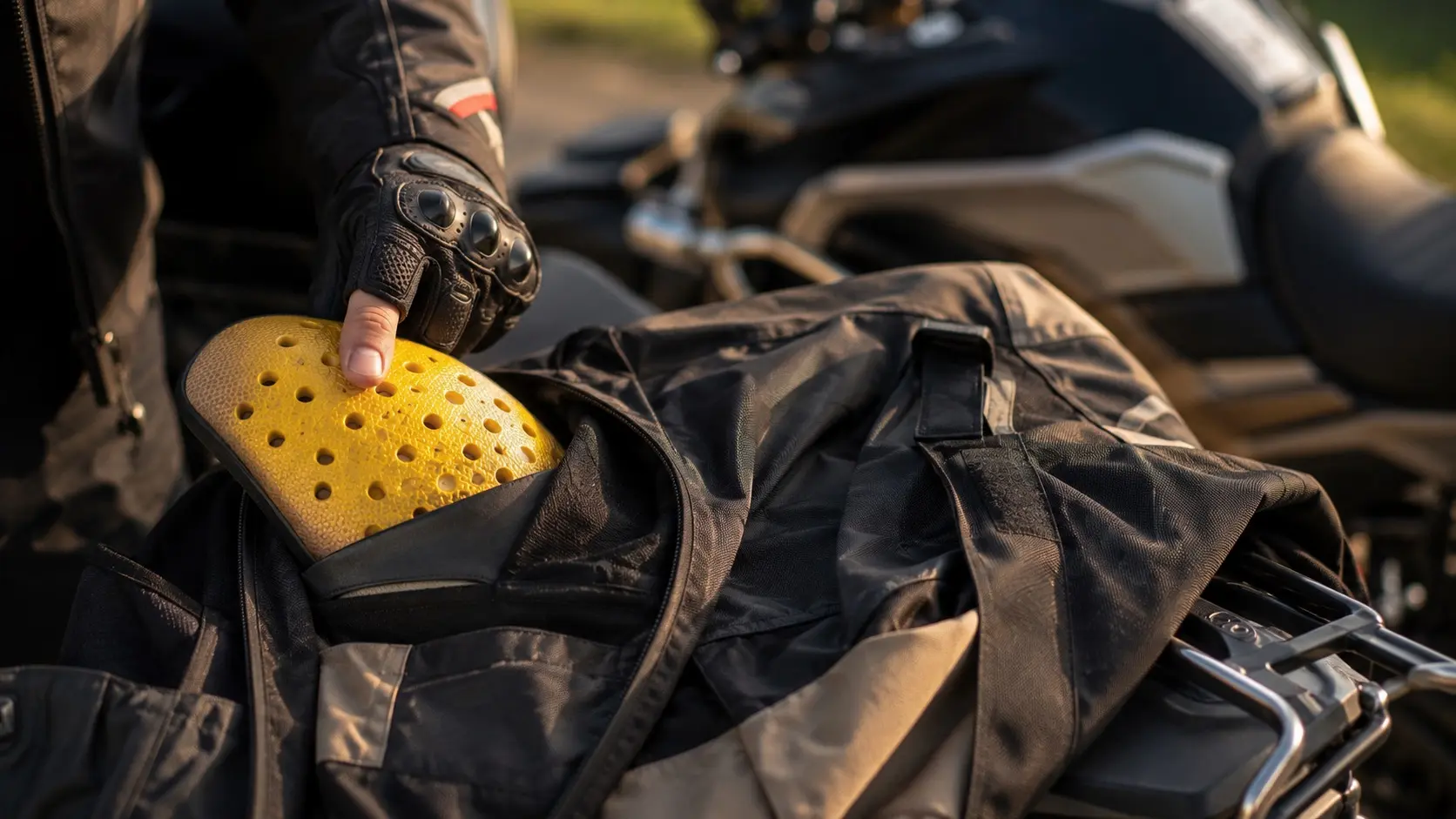
Hidden inside that jacket are a series of oddly shaped inserts protecting your shoulders, elbows and, in many cases, your back. Most riders know they are called CE armour, but far fewer understand what those protectors are actually designed to do.
They are not there simply to make a jacket feel more substantial, nor are they a marketing feature that separates premium riding gear from cheaper alternatives. They perform one of the most important jobs in motorcycle protection by helping reduce the force of an impact before it reaches your body.
Understanding how they work can change the way you look at every piece of protective riding gear you own.
Abrasion and Impact Are Two Different Problems
One of the biggest misconceptions among new riders is believing that a riding jacket only protects against sliding across the road.
In reality, motorcycle clothing has two separate jobs.
The outer shell—whether leather or modern textile—is primarily designed to resist abrasion. If you slide after coming off the motorcycle, this layer helps prevent the road surface from wearing through to your skin.
CE armour serves a different purpose.
It helps manage the sudden impact that occurs when your shoulder, elbow, knee or back strikes the ground, a kerb, or another object.
Both forms of protection work together.
A jacket made from strong abrasion-resistant material without proper impact protectors leaves vulnerable parts of the body exposed to concentrated forces. Equally, excellent armour cannot compensate for an outer shell that tears apart during a slide.
Understanding that these are two different types of protection is the first step towards appreciating why CE armour matters.
What Does CE Armour Actually Do?
Although riders commonly call it “CE armour”, the official term is CE-certified impact protector.
Its purpose is surprisingly straightforward.
When your body hits a hard surface, the protector absorbs and spreads part of that impact energy over a larger area. Instead of one small point receiving the full force, the energy is distributed more gradually.
Think of dropping a heavy object onto a tiled floor.
The force is concentrated in one place.
Now imagine placing a thick rubber mat between the object and the floor. The object still lands, but the force is managed differently.
CE armour works on a similar principle.
It cannot prevent every injury, and no protective equipment can make motorcycling risk-free. What it aims to do is reduce the severity of an impact by limiting the force transmitted to the body.
That is why properly certified armour is such an important part of modern riding gear.
Position Matters More Than Many Riders Realise
Even the best armour cannot protect an area it does not cover.
This is one of the simplest ideas in motorcycle safety, yet it is often overlooked.
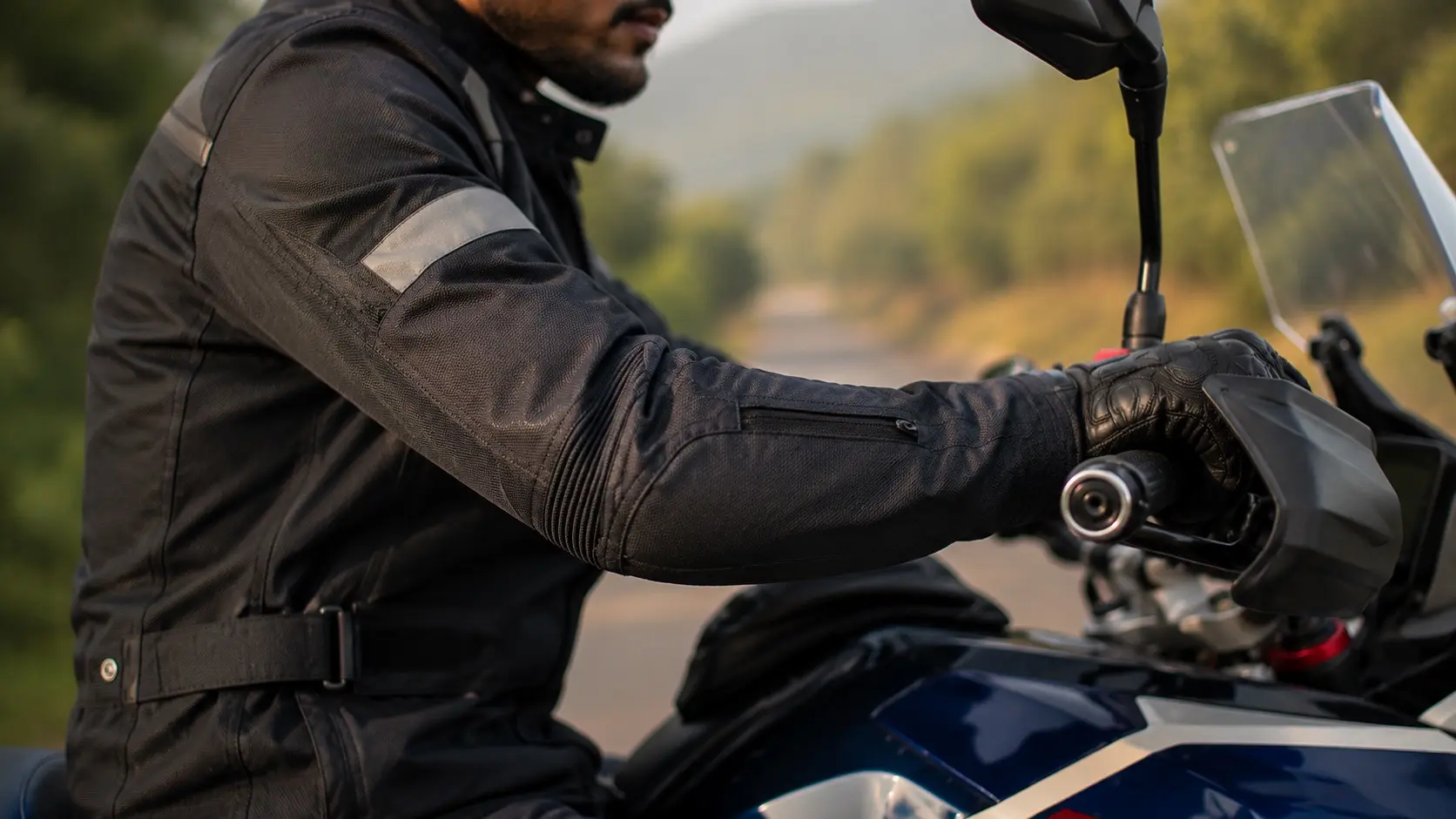
If elbow armour rotates around the sleeve because the jacket is too loose, it may no longer be positioned over your elbow when you need it most.
If shoulder protectors sit too low, they may leave the joint exposed during a fall.
The same applies to back protectors that shift inside oversized jackets.
This is why manufacturers spend considerable effort designing jackets that keep armour in the correct position while allowing enough movement to remain comfortable during a ride.
When trying on riding gear, don’t just ask yourself whether it feels comfortable while standing in a showroom.
Sit on a motorcycle or mimic your riding position.
Check that the armour remains centred over the areas it is intended to protect.
Good fit is not about appearance.
It is about ensuring the protection stays where it belongs.
Soft Does Not Mean Weak
Many riders are surprised by how flexible modern protectors feel.
Older armour often relied on hard plastic shells that felt reassuring because they seemed rigid.
Today’s CE-certified protectors frequently use advanced materials that remain soft during normal movement but stiffen momentarily when subjected to a sudden impact.
That flexibility improves comfort without sacrificing protection.
It also encourages riders to wear their gear for longer journeys, during city commutes and in hot weather.
Comfort should never be dismissed as a luxury.
Protective gear that is uncomfortable often gets left at home.
Protective gear that riders are happy to wear every time offers far greater real-world value.
Looking After Your Armour
Unlike tyres or brake pads, CE armour rarely attracts much attention once the jacket has been purchased.
It deserves an occasional inspection.
Remove the protectors from the garment if the manufacturer allows it and check for:
- cracks
- permanent deformation
- torn fabric covers
- excessive wear
- damage after a crash
If the jacket has experienced a significant impact, inspect the armour carefully even if it appears normal from the outside.
Some manufacturers also recommend replacing protectors after a serious accident because the material may no longer perform as intended.
Equally important is ensuring the armour is reinstalled correctly after washing the jacket. An elbow protector fitted upside down or placed in the wrong pocket cannot provide the protection it was designed to deliver.
Understanding Before Upgrading
Motorcyclists often spend hours researching helmets, jackets and riding boots, yet many know very little about the protective components hidden inside those garments.
Understanding how CE armour works makes it easier to appreciate why proper fit, correct positioning and consistent use matter so much.
It also explains why reputable riding gear places such importance on certified impact protection rather than simply using thicker padding.
The goal is not to create clothing that feels heavier or more substantial.
The goal is to manage impact energy in a way that gives your body a better chance of walking away from a crash with less severe injuries.
That quiet piece of armour inside your jacket may never attract attention during thousands of enjoyable rides.
If it ever needs to do its job, however, you’ll be very glad it was there—and that it was sitting exactly where it was meant to be.