Reading Traffic Hazards Before They Become Emergencies
Learn how new and intermediate riders can spot developing traffic hazards, predict driver behavior, and create more time and space to react.
Good riders do not only react well. They notice problems early enough that they rarely need dramatic reactions.
For new and intermediate riders, this is one of the most useful skills to build. Traffic hazards usually do not appear from nowhere. A car drifting inside its lane, a pedestrian looking across the road, a bus slowing near a stop, or a scooter edging out from a side street can all give you warning before the situation becomes urgent.
Reading traffic is about turning those small clues into useful decisions. You are not trying to predict the future perfectly. You are trying to see likely problems early, create space, and keep your riding smooth enough that you still have options.
Look Beyond the Vehicle in Front
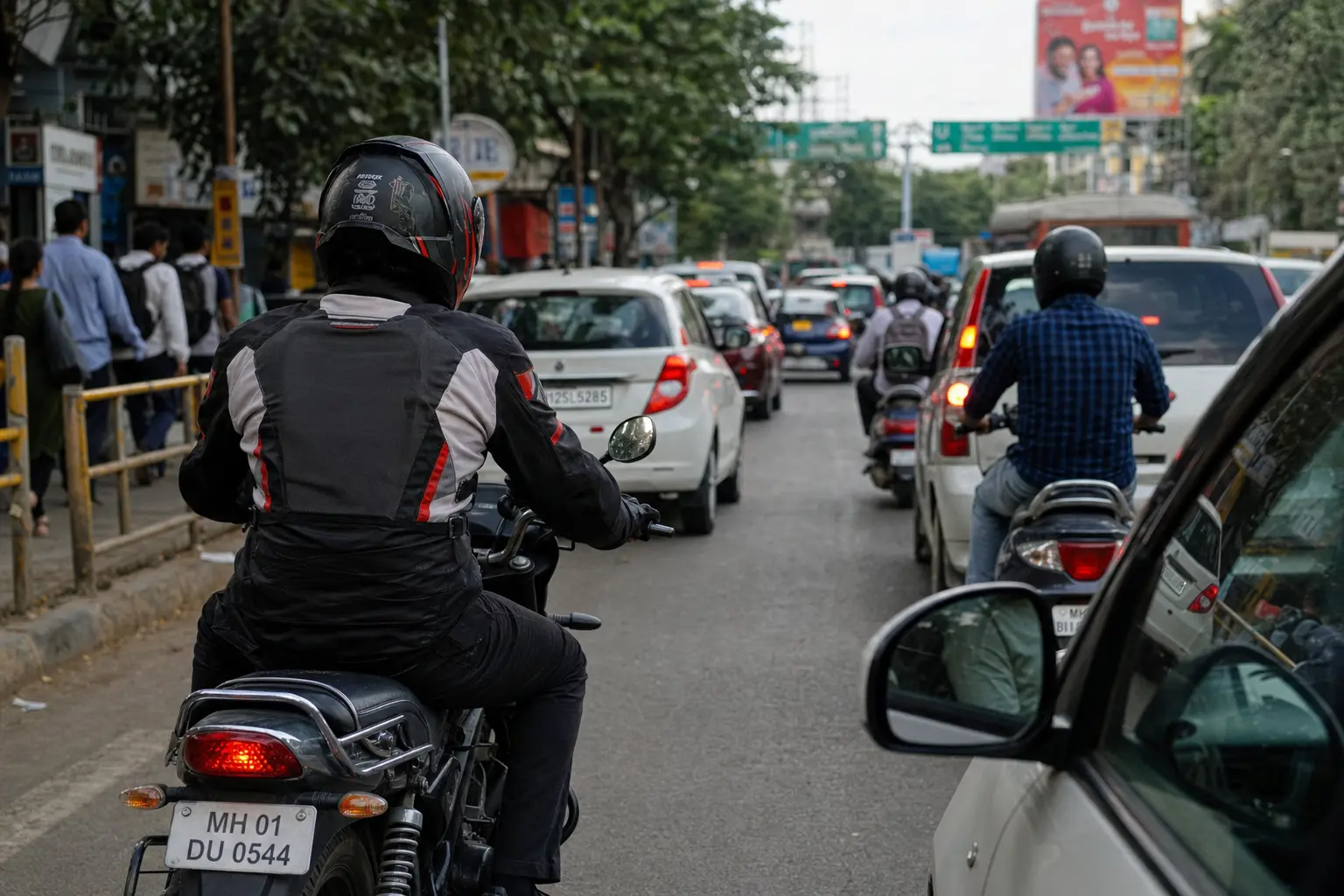
Many riders stare at the bumper or tail light directly ahead of them. That feels natural, especially in traffic, but it gives you very little warning.
Your eyes should keep moving between three zones:
- The vehicle immediately ahead
- The traffic several vehicles ahead
- The sides of the road, including junctions, parked vehicles, pedestrians, and gaps
If brake lights appear three cars ahead, the vehicle in front of you may slow even before its own brake lights come on. If a bus is stopped ahead, expect people to step out from around it. If traffic is flowing smoothly but one lane has suddenly slowed, there may be a turning vehicle, pothole, animal, or pedestrian hidden from your view.
The earlier you notice the pattern changing, the less force you need to use on the brakes, bars, or throttle.
Predict Driver Behavior From Position
Drivers often show what they are about to do before they signal. Sometimes they never signal at all.
Watch the vehicle position, not only the indicator.
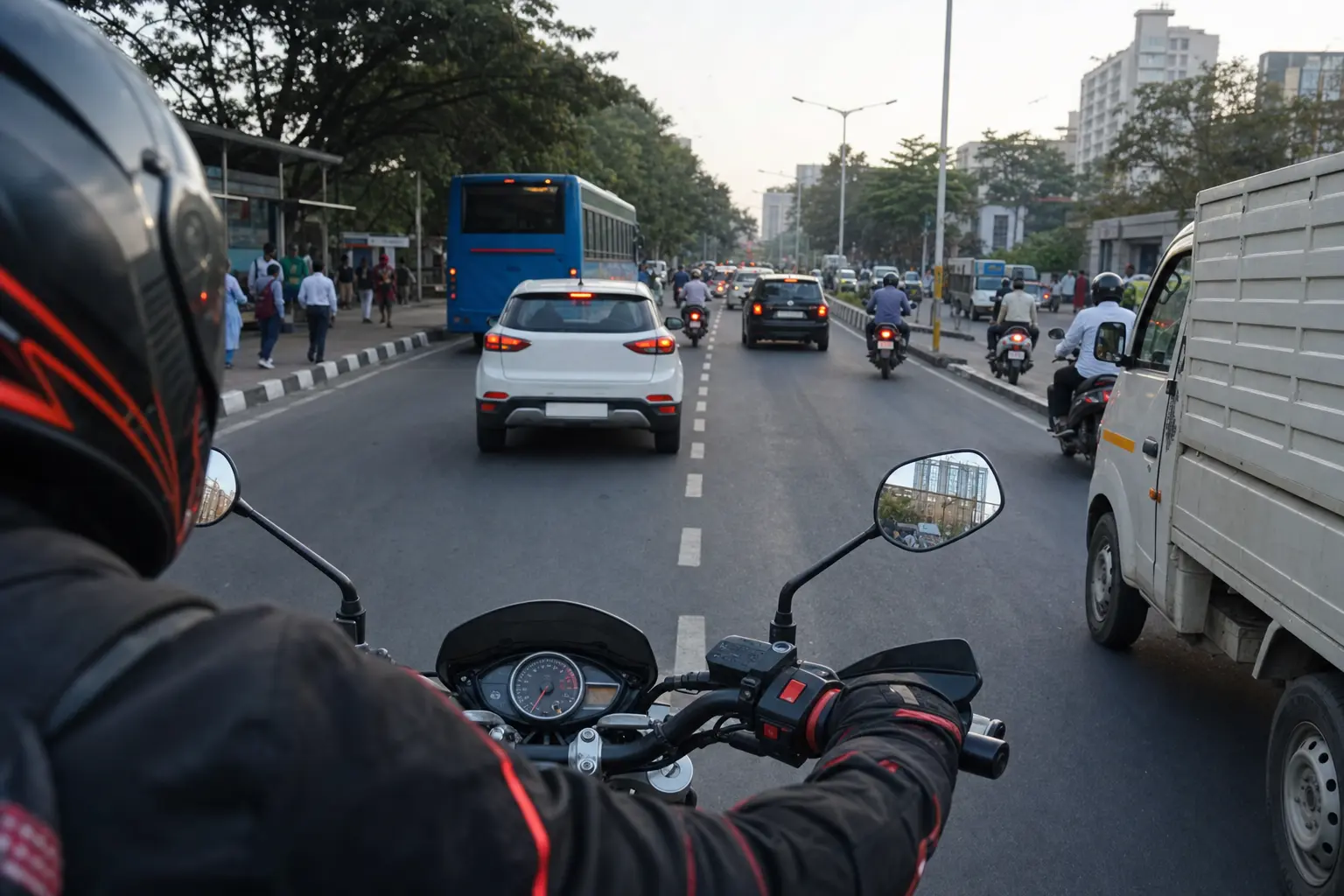
A car moving slightly toward the lane divider may be preparing to change lanes. A driver who slows near a shopfront may stop suddenly. A taxi or auto-rickshaw moving toward the left edge may be looking for a passenger. A car approaching a side road while drifting outward may be preparing for a wide turn.
On highways, a vehicle closing quickly on slower traffic ahead is likely to change lanes. If you are beside it, you are in the wrong place. Either ease off and let it move, or pass decisively if it is safe and legal. Do not sit in the blind spot waiting to see what happens.
In city traffic, the most useful question is: “Where does this driver want to go?” If a car is in the wrong lane for a turn, expect a late correction. If a delivery rider is checking building numbers, expect sudden slowing. If a pedestrian is facing away from traffic but looking toward the opposite side of the road, expect movement.
You are not judging people. You are reading intention.
Identify Developing Hazards
A hazard is not only something already in your path. It can be anything that may affect your space in the next few seconds.
A parked car is not a problem by itself. A parked car with a driver inside, front wheels turned out, or brake lights glowing is a developing hazard. A child standing near the road is not yet in your lane, but the situation demands attention. A dog walking parallel to the road may continue calmly, but a dog looking directly at traffic may dart unpredictably.
Look for combinations. One clue may be harmless. Two or three clues together deserve action.
For example, imagine you are riding through a market road. A bus has stopped ahead. A pedestrian is visible near its front. A scooter behind you is close. The danger is not just the pedestrian. It is the combination of limited view, possible crossing movement, and reduced braking space behind you.
In that situation, the right response is not panic braking at the last moment. It is rolling off early, covering the brakes, moving to a position with better visibility, and avoiding a sudden stop unless necessary.
Create Time With Speed
Speed decides how much time you have.
This does not mean you must ride slowly everywhere. It means your speed should match how much you can see and how many things can change around you.
If you are passing parked cars, ride at a speed that lets you stop if a door opens. If you are approaching a junction with blocked visibility, assume someone may emerge. If you are riding behind a large truck, increase distance because you cannot see through it.
A simple rule helps: never ride faster than your sight line.
If you cannot see beyond a corner, crest, bus, truck, or parked vehicle, reduce speed before you reach the blind area. Waiting until the hazard appears is too late.
Create Space With Position
Position is your second safety tool. You need space in front, behind, and to the sides.
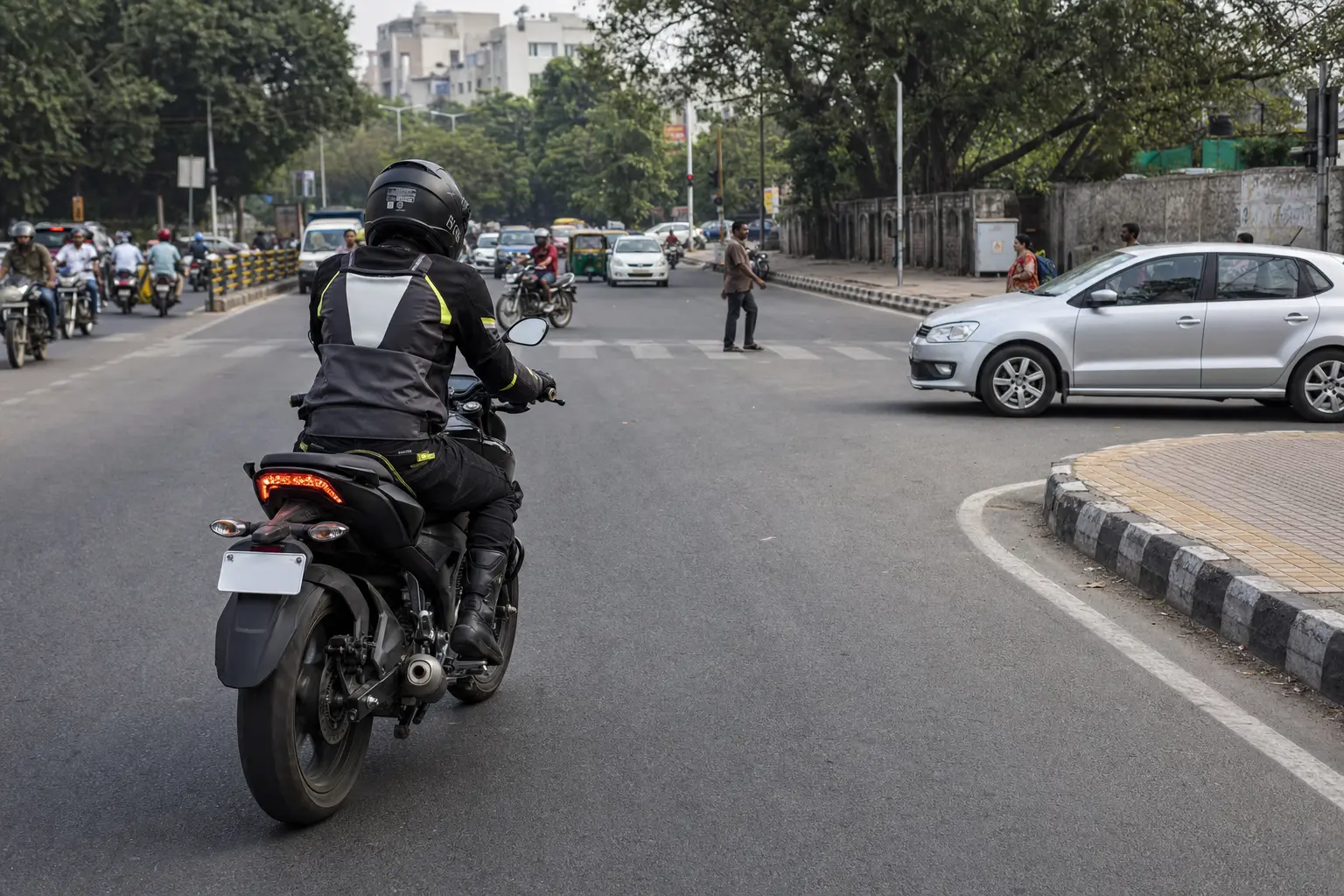
Do not ride boxed in if you can avoid it. If there is a car close ahead, another beside you, and a divider on the other side, you have very few options. A small change in speed can often open a better gap.
In traffic, avoid sitting directly beside a vehicle for long. Either stay behind where the driver can move without touching your space, or move ahead when it is safe. Around buses and trucks, leave extra room because their blind spots are larger and their movement can hide other hazards.
At junctions, position yourself where you can see and be seen. Avoid hiding behind larger vehicles. If a driver waiting to turn cannot see you, they may move into your path even if you technically have priority.
On highways, keep an escape route in mind. If traffic ahead stops suddenly, where will you go? The shoulder may be unsafe. The gap between lanes may close. The best escape route is usually the one you planned before you needed it.
Use Smooth Inputs, Not Sudden Corrections
When you spot a developing hazard early, your response can be calm.
Roll off the throttle. Cover the brakes. Adjust your lane position. Increase following distance. Let another vehicle go first. These small actions are usually enough.
Sudden corrections create new problems. Grabbing the brake can unsettle the bike. Swerving without checking can put you into another vehicle’s path. Accelerating out of fear can reduce your options.
The goal is to reduce surprise. If a car might turn, prepare before it turns. If a pedestrian might cross, slow before they step out. If a truck blocks your view, move into a safer following position before the road disappears behind it.
Smooth riding is not just comfortable. It is a sign that you are seeing things early.
Practical Examples Riders See Every Day
A car ahead slows without brake lights. Maybe the driver has lifted off the throttle. Maybe they are looking for an address. Do not rush to overtake immediately. Check the side roads, mirrors, and the driver’s position. There may be a turn or stop coming.
A scooter moves toward a gap in traffic. Expect it to take the gap, even if the space looks too small. Give it room instead of fighting for the same patch of road.
A bus stops near a crowded area. Expect pedestrians from the front and rear of the bus. Slow early and move only when you have a clear view.
A vehicle waits at a side road with its wheels angled outward. Treat it as ready to move. Adjust speed, cover the brakes, and avoid riding close to the edge of your lane.
A driver looks at you but still moves. Eye contact does not guarantee they have judged your speed correctly. Ride as if they may still enter your path.
Final Thoughts
Reading traffic hazards is a skill built through attention, not fear. You are watching for clues, patterns, and space.
New riders often focus on controlling the motorcycle. That matters, but roadcraft is what keeps those control skills from being tested at the worst possible moment. Intermediate riders improve fastest when they stop treating traffic as random and start noticing how often dangerous situations give warning signs.
Look farther ahead. Read position and behavior. Slow before blind spots. Keep space around the bike. Make small decisions early.
The safest emergency is the one that never becomes an emergency.