Reading Road Surfaces Before They Surprise You
Learn how to recognise changing road surfaces before they reduce grip and catch you by surprise.
Most riders lose confidence when the motorcycle unexpectedly slips, squirms or feels unsettled.
The natural reaction is to blame the tyres, the suspension or even the motorcycle itself.
More often than not, however, the real cause is much simpler.
The road changed.
Good riders understand that every braking, steering and throttle input depends on one thing above everything else:
Grip.
The amount of grip available changes constantly, often within a few metres. Learning to recognise those changes before you ride over them is one of the most valuable skills you can develop. Experienced riders are not simply riding the motorcycle; they are reading the road beneath it.
Every Road Is Telling You Something
To an inexperienced rider, a road is simply a route from one place to another.
To an experienced rider, it is full of information.
The colour changes.
The texture changes.
The surface changes.
Each of those differences offers clues about how much grip the tyres are likely to find.
Rather than reacting after the motorcycle feels different, experienced riders are already adjusting their expectations before they reach the next section of road.
That is why their riding often appears calm and effortless.
Learn to Read Colour
One of the easiest clues to recognise is colour.
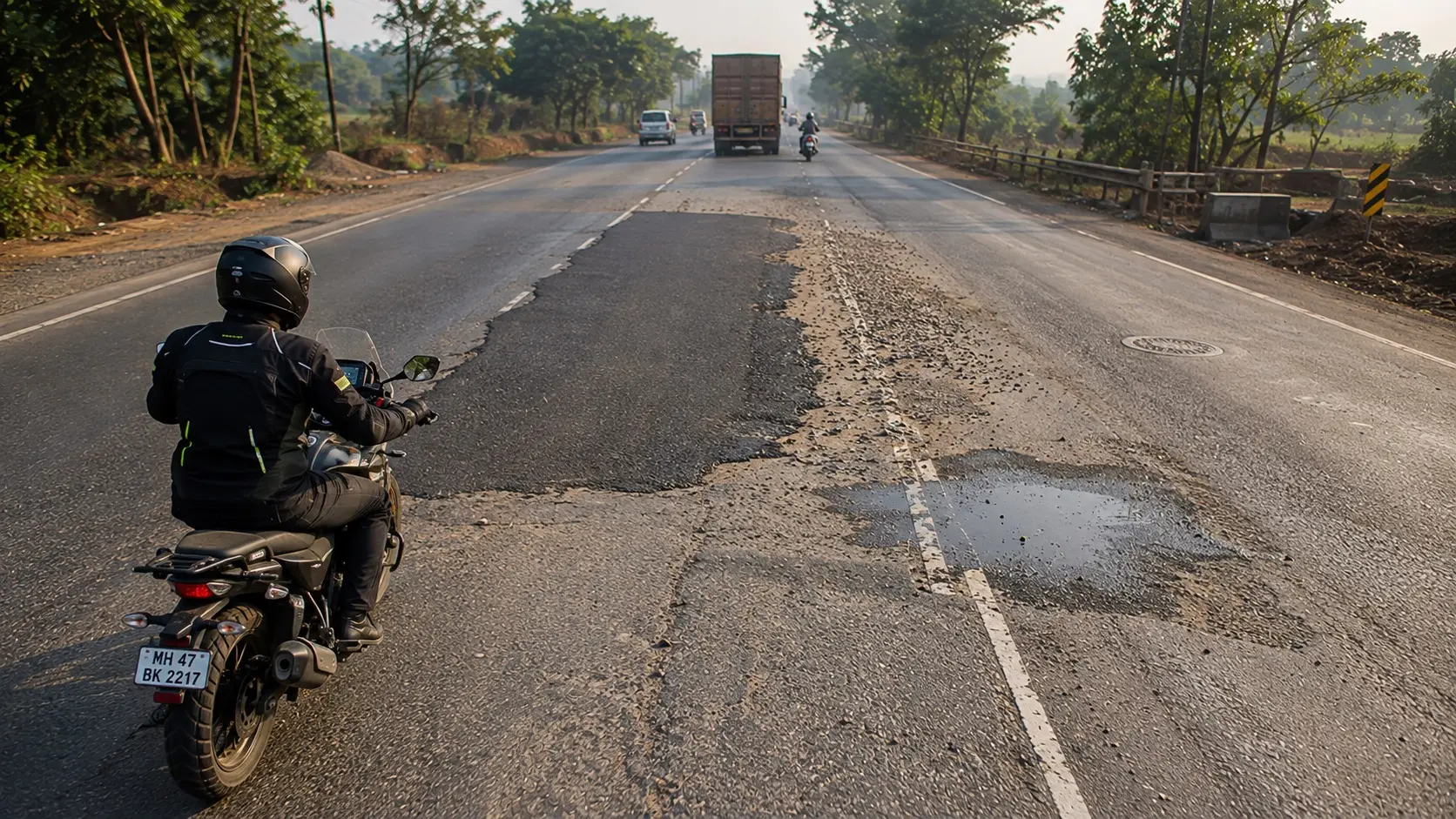
A dark patch on an otherwise dry road may simply be a repair, but it could also be water, oil or fresh bitumen.
A light grey section may indicate dust or loose dirt.
Brown patches often suggest soil dragged onto the road by tractors or construction vehicles.
Green areas near the edge of the road can indicate moss or algae, particularly in shaded places that remain damp long after rain has stopped.
None of these colours automatically mean danger.
They simply tell you that conditions may be changing.
Experienced riders notice these changes early and naturally become smoother with their braking, steering and throttle before reaching them.
Texture Can Be Just As Important
Road surfaces communicate through texture as much as colour.
Fresh asphalt often appears rough and predictable.
Old polished tarmac can become surprisingly slippery, particularly after light rain.
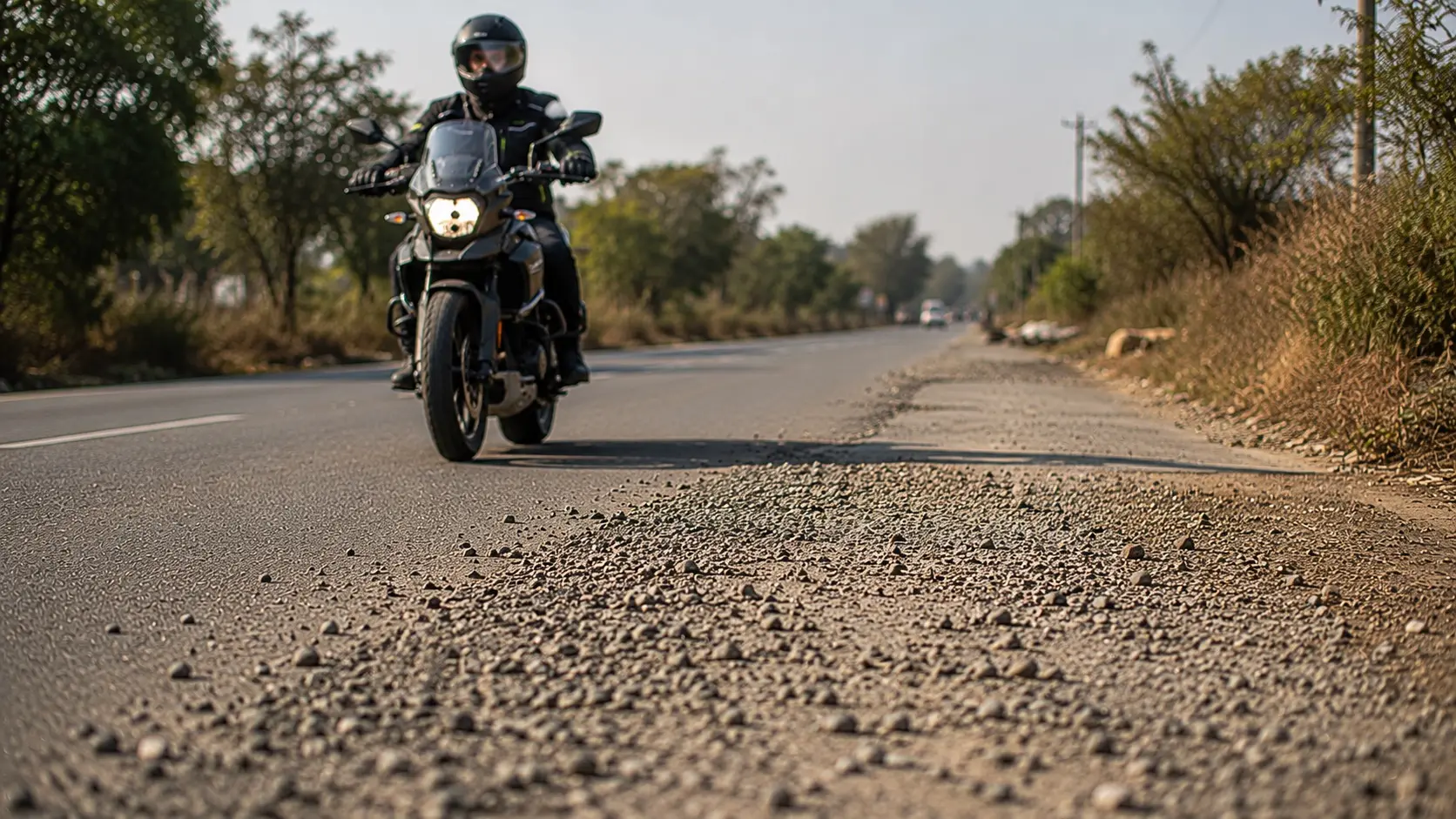
Loose gravel scattered across the road has a very different appearance from firmly compacted gravel.
Even painted lane markings, steel bridge joints and manhole covers often reflect light differently from the surrounding road, making them easier to identify if you are looking ahead rather than directly in front of the motorcycle.
Once you begin noticing texture, it becomes difficult to stop seeing it.
Some Surfaces Always Deserve Respect
Not every surface demands concern, but some deserve an extra moment of thought.
Painted road markings become noticeably more slippery when wet.
Metal inspection covers offer less grip than surrounding tarmac.
Loose gravel after road repairs allows the tyres to move more freely than expected.
Wet leaves may look harmless but can be surprisingly slippery, especially when compressed by traffic.
Mud carried onto the road from nearby fields or construction sites changes grip dramatically from one metre to the next.
The goal is not to fear these surfaces.
It is simply to recognise them early enough that you avoid making sudden riding inputs while crossing them.
Shade Can Hide More Than You Think
Many riders relax when the road appears dry and predictable.
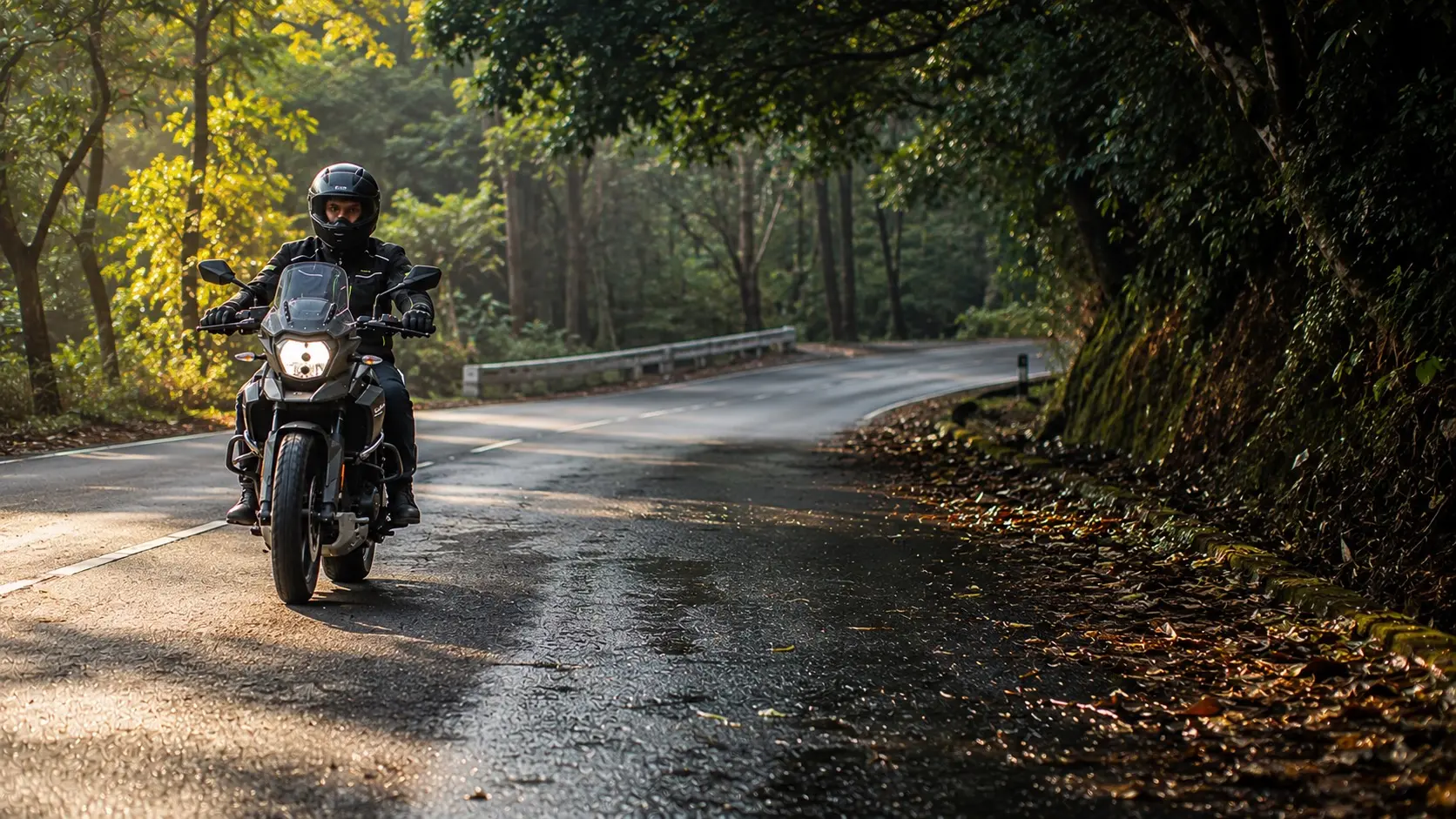
Then they enter a shaded section beneath trees.
Temperatures fall.
Moisture remains longer.
Leaves collect.
Moss grows unnoticed.
The road surface can change without any obvious warning.
Mountain roads and forest routes are particularly good examples.
One bend may offer excellent grip while the next remains damp throughout the day.
Experienced riders quickly learn that sunlight and shade often create two completely different riding conditions on the same road.
Construction Zones Change Every Day
Temporary roadworks deserve special attention because they rarely look the same twice.
Freshly repaired sections.
Loose gravel.
Uneven edges.
Temporary lane markings.
Dust.
Construction vehicles dragging soil onto the road.
These areas constantly evolve, making yesterday’s experience unreliable.
Approaching them with a little extra patience often provides far more confidence than assuming conditions remain unchanged.
Read The Road Before You Ride On It
Perhaps the biggest difference between newer and experienced riders is timing.
New riders often evaluate the road after the motorcycle reaches it.
Experienced riders evaluate it beforehand.
They ask simple questions almost without thinking.
Why is that section darker?
Why are cars leaving dust behind?
Why is that corner shaded?
Why are brake lights appearing ahead?
These small observations gradually become instinctive.
The motorcycle feels calmer because fewer surprises reach the tyres.
Practise Observation One Ride At A Time
You do not need to memorise every possible road surface before your next ride.
Instead, choose one thing to notice.
Perhaps spend one journey observing only colour.
On another, pay attention to texture.
On another, notice where roads remain damp after rain.
Before long, these observations become part of your normal riding rhythm.
You are no longer simply following the road.
You are understanding it.
Final Thoughts
The road is constantly giving riders information.
Colour.
Texture.
Moisture.
Repairs.
Debris.
Changing light.
Experienced riders are not better because they possess extraordinary reactions.
They simply notice these clues earlier.
That extra awareness gives them more time to adjust their speed, their line and their riding inputs before grip changes beneath the tyres.
The motorcycle never knows what lies ahead.
The rider does.
And that quiet habit of reading the road before riding over it is one of the simplest ways to make every journey smoother, safer and more enjoyable.