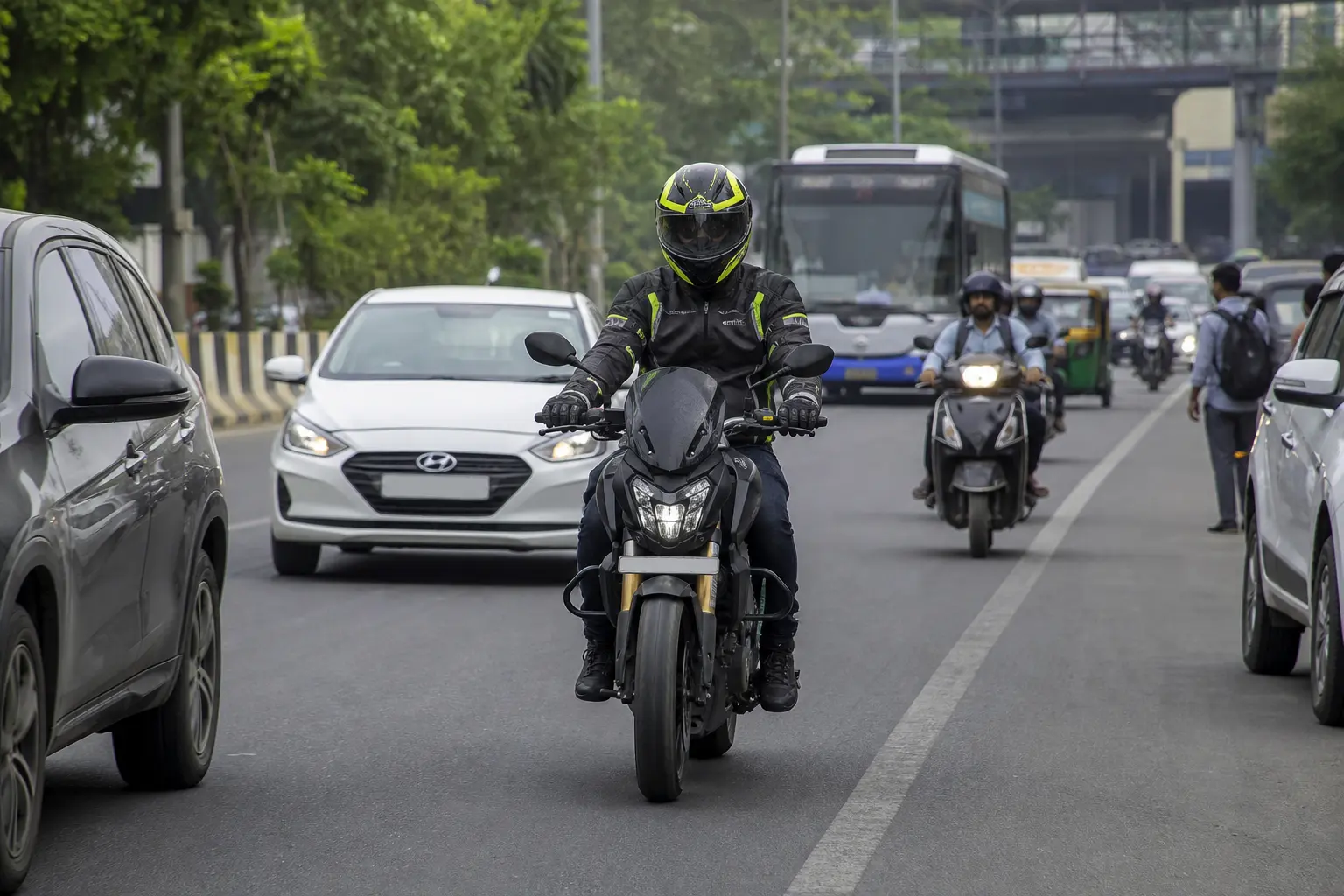
Motorcycle Lane Positioning for Visibility and Safety
Learn how new and intermediate riders can use lane positioning to stay visible, create space, and ride more safely in city and highway traffic.
Lane positioning is one of the quiet skills that separates nervous riding from controlled riding. It is not about owning the road or forcing space from other vehicles. It is about placing the motorcycle where you can see more, be seen earlier, and keep options open if traffic changes.
New riders often think lane position simply means staying in the middle of the lane. That can be safe in some situations, but it is not a rule for every road. A motorcycle is narrow, which gives you more choices within a lane than a car has. Used well, that space can improve visibility and safety. Used poorly, it can put you in blind spots, near bad surfaces, or too close to vehicles that may move without warning.
Good lane positioning starts with a simple question: “Where can I see, be seen, and react?”
Think in Lane Zones
A lane can be divided into three useful zones: left, center, and right. None of them is always correct.
The center of the lane can be useful when you need a balanced position and do not want to invite another vehicle into your space. But it may also collect oil, gravel, water, and debris, especially near junctions or toll areas where vehicles stop often.
The left or right side of the lane can improve your view past traffic, help other drivers see you in their mirrors, or create more room from a hazard. But riding too close to the edge can expose you to pedestrians, parked cars, potholes, broken shoulders, or vehicles squeezing through gaps.
The best position changes with the situation. Your lane position should be active, not automatic.
Position Yourself to Be Seen
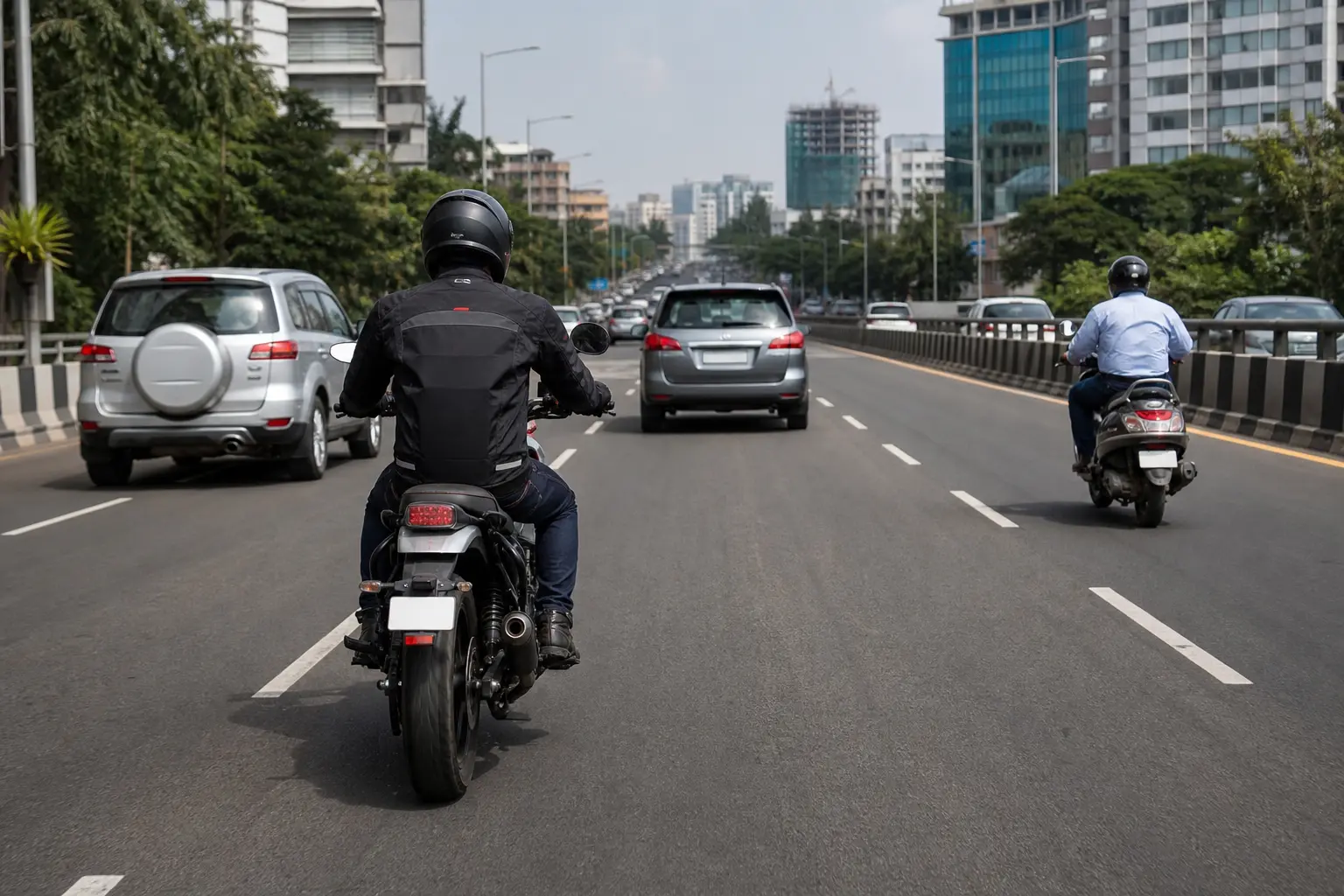
A motorcycle can disappear easily in traffic. Drivers may not notice you if you sit directly behind a car, stay in a blind spot, or blend into a cluttered background.
When following a car, avoid sitting directly behind its center for long periods. If you move slightly to one side within your lane, the driver ahead is more likely to see you in a mirror, and you gain a better view of traffic beyond the car.
This does not mean weaving from side to side. It means choosing a clear, stable position. If you are behind a car on a city road, the right side of your lane may let you see past it and appear in the driver’s right mirror. On another road, the left side may be better because of traffic flow, road layout, or an upcoming turn.
At junctions, visibility becomes even more important. If a car waiting to turn cannot see you because you are hidden behind a bus, truck, or SUV, your right of way may not protect you. Adjust position early so you are not masked by larger vehicles.
Use Position to Improve Your View
You cannot react to what you cannot see.
Behind a large vehicle, your view is blocked. If you ride too close, you only see the back of the truck or bus. You miss brake lights ahead, pedestrians crossing, potholes, broken road surfaces, and sudden lane changes.
Create distance first. Then use a slight offset within your lane to look ahead without moving into danger. The goal is not to peek out aggressively. It is to build a wider picture of the road.
On a highway, this may mean riding toward the right side of your lane when following a vehicle in the left portion of the lane, or toward the left side when that gives a clearer view. In the city, it may mean positioning away from parked vehicles so you can see doors opening, pedestrians stepping out, or autos pulling away from the kerb.
Your position should give you information before you need action.
Avoid Common Rider Mistakes
One common mistake is riding too close to the edge of the road. New riders sometimes do this to stay away from faster traffic. It may feel polite, but it can be risky. The road edge often has gravel, broken tarmac, drain covers, parked vehicles, pedestrians, and sudden entries from side streets. It can also encourage drivers to squeeze past within the same lane.
Another mistake is sitting in blind spots. If you are beside a car’s rear quarter for more than a moment, assume the driver may not know you are there. Either drop back or move ahead when it is safe. Do not hover beside cars, buses, or trucks.
A third mistake is changing position too late. If you wait until a hazard is directly in front of you, you may need a sudden swerve. Good riders adjust early and smoothly. They move away from parked cars before reaching them. They create space before a junction. They choose a safer lane position before a bend or traffic pinch point.
Finally, some riders treat lane position as a way to dominate traffic. That is not the purpose. The aim is safety, visibility, and options.
City Riding Examples
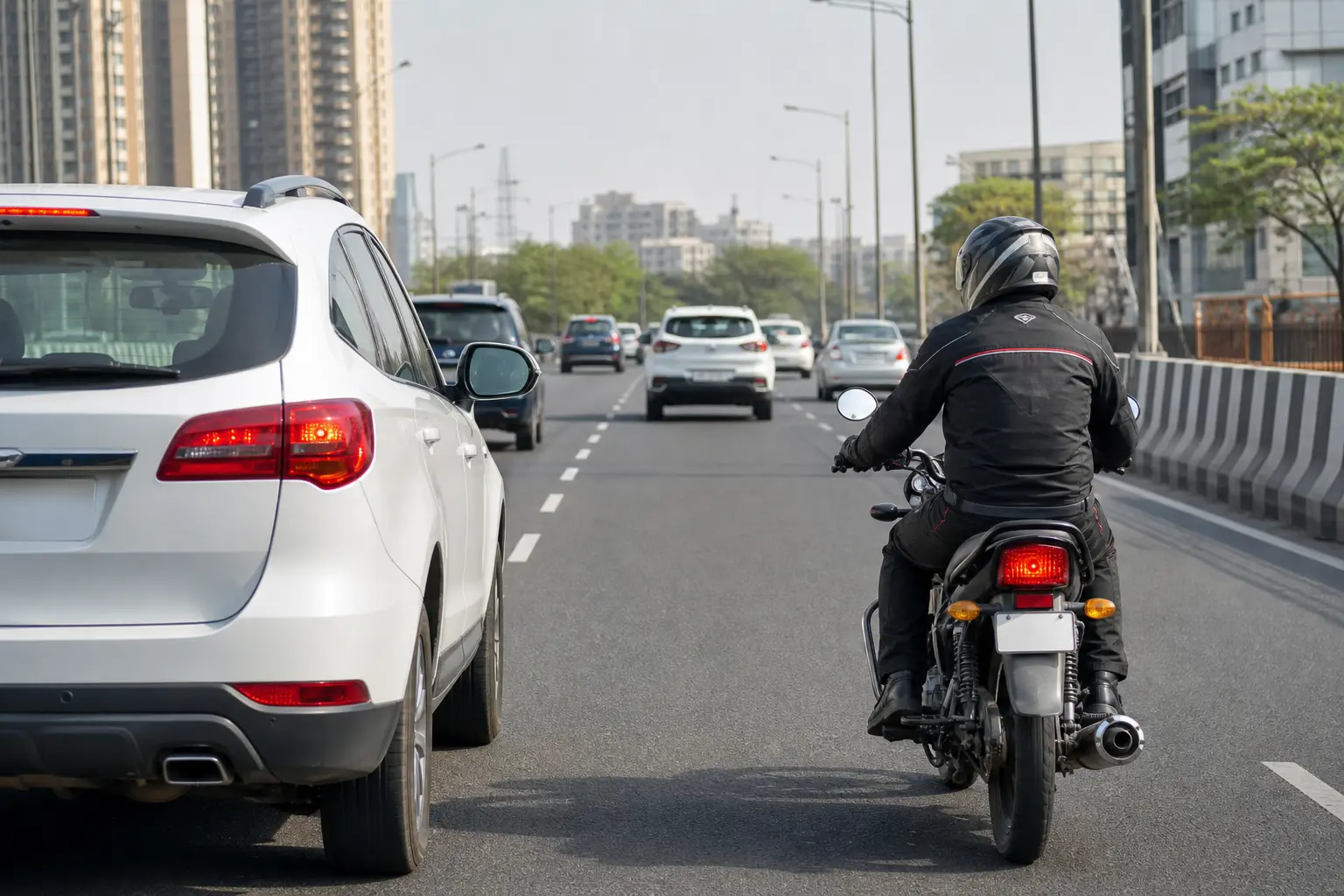
In city traffic, hazards come from every direction. Parked cars, pedestrians, delivery riders, buses, autos, cyclists, and sudden U-turns all affect your position.
When passing parked cars, leave door-opening space where possible. Watch for brake lights, front wheels turning outward, or a person inside the vehicle. If you cannot create much side space, reduce speed. Position alone is not enough if your speed leaves no reaction time.
Near bus stops, avoid squeezing along the kerb side of a bus. Pedestrians may step out from the front or rear, and the bus may move again suddenly. A better approach is to slow, hold a position with a clear view, and pass only when you can see the space you are entering.
At traffic lights, avoid stopping in a place where you are hidden between larger vehicles. Choose a position where the vehicle behind can see you clearly. Keep the bike in gear when appropriate, watch mirrors, and leave enough space ahead to move if traffic behind fails to stop.
On narrow roads, do not ride so far left that cars assume they can share the lane with you. Hold a clear, predictable position while leaving yourself room to move away from oncoming traffic or road damage.
Highway Riding Examples
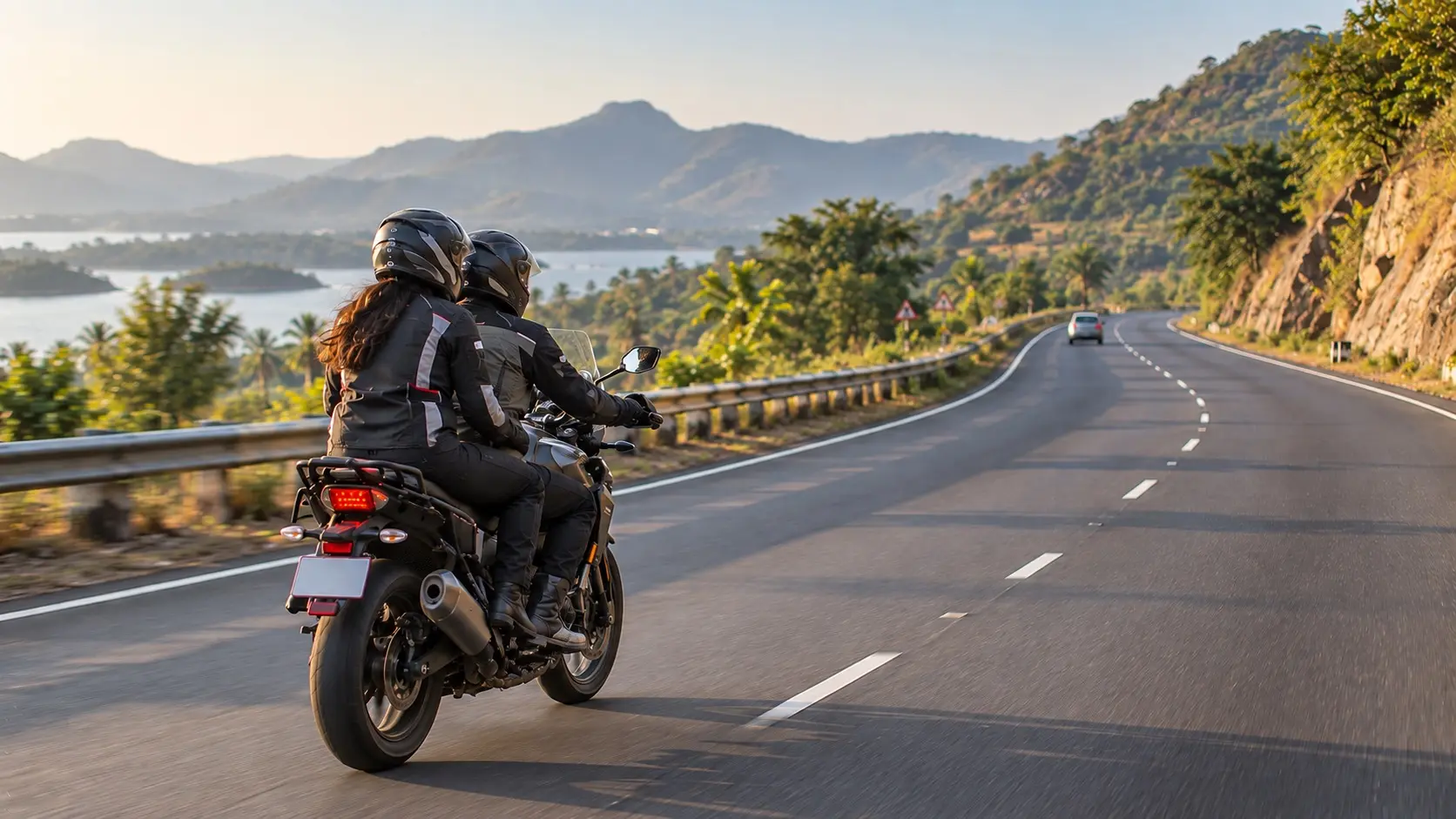
Highway lane positioning is about visibility at higher speed and avoiding long exposure to risk.
When following traffic, maintain enough distance to see ahead. If a car or truck blocks your view completely, you are too close. A small offset can help, but distance matters more than peeking around the vehicle.
When overtaking, do not sit in the blind spot while deciding. Prepare from a visible position, check mirrors, complete the overtake smoothly, and return only when there is enough space. Lingering beside a vehicle increases risk, especially beside trucks and buses.
If you see a vehicle ahead gaining on slower traffic, expect it to change lanes. Adjust your position so you are not beside it when it moves. Drivers often look for the bigger gap, not the smaller motorcycle.
On bends, position for vision without crossing lane markings or drifting wide. Enter at a speed that lets you hold your line. A wide entry may improve view on some roads, but only if it keeps you safely within your lane and away from oncoming traffic.
Final Thoughts
Lane positioning is not a fixed rule. It is a constant part of riding judgment.
The best position is the one that helps you see more, helps others see you, gives you space from hazards, and leaves an escape route if something changes. Sometimes that is the center of the lane. Sometimes it is a slight move left or right. Sometimes the smartest choice is not a different position, but less speed and more distance.
For new and intermediate riders, the goal is simple: stop drifting through traffic and start choosing your position deliberately.
Ride where you are visible. Ride where you can see. Ride where you still have time and space if the road changes.