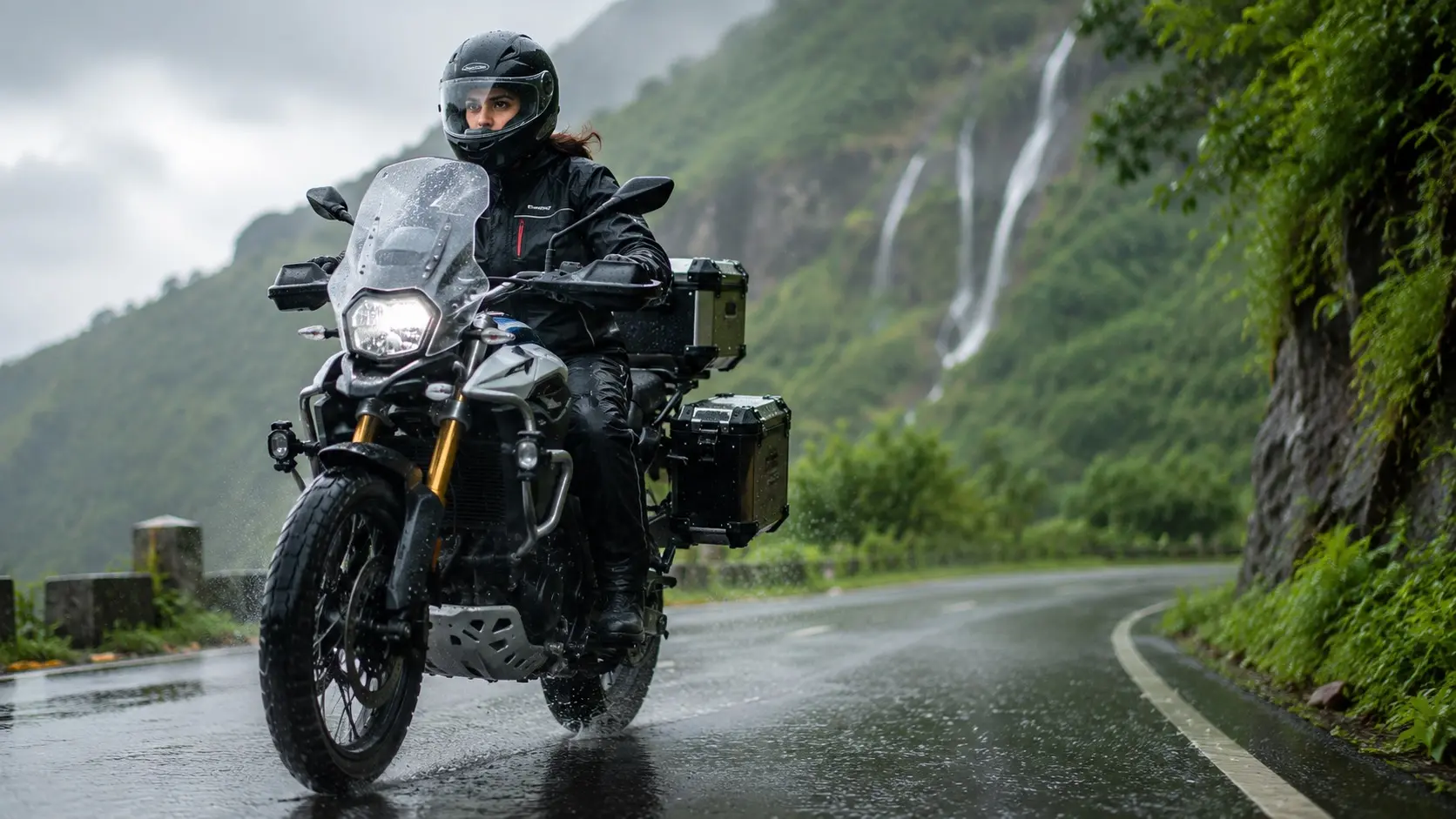
Monsoon Riding Gear That Actually Works
Practical waterproof riding gear choices for safer and more comfortable monsoon riding
Every year, the monsoon arrives and riders face the same question. What gear actually works when the rain starts falling?
The answer is often different from what marketing suggests.
Many products claim to be waterproof. Some work for a short commute. Others perform well on long rides. Some simply become uncomfortable after an hour in heavy rain.
The challenge for riders in India is finding gear that balances waterproofing, comfort, practicality, and affordability.
This guide focuses on real-world monsoon riding and the gear that genuinely helps when conditions turn wet.
The Reality of Riding in the Rain
Monsoon riding is not just about getting wet.
Riders also deal with:
- Reduced visibility
- Waterlogged roads
- Mud and road spray
- Lower grip levels
- Longer braking distances
Good gear cannot eliminate these challenges, but it can make riding safer and far more comfortable.
The goal is to stay reasonably dry while maintaining focus and control on the motorcycle.
Waterproof Versus Water Resistant
One of the biggest sources of confusion is the difference between waterproof and water resistant.
Water Resistant Gear
Water resistant gear:
- Handles light rain
- Resists occasional splashes
- Usually breathes better
However, prolonged exposure to heavy rain will eventually allow water to penetrate.
Waterproof Gear
Waterproof gear:
- Uses dedicated waterproof membranes or rain layers
- Performs better in sustained rainfall
- Provides better protection during long rides
For Indian monsoon conditions, truly waterproof gear makes a significant difference.
The Importance of a Dedicated Rain Layer
Many experienced riders eventually discover a simple truth.
A separate rain layer often works better than relying entirely on a waterproof riding jacket.
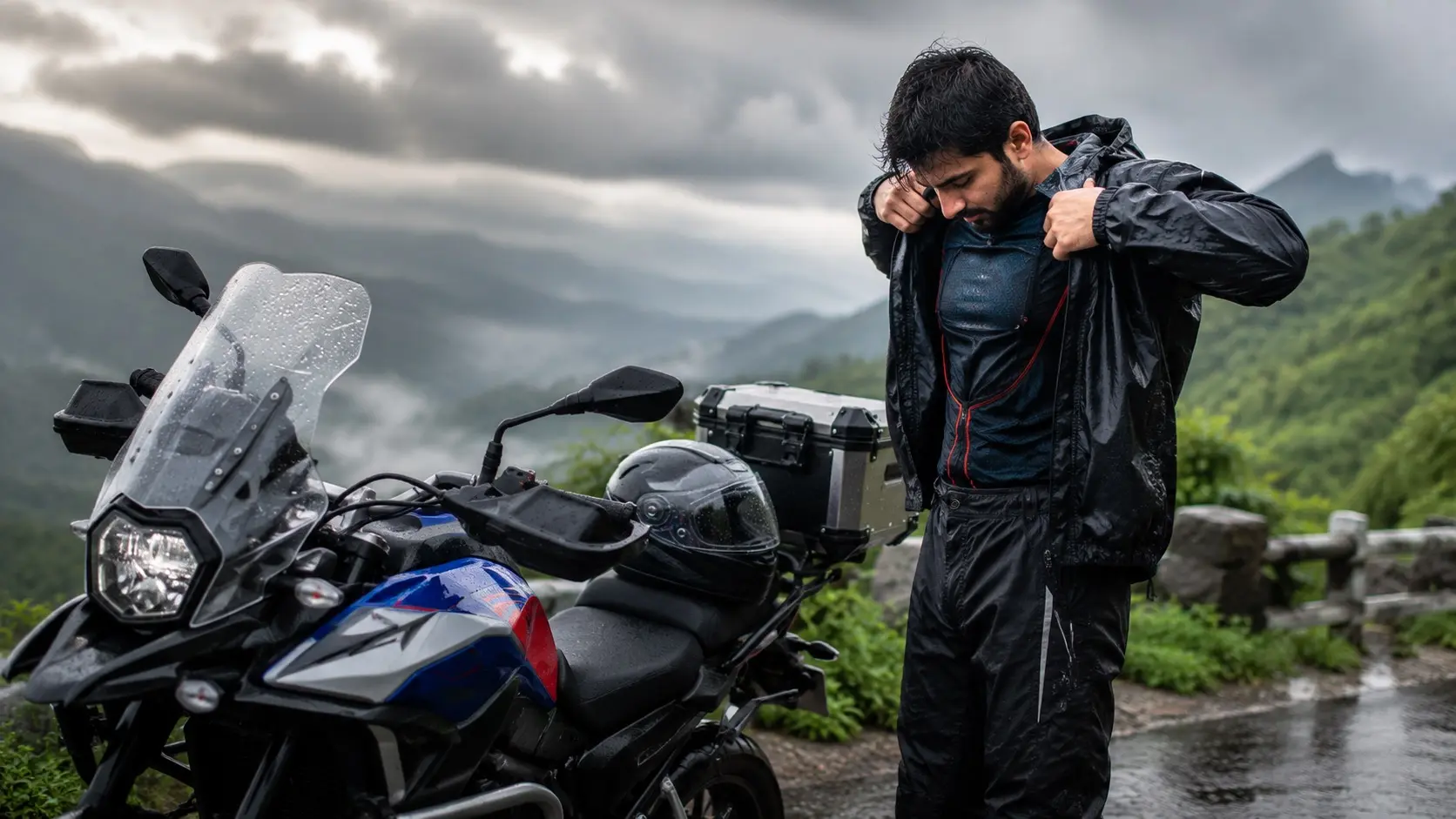
Benefits include:
- Better waterproofing
- Easier drying
- Lower cost
- Greater flexibility
A quality rain jacket and rain pants can transform an ordinary riding setup into a capable monsoon solution.
Choosing the Right Riding Jacket
Your riding jacket remains your primary protective layer.
During monsoon season, look for:
- Good armor coverage
- Durable construction
- Effective ventilation when rain stops
Many riders prefer:
- Mesh jacket plus rain layer
- Textile touring jacket with waterproof liner
Both approaches can work.
The best choice depends on how frequently you ride in the rain and how long your rides typically are.
Gloves That Work in Wet Conditions
Wet hands quickly become uncomfortable.
They also affect:
- Grip
- Control
- Rider confidence
Look for gloves that offer:
- Water resistance
- Fast drying materials
- Good grip when wet
Fully waterproof gloves can be useful for touring, but many commuters prefer lightweight gloves that dry quickly after a ride.
Waterproof Footwear Matters More Than Most Riders Realize
Wet feet can make an entire ride miserable.
Water entering shoes leads to:
- Discomfort
- Cold feet
- Distraction
Riding boots with waterproof construction help significantly.
For riders who do not own waterproof boots, rain covers can provide a practical alternative.
Helmet Considerations for Monsoon Riding
A good helmet becomes even more important during the rainy season.
Key features include:
- Effective visor sealing
- Anti-fog capability
- Good ventilation
- Clear visibility
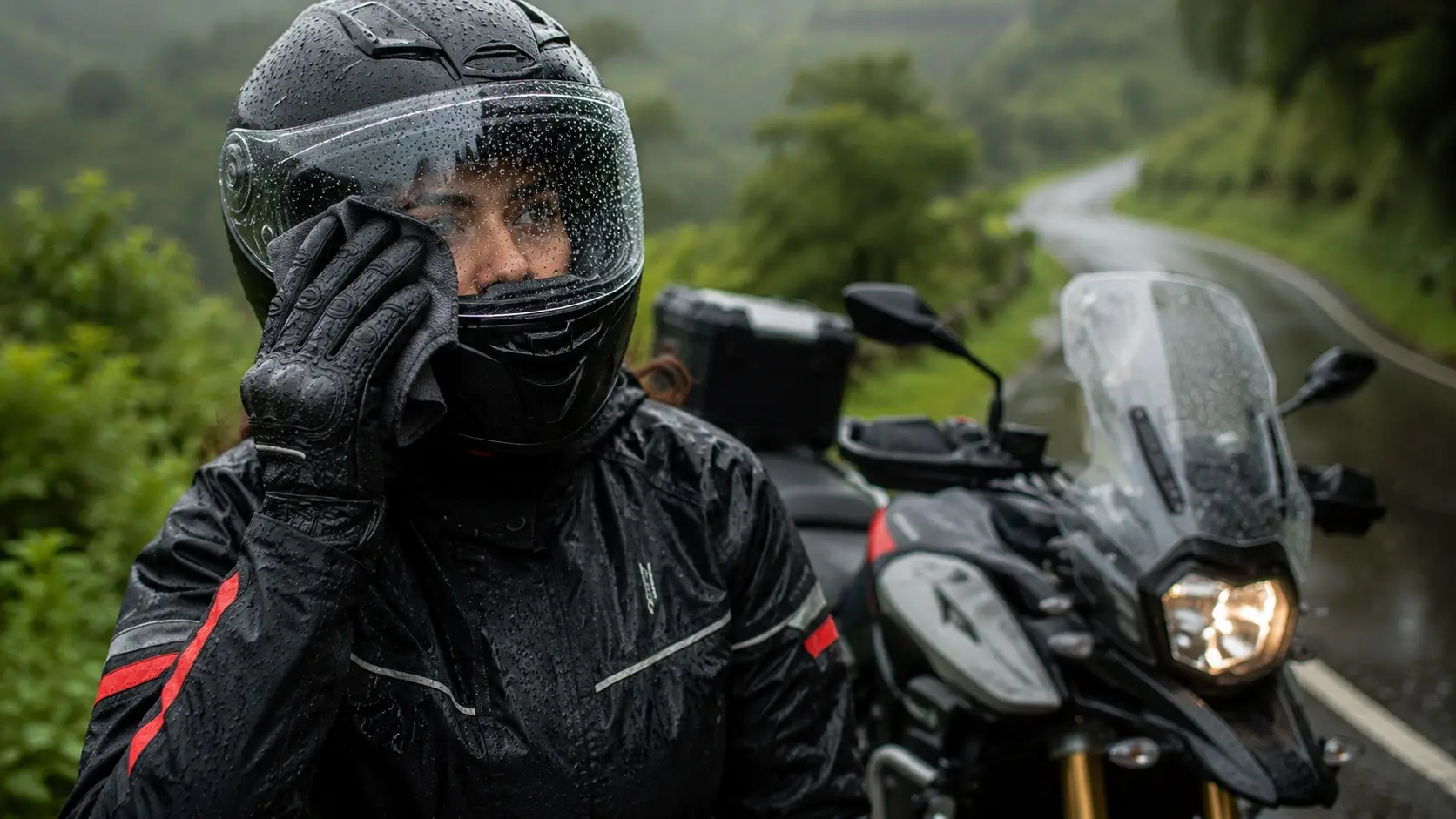
Many riders focus on staying dry while overlooking visibility, which is often the greater safety concern.
High Visibility Can Improve Safety
Rain reduces visibility for everyone on the road.
Bright colors and reflective elements help:
- Other road users see you sooner
- Improve visibility in poor weather
- Increase rider confidence
You do not need fluorescent gear from head to toe.
Even small reflective panels can make a meaningful difference.
Common Monsoon Gear Mistakes
Many riders make the same mistakes every season:
- Assuming water resistant means waterproof
- Riding in soaked sneakers
- Ignoring visor fogging
- Using low-quality rain suits that tear quickly
- Prioritizing appearance over functionality
These issues usually become obvious after the first heavy downpour.
Building a Practical Monsoon Setup
A sensible setup might include:
- Full face helmet with clear visor
- Mesh or textile riding jacket
- Dedicated rain jacket and pants
- Water resistant or waterproof gloves
- Riding boots or waterproof footwear
- Reflective elements for visibility
This combination handles most commuting and touring situations without excessive cost.
Touring During Monsoon Season
Long distance riding introduces additional challenges.
You may encounter:
- Continuous rainfall
- Multiple weather systems
- Limited opportunities to dry gear
In these situations:
- Waterproof luggage becomes important
- Waterproof gloves become more valuable
- Spare base layers improve comfort significantly
Preparation often matters more than expensive gear.
Final Thoughts
The best monsoon riding gear is rarely the most expensive option.
What matters is having a system that works together.
A protective riding jacket, a reliable rain layer, suitable gloves, and proper footwear will handle most Indian monsoon conditions effectively.
The goal is not staying perfectly dry at all costs.
The goal is staying comfortable, visible, and focused enough to ride safely when the weather turns against you.