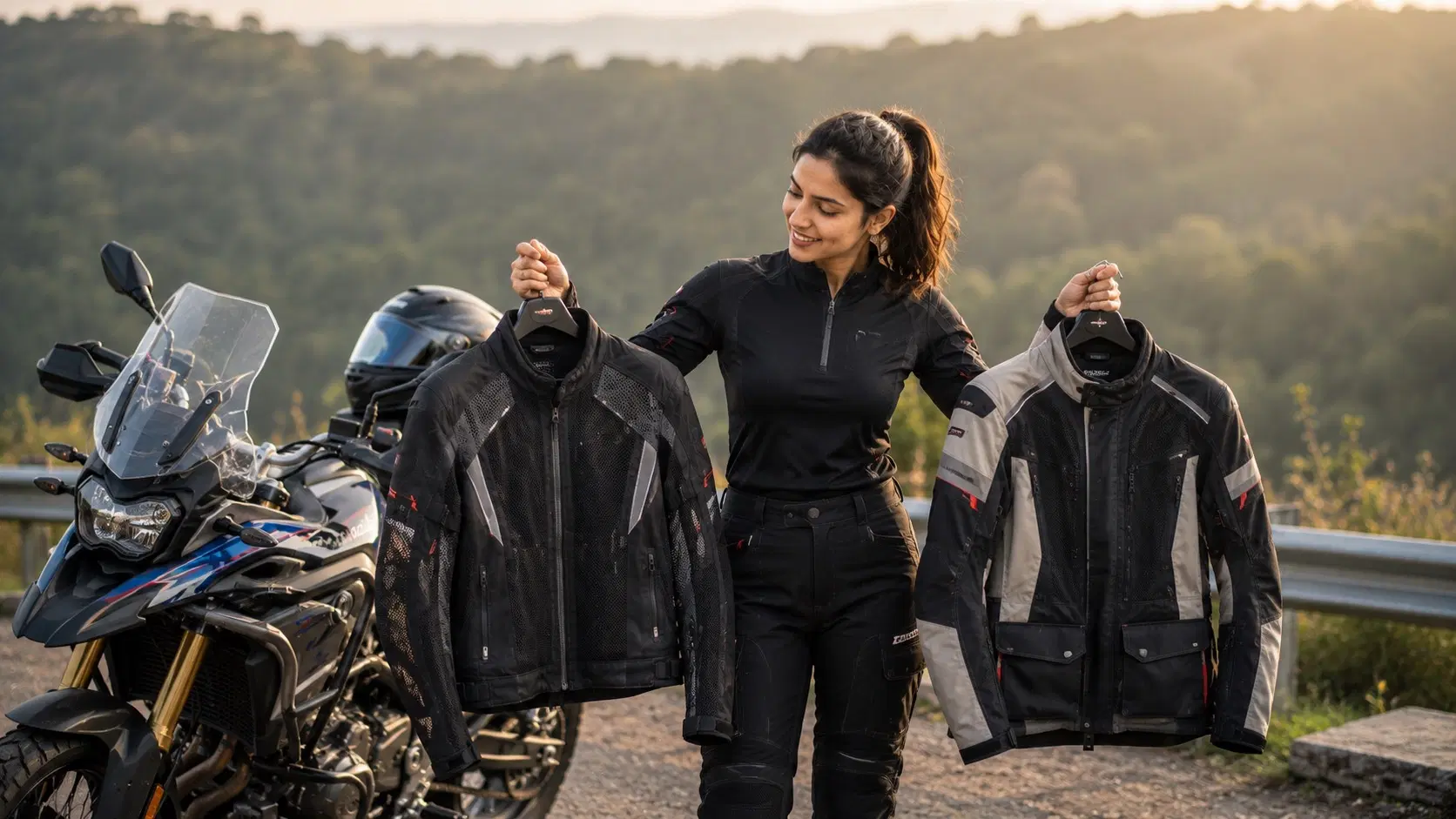
Mesh vs Textile Jackets for Indian Riders
Compare mesh and textile riding jackets to choose the right option for Indian roads
One of the first questions new riders ask after buying a helmet is surprisingly difficult to answer.
Should you buy a mesh riding jacket or a textile one?
Walk into any motorcycle gear store and you will probably hear passionate opinions from both sides. Some riders swear by mesh jackets, especially during the Indian summer. Others insist textile jackets are worth the extra weight because they perform better on long tours and in changing weather.
The truth is neither jacket is universally better.
The right choice depends on where you ride, how often you ride, and the kind of conditions you expect to face.
Why This Decision Matters
Unlike helmets, riding jackets are worn in widely varying conditions.
The same rider may experience:
- Forty degree city traffic
- Cool early morning highways
- Sudden monsoon showers
- Weekend mountain rides
No single jacket excels in every situation.
Understanding the strengths of each material helps you choose one that you will actually enjoy wearing.
Mesh Jackets
Mesh jackets are designed around airflow.
Large ventilation panels allow air to move through the jacket, helping riders stay cooler during warm weather.
Advantages include:
- Excellent ventilation
- Comfortable in heavy traffic
- Better suited to Indian summers
- Usually lighter than textile jackets
Many modern mesh jackets also include CE-certified armour and reinforced impact zones, making them far safer than many riders assume.
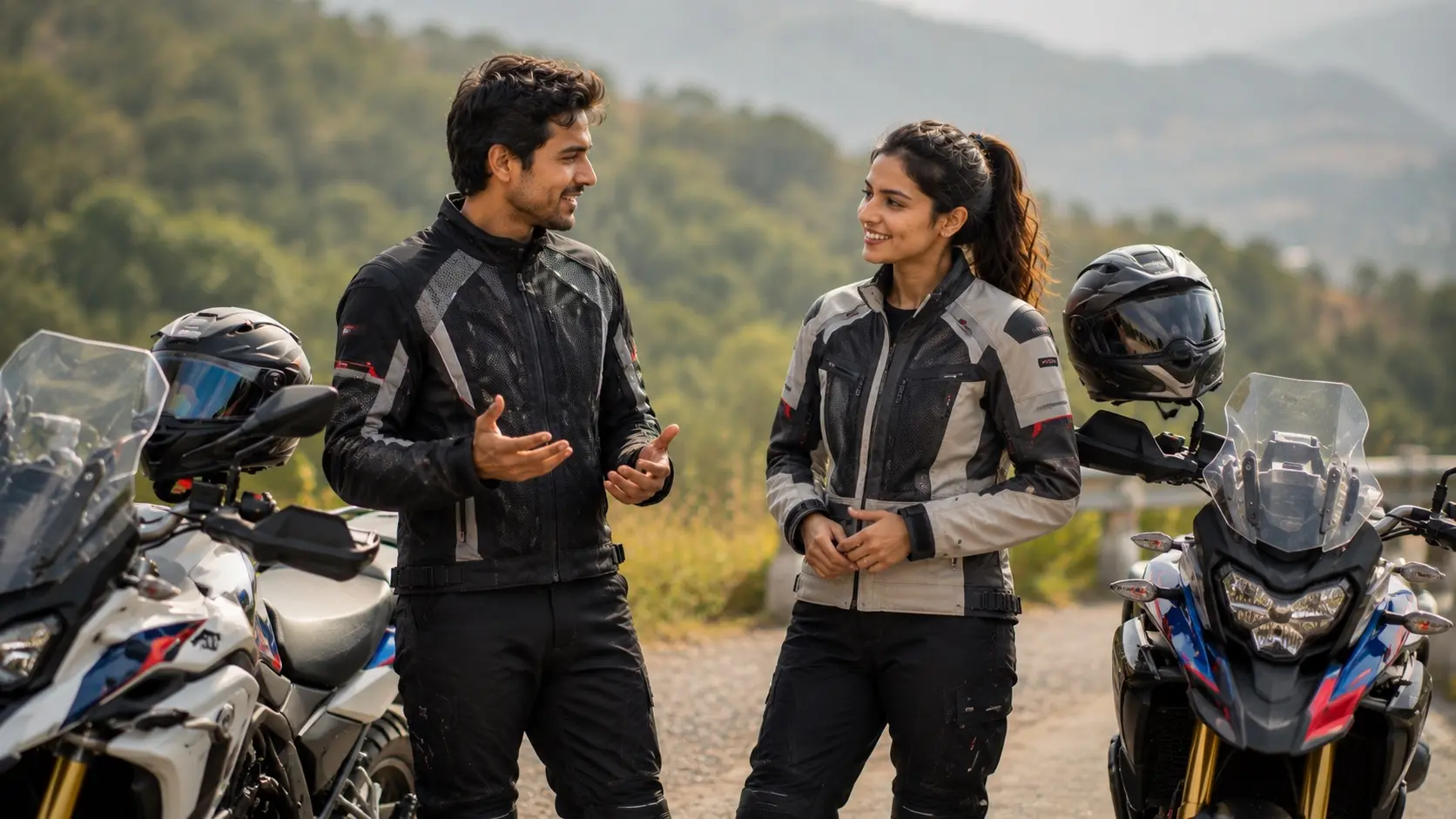
One common misconception is that mesh automatically means poor protection.
That simply is not true.
Protection depends on the quality of construction, abrasion-resistant materials, and certified armour rather than the amount of mesh alone.
Textile Jackets
Textile jackets focus more on versatility.
Compared with mesh jackets, they usually offer:
- Better weather protection
- Improved wind resistance
- Greater warmth in cooler conditions
- Better suitability for long-distance touring
Some include removable thermal liners, waterproof membranes, or both.
That makes them attractive for riders who regularly travel across different climates.
Mesh Plus Rain Layer Versus Waterproof Textile
This is where many experienced Indian riders begin thinking differently.
Instead of buying a heavy waterproof textile jacket, many prefer a simple combination:
- Mesh riding jacket
- Lightweight waterproof rain suit
This approach offers better comfort during most of the year while still providing effective protection during the monsoon.
It also avoids riding in a waterproof jacket on hot afternoons when ventilation matters far more than rain protection.
Which Jacket Suits Your Riding?
Instead of asking which jacket is better, ask where you spend most of your time.
If You Mostly Commute
✅ Mesh jackets are usually the better choice.
City riding means:
- Slow traffic
- High temperatures
- Frequent stops
Good airflow quickly becomes more important than weather protection.
If You Mostly Tour
Textile jackets begin to make more sense.
They handle:
- Long highway hours
- Changing weather
- Cooler mornings
- Mountain roads
The extra comfort during extended rides often outweighs the added weight.
What About the Monsoon?
Many riders assume textile jackets are automatically the best option during the rainy season.
That is not always the case.
A soaked textile jacket can take a long time to dry.
Meanwhile, a mesh jacket combined with a quality external rain layer can often be:
- More comfortable
- Easier to dry
- More practical for everyday riding
This is why many experienced touring riders carry rain gear rather than relying solely on waterproof liners.
Leather Is a Different Conversation
Some readers may wonder why leather jackets are missing from this comparison.
Leather remains an excellent choice for:
- Track riding
- Sport riding
- Maximum abrasion resistance
However, for everyday Indian commuting and touring, the decision is usually between mesh and textile because they better suit our climate and riding conditions.
A Practical Guide
If you are still undecided, consider the following:
☀️ Mostly ride in city traffic?
Choose a mesh jacket.
🛣️ Spend long hours on highways?
A textile jacket will usually feel more comfortable.
🌧️ Ride through the monsoon regularly?
Mesh jacket with a dedicated rain layer is often the more practical solution.
🏔️ Ride in cooler hill stations or mountains?
Textile jackets provide better insulation against wind and lower temperatures.
🚦Need one jacket for everyday commuting?
Mesh remains the most versatile choice for most Indian riders.
Price Is Not the Biggest Factor
Expensive jackets do not automatically suit your riding better.
A premium textile jacket may offer features you never use.
Likewise, a well-designed mesh jacket can provide years of comfortable riding if it matches your needs.
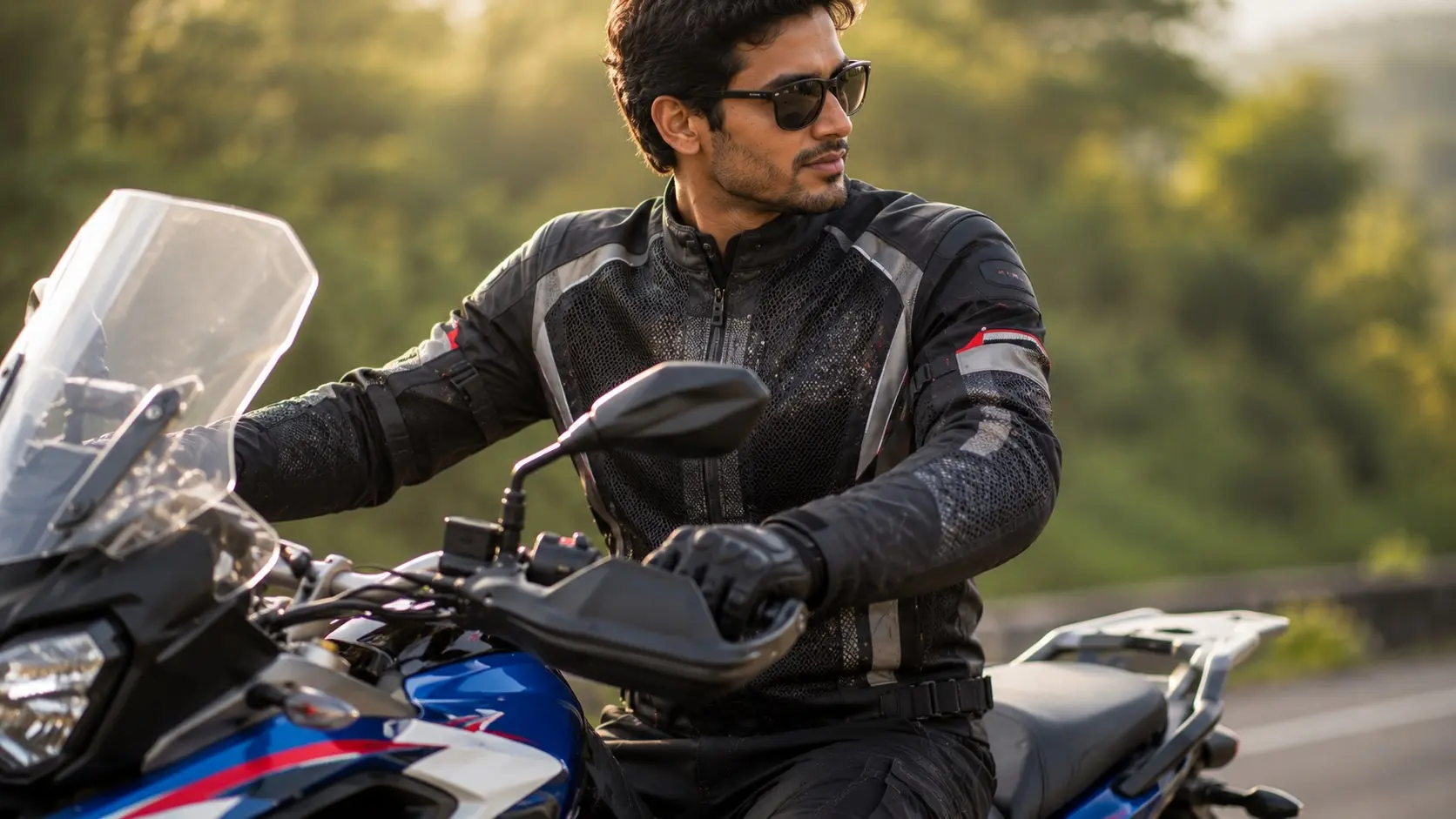
Buying for your riding style is usually smarter than buying for specifications.
Final Thoughts
The debate between mesh and textile jackets often sounds as though one option must be better than the other.
Real-world riding tells a different story.
For most Indian riders, a quality mesh jacket paired with a dedicated rain layer offers the best balance of comfort, protection, and practicality.
Textile jackets become the stronger choice for riders who regularly tour long distances or ride through colder climates.
The best riding jacket is not the one with the longest feature list.
It is the one you will happily wear every time you throw a leg over your motorcycle.