How to Choose the Right Riding Boots
Learn how to choose motorcycle riding boots by understanding protection comfort riding style and long term ownership before making a purchase.
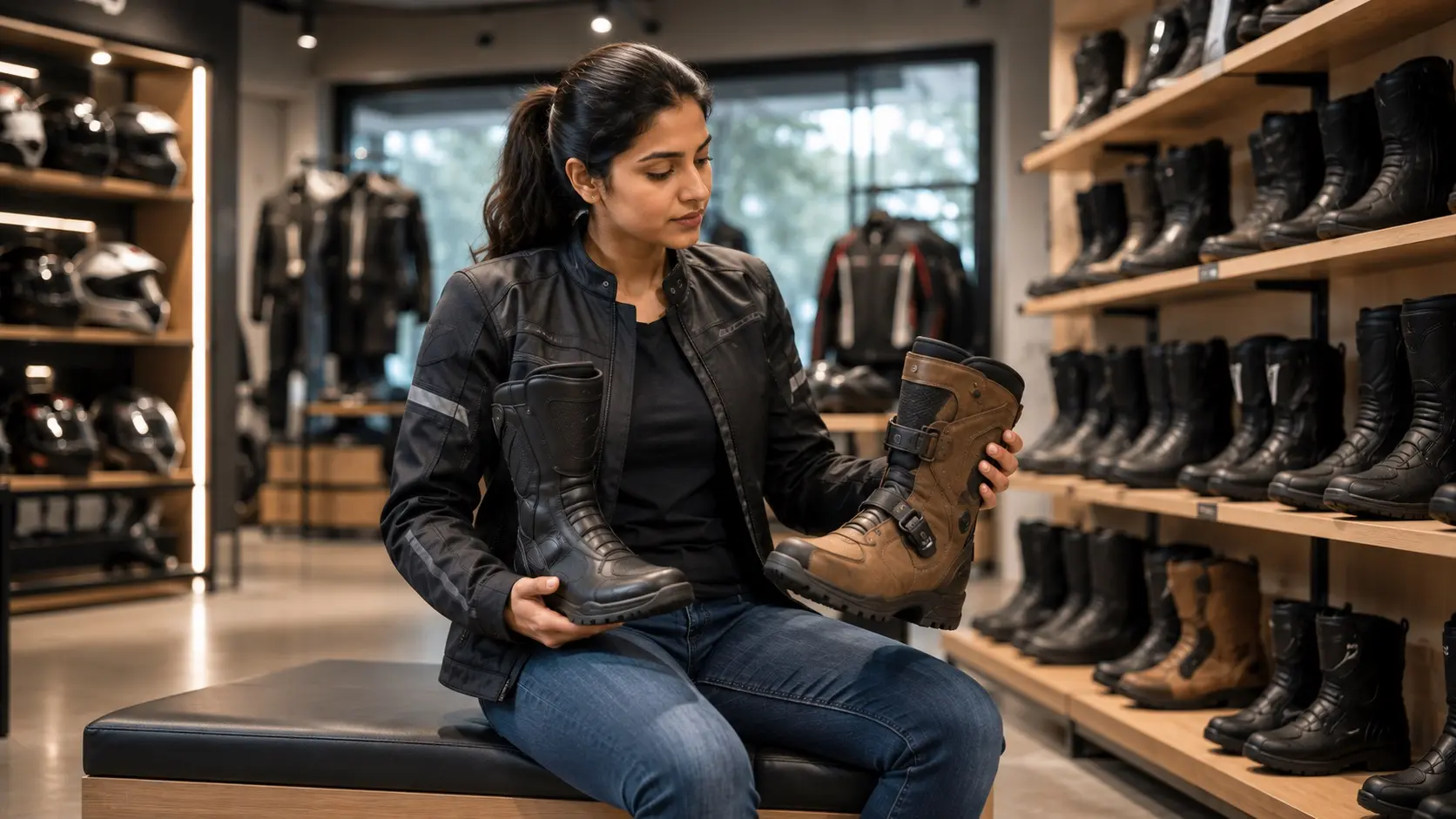
Buying your first pair of motorcycle riding boots can feel surprisingly complicated.
Adventure boots, touring boots, urban boots, racing boots, waterproof boots, short boots, tall boots, premium brands and budget options all compete for your attention. It is easy to become distracted by styling, specifications or online reviews while overlooking a far more important question.
What will these boots actually need to do for the way you ride?
That question sits at the heart of a good buying decision.
A quality pair of riding boots is not simply protective equipment. It becomes part of every ride, every fuel stop, every walk into a cafe and every tour you take over the coming years. Choosing wisely means looking beyond today’s excitement and understanding what ownership will feel like long after the purchase has been made.
Start with your riding, not the boots
One of the most common mistakes riders make is deciding on a type of boot before thinking about how they actually ride.
Someone who commutes 20 kilometres every day through city traffic has very different needs from someone spending ten days crossing the Western Ghats or exploring rough mountain roads.
Ask yourself a few simple questions before looking at any product.
- Where do I ride most often?
- How many hours do I spend in the saddle?
- Will I be walking a lot after getting off the motorcycle?
- Do I regularly ride in heavy rain?
- How important is ventilation during summer?
The answers to these questions should shape your shortlist far more than a brand name or online recommendation.
Protection should come before appearance
Many new riders naturally focus on how a boot looks.
Experienced riders usually focus somewhere else.
Motorcycle boots exist to protect areas that ordinary footwear cannot.
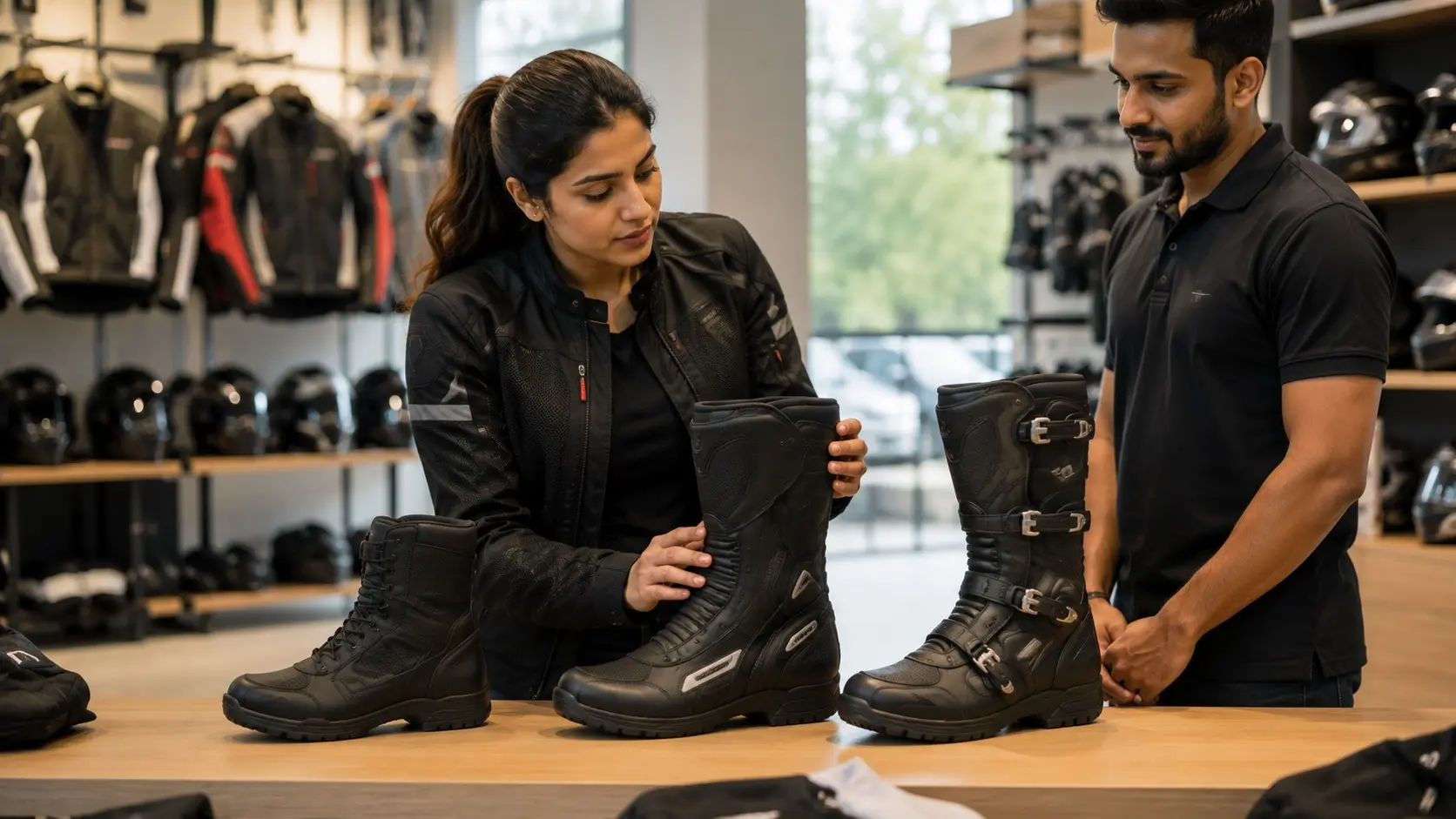
Good riding boots should provide meaningful protection around the ankle, heel, toe box and shin while offering a sole that resists twisting during an impact.
Protection often means accepting a little extra stiffness compared with casual footwear. That stiffness may initially feel unfamiliar, but it plays an important role in reducing injuries during a crash.
A boot that feels comfortable in a showroom but offers little structural support may prove to be the poorer long-term decision.
The objective is not to buy the stiffest boot available.
It is to buy the level of protection that matches the risks associated with your riding.
Think about life after getting off the motorcycle
One aspect that buyers frequently underestimate is walking comfort.
Not every motorcycle journey ends when the engine stops.
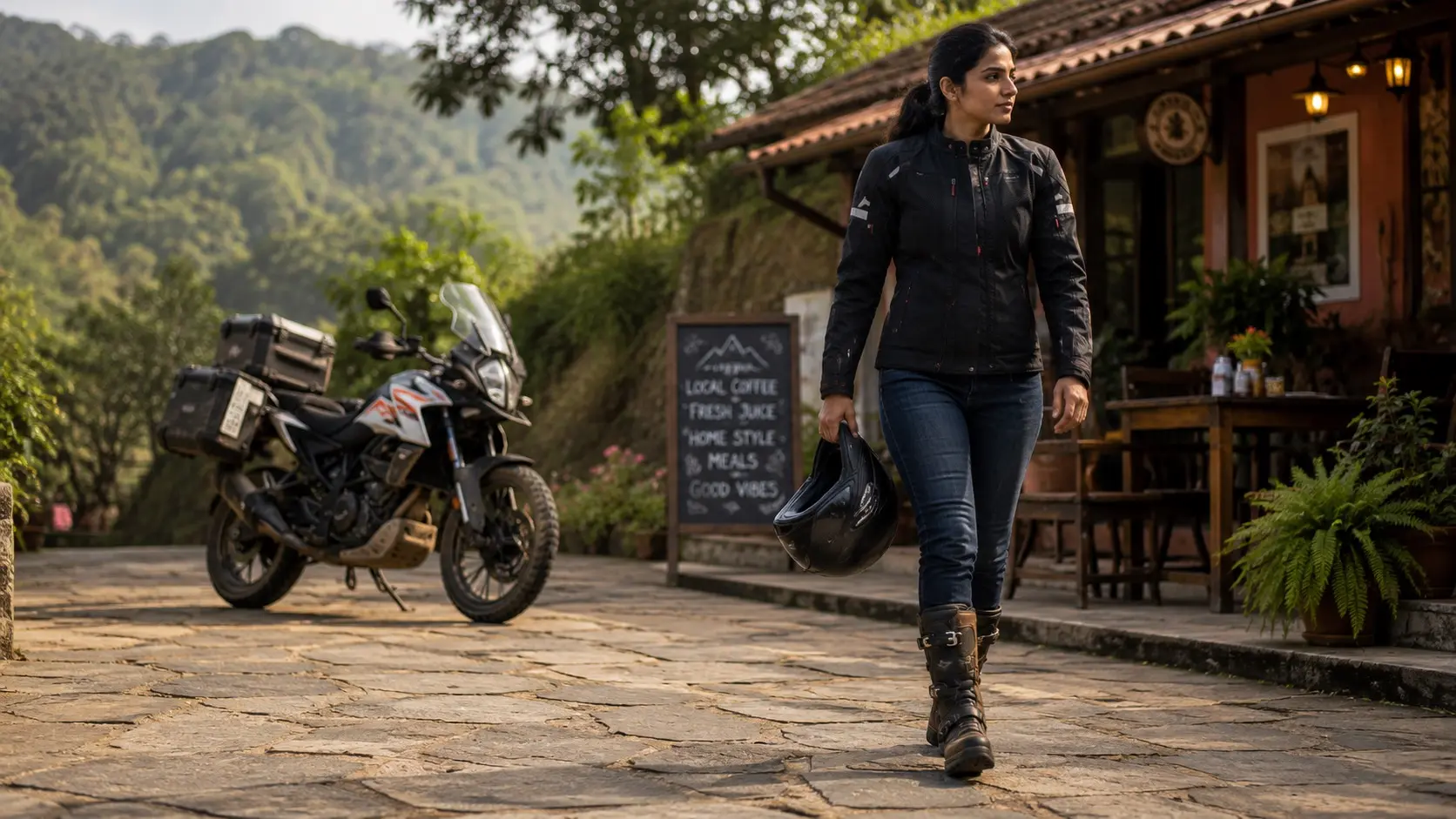
Touring riders often spend hours exploring towns, visiting attractions or walking between hotels and restaurants. Adventure riders may hike short distances to viewpoints. Daily commuters may spend an entire workday wearing their riding boots.
This is where ownership experience becomes more important than product specifications.
A heavily reinforced adventure boot may offer excellent protection on rough terrain but feel cumbersome during long walks.
A lightweight urban boot may be extremely comfortable off the motorcycle but provide less support during demanding touring.
Neither choice is automatically better.
The right choice depends on how much of your day is spent riding compared with walking.
Waterproof or ventilated
For Indian riders, this decision deserves careful thought.
Waterproof boots can make monsoon riding significantly more comfortable while reducing the discomfort of wet socks during long journeys.
However, waterproof membranes also tend to retain more heat during hot summer riding.
Ventilated boots improve airflow and comfort in warm conditions but offer less protection against prolonged rain.
There is no universal answer.
If most of your riding takes place during hot weather with only occasional rain, ventilation may become the higher priority.
If you regularly tour during the monsoon or ride in unpredictable weather, waterproofing may prove more valuable over the life of the boot than slightly improved airflow.
The important point is understanding the compromise before making the purchase.
Do not buy more boot than you need
It is tempting to assume that the most expensive or most protective boot is automatically the best choice.
In reality, excessive protection can sometimes reduce everyday usability.
A rider who mainly commutes in urban traffic may quickly become frustrated by extremely rigid off-road boots that make walking awkward and gear changes less natural.
Similarly, someone planning extended adventure touring may outgrow lightweight riding shoes within a few months.
Buying for your actual riding rather than your aspirational riding usually leads to greater satisfaction over time.
Your equipment should support the rides you are taking today while remaining suitable for the rides you realistically expect to take in the near future.
Fit matters more than features
Specifications often dominate product pages.
Yet the most important characteristic of any riding boot is how well it fits your feet.
Pressure points that seem minor in a showroom can become painful after several hours on the road.
Your heel should remain secure without excessive movement.
Your toes should have enough room to move naturally without sliding forward during braking.
The boot should feel supportive around the ankle without creating uncomfortable pressure.
Whenever possible, try boots on while wearing the riding socks you normally use.
Walk around.
Sit on your motorcycle if the retailer allows it.
Operate the gear lever and rear brake.
These simple checks reveal far more than a specification sheet ever can.
Consider ownership, not just purchase price
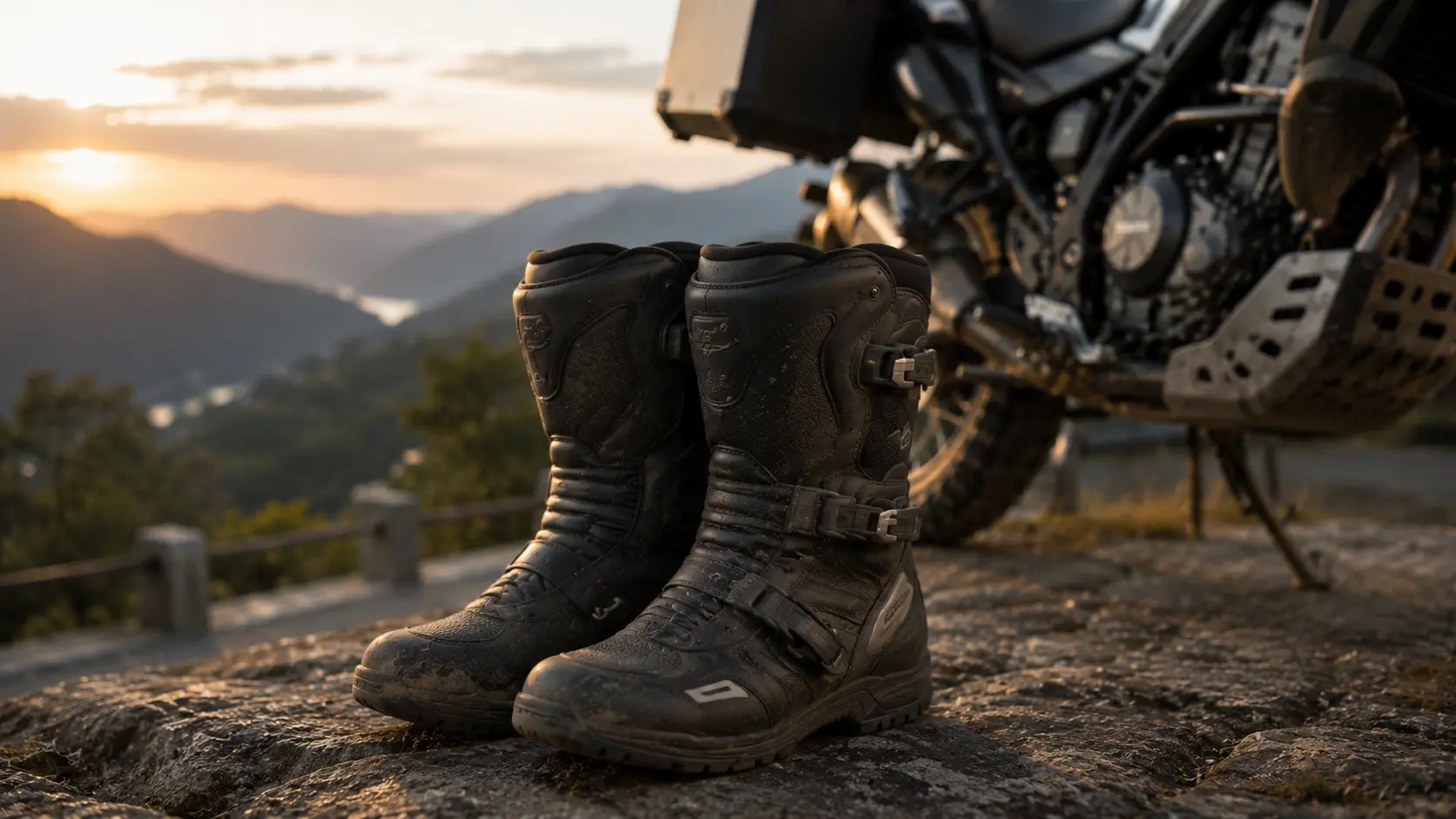
A quality pair of riding boots is often one of the longest-lasting pieces of riding equipment a motorcyclist owns.
Better construction, replaceable components and durable materials frequently provide value over many years of regular use.
A cheaper pair that needs replacing after two seasons may ultimately cost more than investing in a better-built boot from the beginning.
Value should therefore be measured across years of ownership rather than only at the checkout counter.
Final thoughts
Choosing motorcycle riding boots is not about finding the best product.
It is about finding the boot that best supports the way you ride.
The strongest buying decisions begin by understanding your own priorities before comparing brands, prices or features.
Protection, comfort, weather suitability and long-term ownership all deserve careful consideration.
When you approach the decision this way, the products become easier to evaluate because you already understand what matters most to you.
The strongest buying decisions begin by understanding your own priorities before comparing brands, prices or features. Once you know what matters most to your riding, choosing between different boots becomes far less confusing—and far more likely to leave you satisfied long after you’ve left the store.