Choosing the Right Motorcycle Tyres for Your Riding
A practical guide to deciding whether to replace original motorcycle tyres or choose compatible alternatives for your riding.
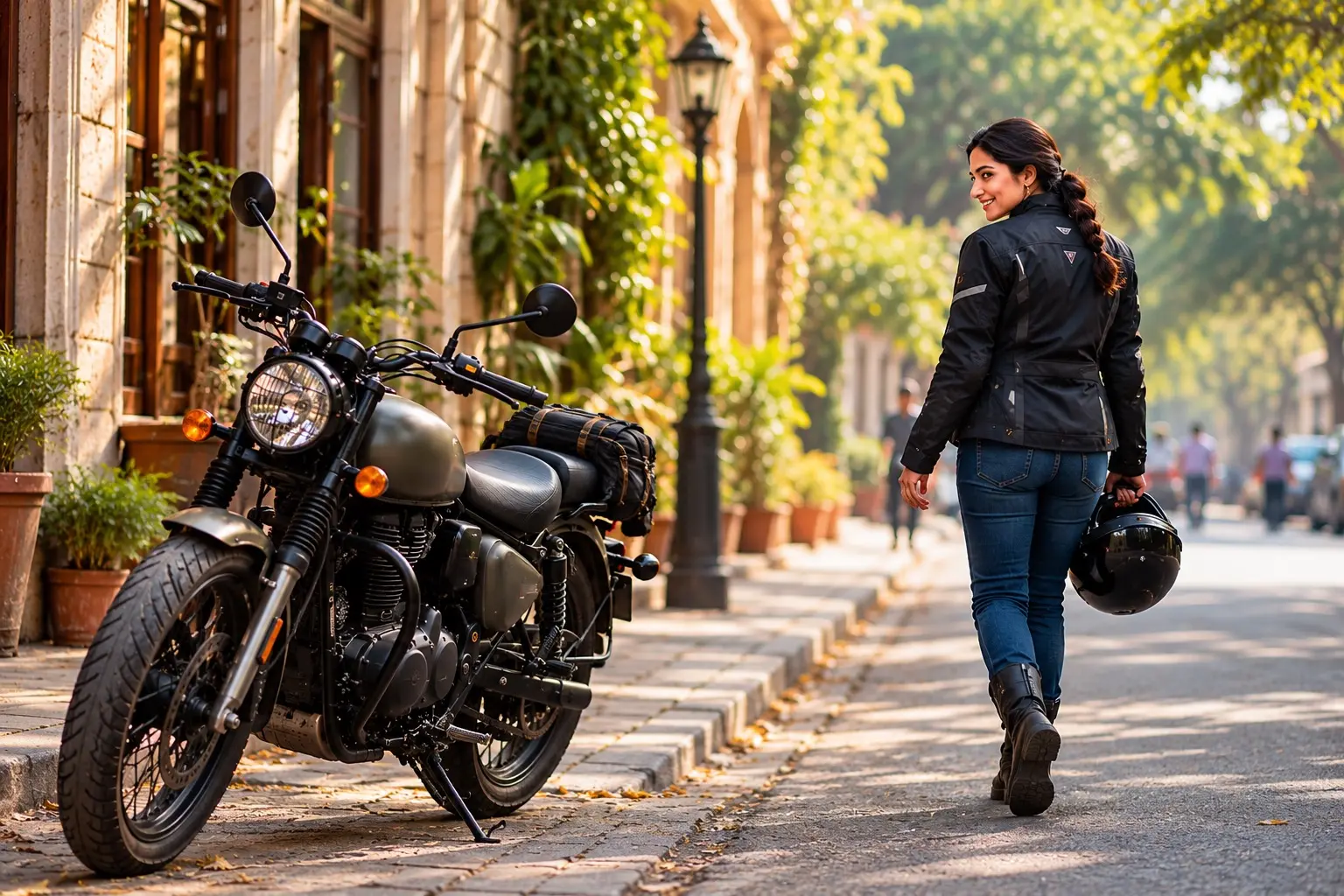
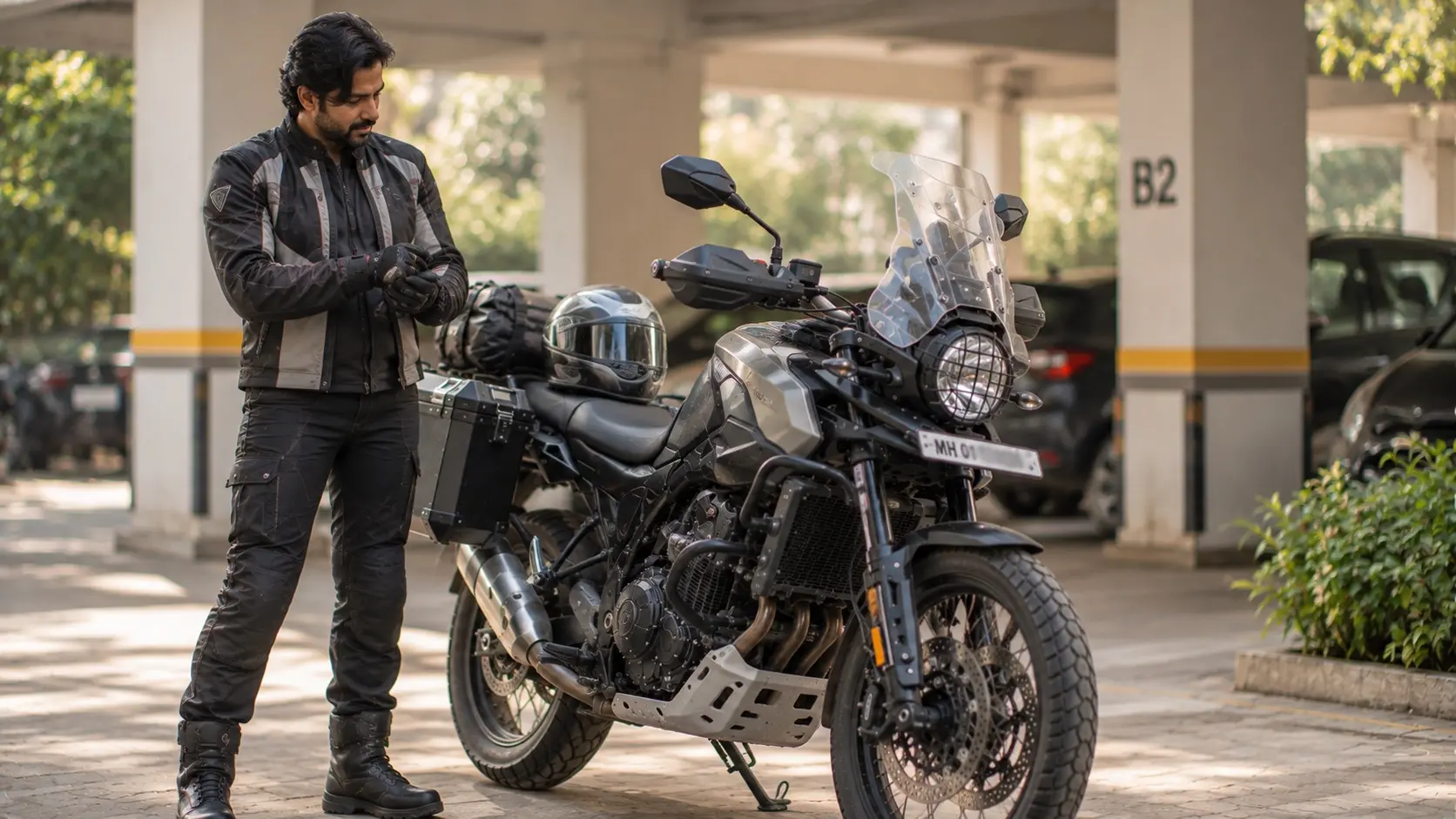
When a motorcycle needs its first replacement tyres, many riders simply ask for the same ones that came with the bike. It is a sensible approach. The original tyres are familiar, the motorcycle has behaved predictably on them, and there is no obvious reason to introduce uncertainty.
But replacement time also presents an opportunity to ask whether the original choice still suits the way the motorcycle is being used. A rider who now spends most weekends on highways may have different priorities from someone regularly exploring gravel roads. Equally, a rider who has been happy with the original tyres may have no reason to change.
The useful question is not whether another brand is better. It is whether another compatible tyre offers a meaningful advantage for your riding.
Should you stay with the original tyres?
For a newer rider, replacing the original tyres with the same model is a reasonable default. You already know how the motorcycle feels on them, and there is no need to experiment simply because another rider recommends a different brand.
That does not mean the original tyre is necessarily the only suitable choice for the motorcycle’s entire life. Manufacturers select original equipment to satisfy a range of requirements, while replacement tyre manufacturers may offer alternatives intended for different riding priorities.
If the original tyres have served you well, begin by asking what you would actually like to improve. Perhaps nothing. Perhaps you would prefer a tyre better suited to extended road touring, or one designed for the loose surfaces you now encounter regularly.
If you cannot identify a meaningful reason to change, buying the original specification again is a perfectly valid decision.
Match the tyre to the roads you actually ride
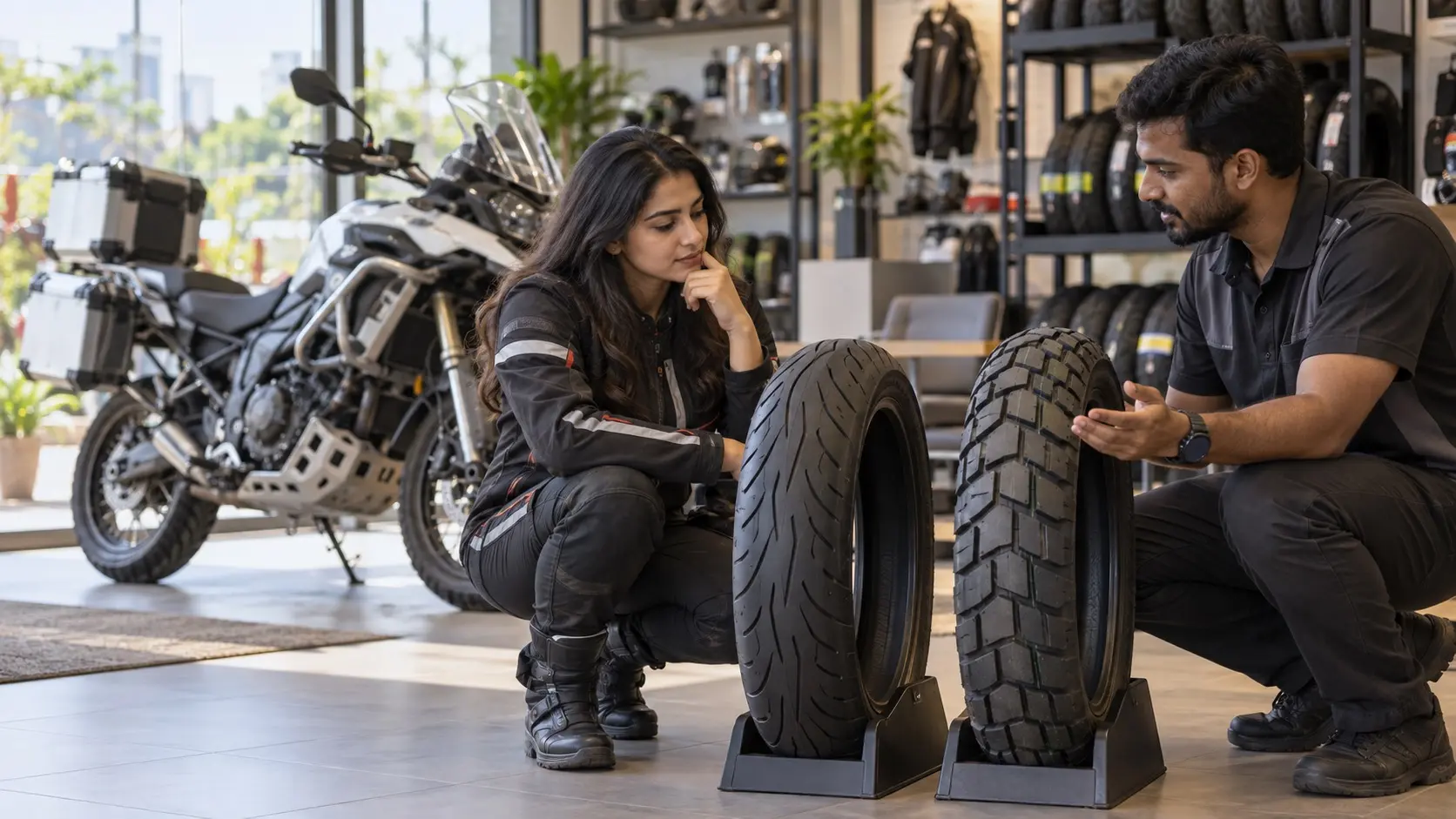
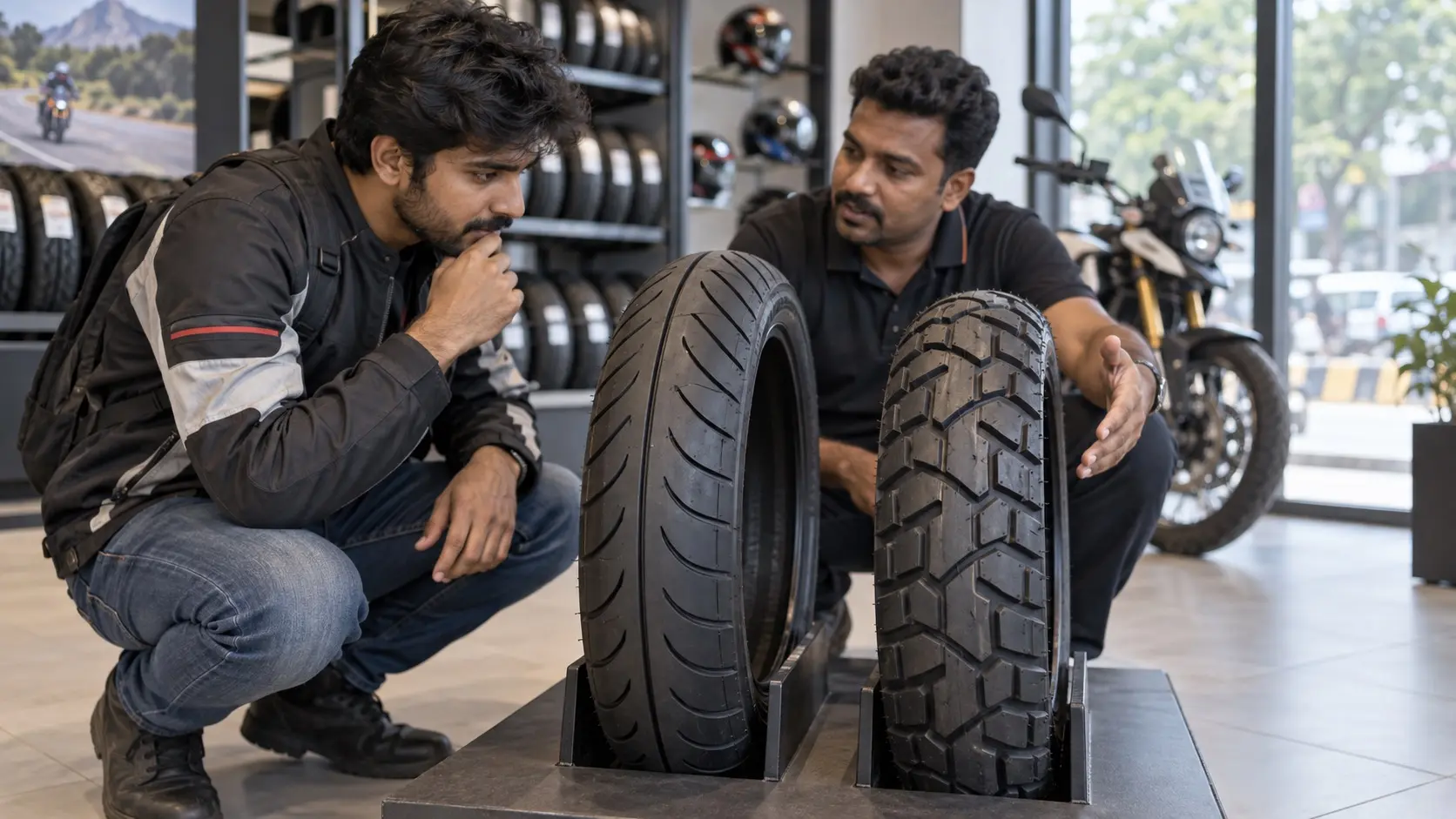
The appearance of a tyre can be persuasive. An aggressive tread may make an adventure motorcycle look more capable, while a smooth road-oriented design may appear less adventurous. Neither impression tells the whole story.
Road-focused tyres are designed primarily for paved surfaces. Depending on the model, they may prioritise road handling, wet-weather performance, comfort, or durability. They are a natural starting point for riders whose motorcycles spend almost all their time on city roads and highways.
Mixed-surface tyres are intended to accommodate some combination of paved and unpaved riding. Their usefulness depends on the particular design and the surfaces involved. A tyre suited to occasional gravel roads is not necessarily intended for deep mud or demanding trails.
More off-road-oriented tyres may offer advantages on loose terrain, but those advantages can involve compromises in road behaviour, noise, wear, or comfort. The extent of those compromises varies considerably between models.
The important distinction is between the riding you imagine doing and the riding you actually do. An occasional rough road does not automatically justify a more aggressive tyre. Equally, a rider who regularly travels on loose surfaces should not dismiss that requirement simply because most kilometres are covered on tarmac.
Compatibility comes before preference
Before comparing brands, establish which tyres are suitable for your motorcycle.
The owner’s manual and manufacturer information are the starting points. Check the approved front and rear tyre sizes, construction, load and speed requirements, and any specified tyre combinations. The tyre manufacturer’s fitment information can then help identify suitable alternatives.
For example, a Royal Enfield Himalayan owner should check the requirements for the exact model and year rather than assume every Himalayan uses the same tyre specification.
Do not assume that a wider tyre, a different profile, or a more aggressive tread is automatically an upgrade. A tyre must also be suitable for the wheel and provide the necessary clearance. Front and rear tyres should be selected as a compatible combination, not as two unrelated purchases.
The distinction between tube-type and tubeless fitment also remains important, but it is a separate decision from choosing a tyre’s intended riding use. A tyre’s construction and its compatibility with the wheel must be confirmed rather than inferred from its appearance.
If you are considering a specification different from the original, have a qualified tyre specialist verify that it is approved or otherwise suitable for the motorcycle. If that cannot be established, stay with the manufacturer’s specified fitment.
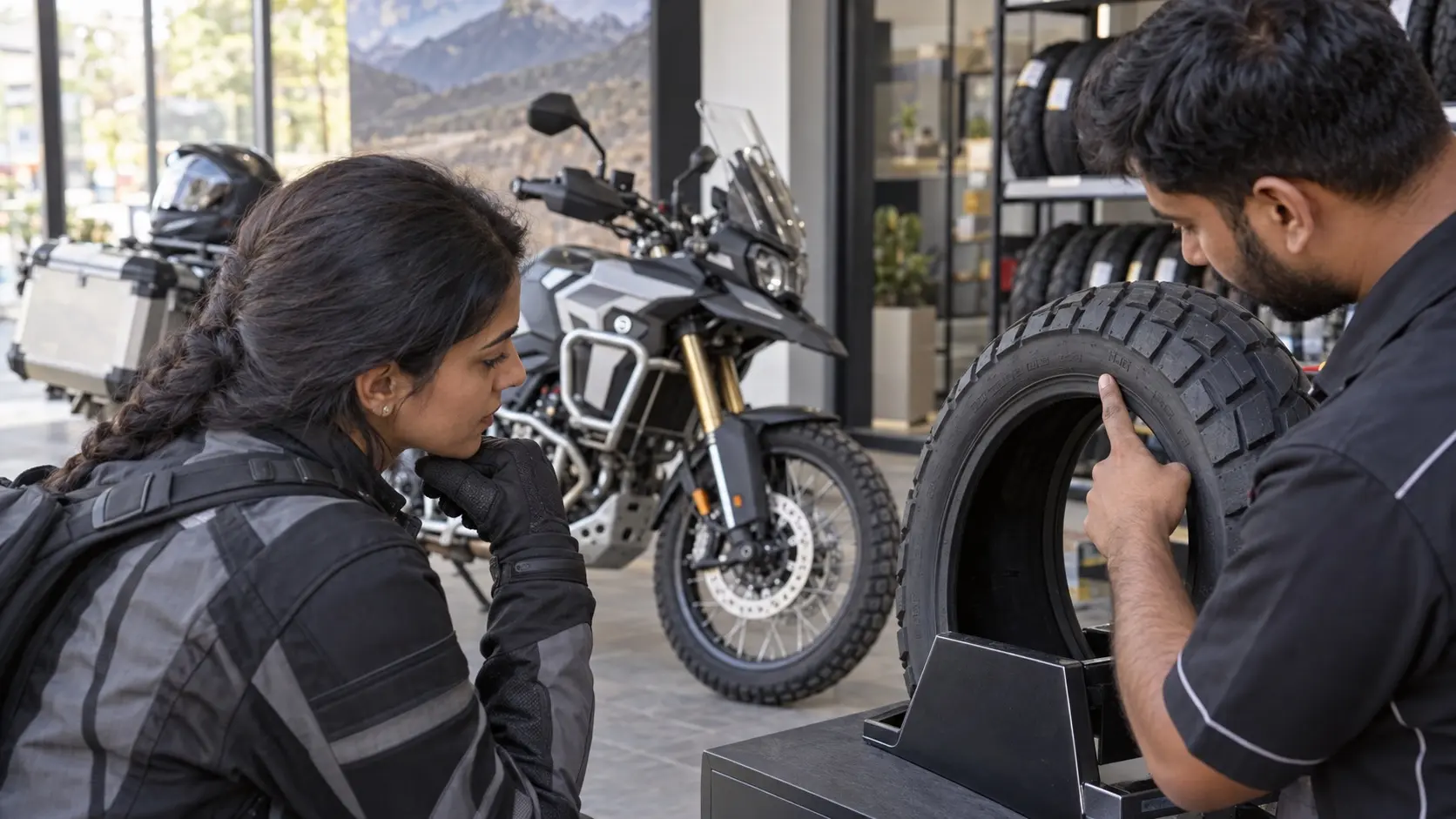
Compare the qualities that matter to you
Once compatibility is established, the comparison becomes more useful.
For a commuter, predictable road behaviour, wet-weather performance, durability, and availability may matter more than off-road capability. A weekend rider may place greater emphasis on how the motorcycle feels on winding roads. A long-distance tourer may care about sustained highway use, luggage loads, and the ability to obtain a replacement during a journey.
Rather than asking which tyre has the most grip or the longest life, ask what evidence supports those claims and under which conditions. Tyre performance depends on more than tread appearance. Construction, compound, intended use, and the motorcycle itself all influence the result.
Manufacturer technical information can establish intended use and compatibility. Independent comparative tests and credible long-term owner reports can add useful context about performance and wear. A recommendation from another rider is most valuable when their motorcycle, riding conditions, and priorities resemble yours.
Avoid treating a single mileage report as a promise. Tyre life can vary with riding style, load, road conditions, and maintenance.
Consider the complete replacement
The purchase price is only one part of the decision. Availability, fitting, and the expected life of the tyre also affect ownership.
A tyre that is easy to obtain locally may be a practical advantage for a rider who depends on the motorcycle every day. For touring, it is worth considering whether the chosen size and model can be sourced along the routes you commonly travel.
When changing tyre models, ask the specialist about the appropriate front and rear combination. Replacing only one tyre with a substantially different design may not be the best approach, even when the size appears correct.
It is also worth checking the manufacturing date and condition of the tyres being supplied. A tyre should be suitable for sale and properly stored, rather than chosen solely because it is inexpensive. Professional fitting and balancing are part of a sound replacement decision.
Final Thoughts
The original tyre is not a mistake that needs correcting. It is a useful reference point.
If it has suited your riding, replacing it with the same model may be the simplest and most sensible choice. If your riding has changed, or a compatible alternative offers a benefit you genuinely value, there is good reason to explore beyond the original brand.
Start with the motorcycle’s requirements, then consider the roads you ride most often, the compromises you are willing to accept, and the evidence behind the alternatives. That approach is more useful than choosing by tread appearance, reputation, or price alone.
Sometimes the research will lead you back to the original tyre. Sometimes it will lead you elsewhere. Either way, you will understand the decision you are making.
Technical references
The compatibility guidance in this article is supported by Bridgestone’s motorcycle tyre safety and maintenance manual, Michelin’s explanation of motorcycle load and speed ratings, and Metzeler’s motorcycle tyre fitment guide. Always confirm the requirements for your exact motorcycle before purchasing.