Why Experienced Riders Stand on the Footpegs and When You Should Too
Learn why standing on the footpegs improves motorcycle control on rough roads and slippery surfaces.
Why Experienced Riders Stand on the Footpegs and When You Should Too
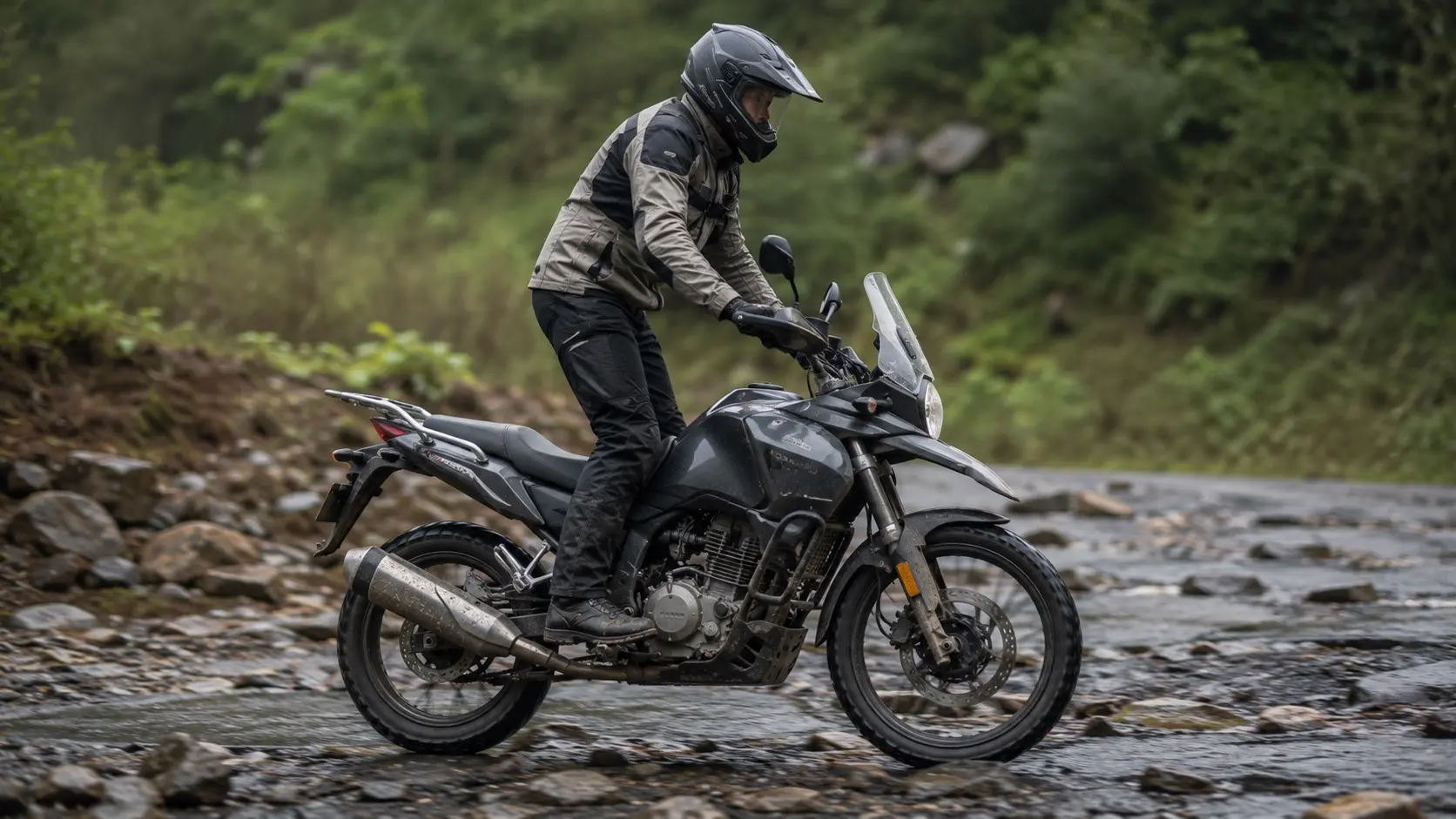
Watch an experienced rider cross a rough stretch of road and you may notice something curious. Just before the motorcycle reaches the obstacle, the rider rises gently onto the footpegs. A few seconds later, they sit back down as though nothing unusual happened.
For many newer riders, this can look like an advanced off-road technique that belongs on rally stages or mountain trails. In reality, standing on the footpegs is one of the simplest ways to improve control over a motorcycle whenever the road becomes unpredictable.
The important lesson, however, is not learning how to stand. It is understanding why experienced riders do it.
Once you understand that principle, you’ll start seeing opportunities to use it on ordinary roads, not just off-road adventures.
It Is Not About Standing
The biggest misconception is that standing on the footpegs is a riding style.
It is not.
It is simply another riding position that allows the motorcycle to move more freely beneath you.
When you’re seated, every bump travels through the suspension, into the seat, and eventually into your body. Your weight is connected directly to the motorcycle, so every movement of the bike also moves you.
Standing changes that relationship.
Instead of the seat carrying your weight, your legs do.
Your knees and ankles begin acting like an additional suspension system, absorbing movements that would otherwise unsettle your body.
The motorcycle is still moving over the same terrain, but you are no longer forcing yourself to move with every bump.
Let The Motorcycle Do Its Job
Modern motorcycles are remarkably good at absorbing rough surfaces.
Their suspension compresses and rebounds.
Their tyres deform around rocks and potholes.
The frame flexes slightly.
The handlebars make tiny corrections.
These movements are not signs that something is wrong. They are signs that the motorcycle is doing exactly what it was designed to do.
Many riders instinctively try to stop these movements by gripping the handlebars tightly or stiffening their bodies.
Experienced riders do the opposite.
They relax.
Standing on the footpegs makes that easier because your arms become lighter, your grip softens naturally, and the motorcycle is free to respond to the terrain without constantly moving your entire body.
In many situations, the smoother rider is actually the rider making fewer corrections.
Everyday Situations Where Standing Helps
You do not need an adventure motorcycle or an off-road trail to benefit from this technique.
Many Indian riders encounter situations where briefly standing on the footpegs can make the motorcycle feel calmer and easier to control.
Some common examples include:
- Deep potholes hidden after rain.
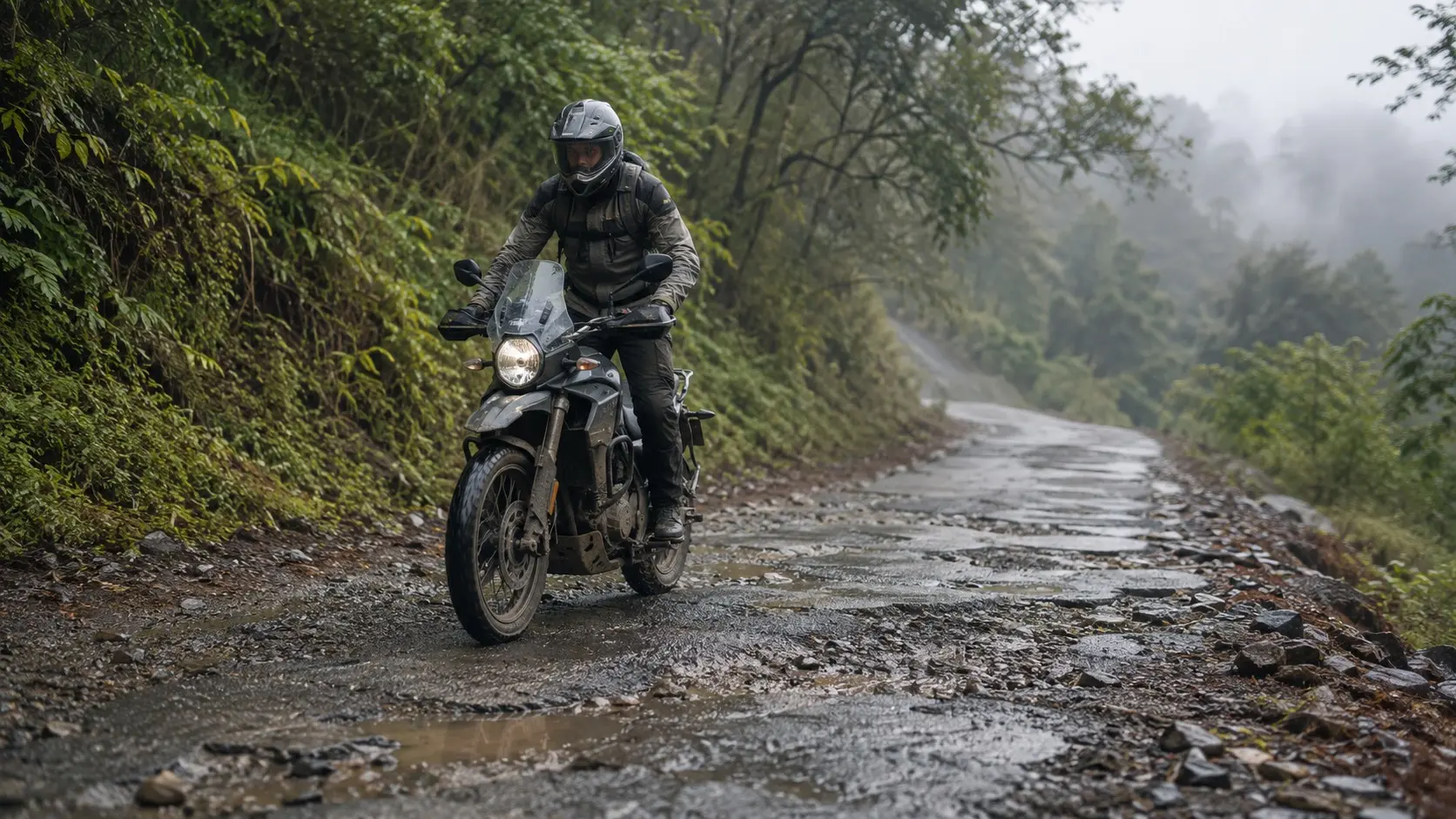
- Broken sections of mountain roads.
- Loose gravel left behind after road repairs.
- Large speed breakers taken at sensible speeds.
- Rocky village roads.
- Water crossings with uneven surfaces.
Standing is usually temporary.
Standing on the footpegs is not a trick to learn once and tick off a list. It is a skill that becomes calmer, smoother and more natural each time you practise it. If you have not used it for months or years, do not be surprised if it feels unfamiliar again. That is simply how riding works, a lesson we explored in Every Rider Gets Rusty.
Most experienced riders remain on the footpegs for only a few seconds before sitting down again once the road smooths out.
That brief change in body position is often enough to let the motorcycle work more effectively.
Wet Grass Can Be Surprisingly Slippery
One situation that catches many riders by surprise is wet grass.
It looks harmless, yet it can offer surprisingly little grip.
When grass becomes wet, tyres struggle to bite into the surface. Instead, they glide over flattened blades coated with water.
Standing on the footpegs does not magically create traction.
What it does is allow the motorcycle to move gently underneath you without throwing your upper body off balance.
The key is to remain relaxed.
Avoid sudden steering inputs.
Avoid abrupt braking.
Allow the motorcycle to find its line while you guide it smoothly.
Many riders discover that the calmer they remain, the more stable the motorcycle feels.
Muddy Roads Demand Patience
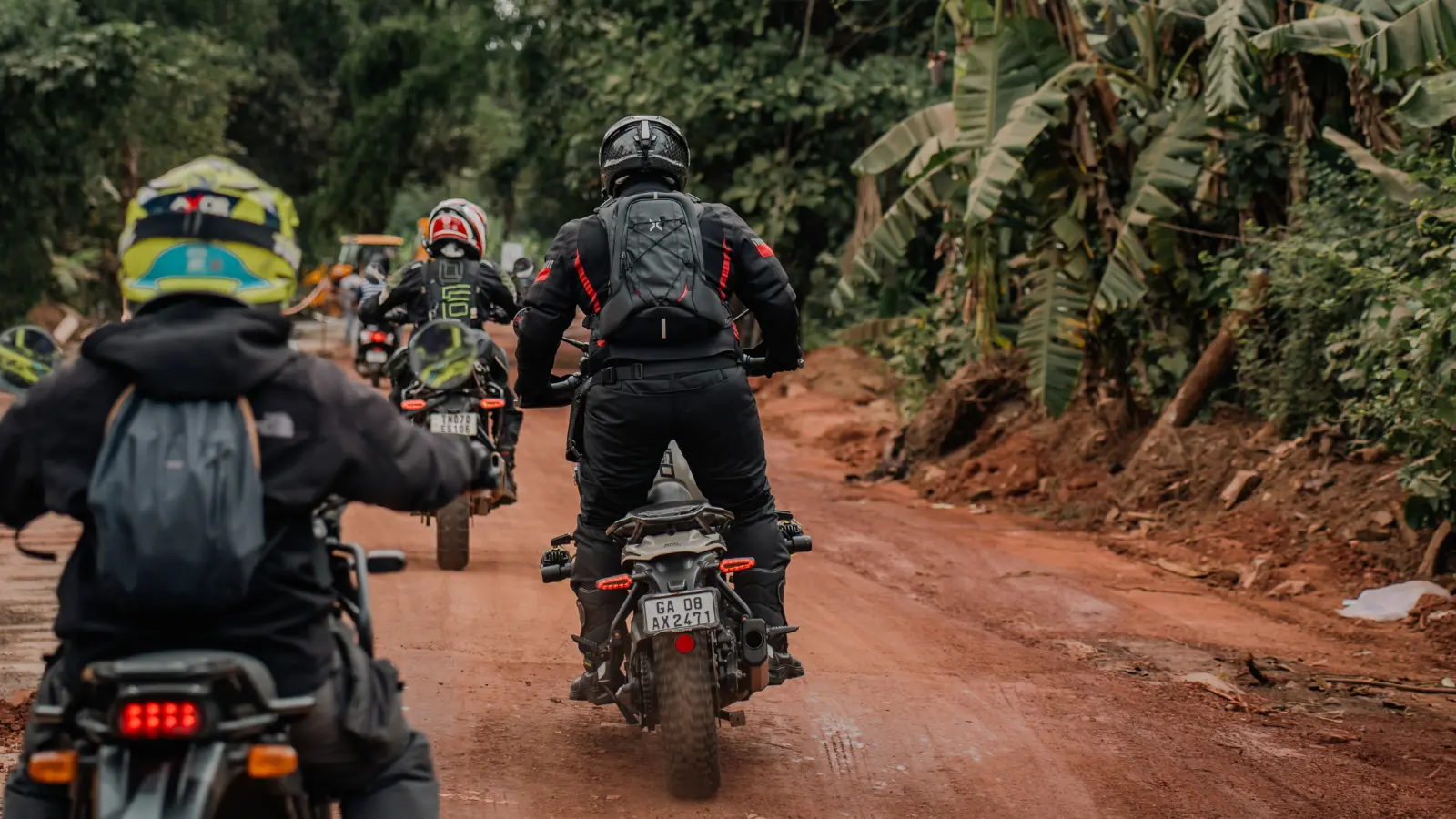
Anyone who has ridden through places like Coorg during or after the monsoon knows that “mud” can mean many different things.
One section might be wet clay.
The next could contain loose stones.
Further ahead you may find moss, slippery leaves, shallow ruts or soft red soil.
Grip changes constantly.
That is precisely why experienced riders often stand.
Their goal is not to overpower the motorcycle but to let it react naturally while they stay balanced above it.
A relaxed body allows the tyres and suspension to search for available grip instead of fighting every small movement.
What About Braking?
A common question is whether you can still use the rear brake while standing.
Absolutely.
Experienced riders continue to use both brakes whenever conditions require them.
The difference lies in foot position.
Rather than resting the entire foot on the peg, riders often support themselves using the ball of the foot. When they need the rear brake, the foot pivots forward to press the pedal before returning to its normal position.
The same principle applies to changing gears.
Standing should never mean giving up control of the motorcycle’s controls. It simply requires smoother, more deliberate movements.
Why Riders Shift Their Weight
You may also notice riders moving slightly forward or backward while standing.
This is not because there is a fixed rule.
It is because they are trying to keep both tyres working effectively.
During a climb, weight naturally shifts towards the rear. Moving your body slightly forward helps keep enough load on the front tyre so it continues to steer accurately.
During a descent, gravity transfers weight towards the front. Sliding your hips slightly rearward helps balance the motorcycle and prevents excessive loading of the front suspension.
The important point is not memorising positions.
It is understanding why they change.
The rider is constantly helping the motorcycle maintain traction at both ends.
Stay Loose, Not Rigid
Perhaps the biggest mistake beginners make is treating standing as though they are climbing a ladder.
Locked knees.
Straight arms.
Tight shoulders.
A death grip on the handlebars.
That posture quickly becomes tiring and makes the motorcycle feel unstable.
Instead, think of yourself as floating above the motorcycle.
Keep your knees slightly bent.
Allow your elbows to remain relaxed.
Hold the handlebars lightly rather than hanging from them.
Your legs support your body while the motorcycle moves naturally beneath you.
The more relaxed you become, the less dramatic rough terrain begins to feel.
Final Thoughts
Standing on the footpegs is not reserved for adventure riders crossing deserts or tackling mountain trails.
It is a practical skill that helps ordinary riders deal with ordinary roads.
Whether you’re crossing a rough village track, riding over broken tarmac, negotiating wet grass, or easing through muddy roads after heavy rain, standing briefly can help the motorcycle stay composed while reducing the impact on your body.
Perhaps the most valuable lesson, however, has nothing to do with standing itself.
It is learning that motorcycles are designed to move.
Good riders do not fight those movements.
They understand them, work with them, and allow the motorcycle to do what it was built to do.