How to Pack Efficiently for a Motorcycle Road Trip
A practical guide to packing a motorcycle for touring without carrying unnecessary weight or gear
How to Pack Efficiently for a Motorcycle Road Trip
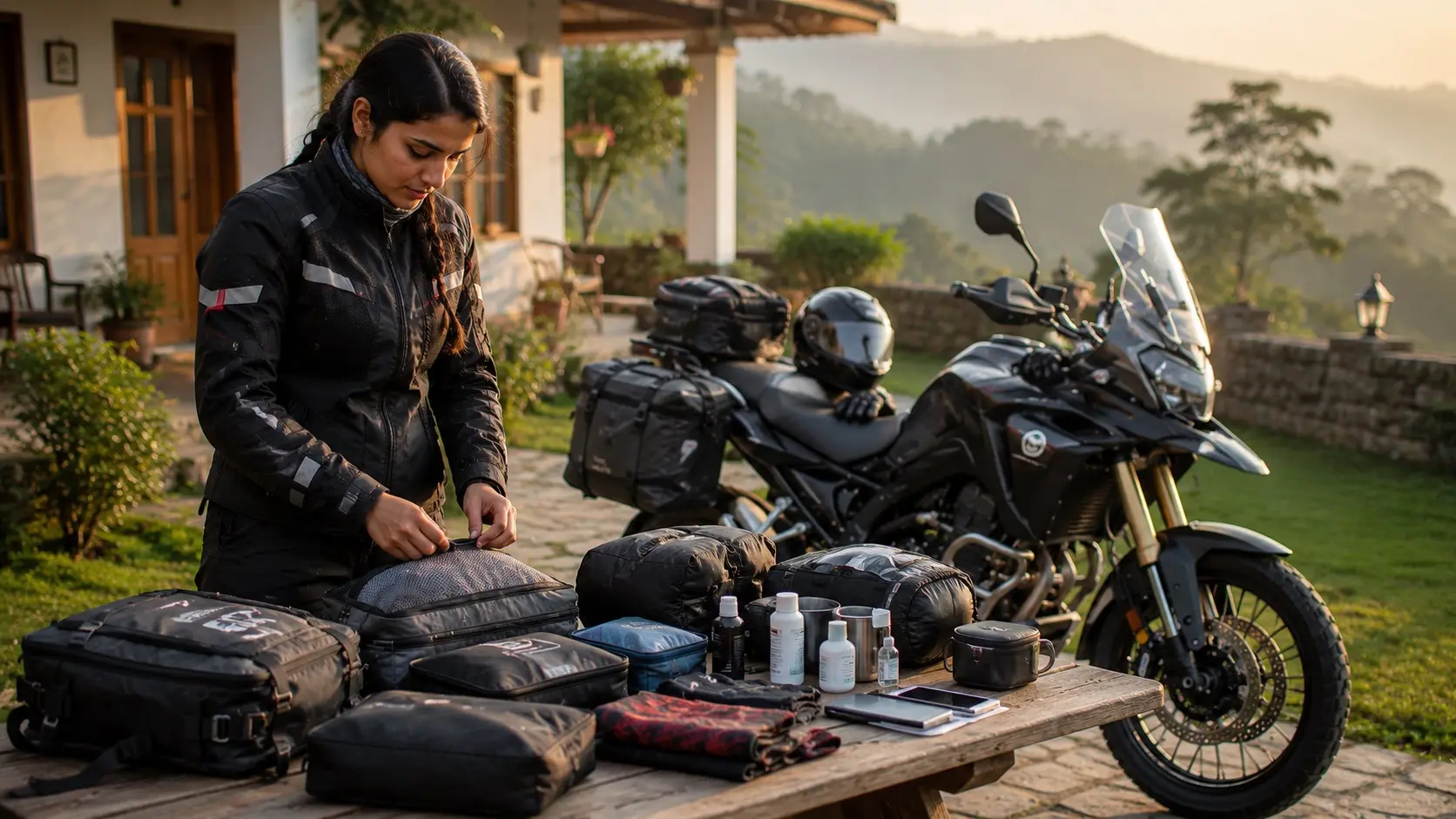
Packing for a motorcycle trip is a skill that most riders learn through trial and error.
The first trip often involves carrying far too much. Extra clothes, duplicate tools, unnecessary gadgets, and enough supplies to survive a month in the wilderness. By the end of the ride, most of those items never leave the luggage.
Efficient packing is not about carrying less for the sake of it. It is about carrying the right things in the right places. A well-packed motorcycle handles better, feels lighter, and makes every stop easier.
Start With the Type of Ride
Before packing anything, think about the ride itself.
Ask yourself:
- How many days will you be away?
- Will you have access to accommodation every night?
- Are you touring solo or with friends?
- What weather conditions are expected?
- Will you ride mostly highways or remote roads?
The answers determine what you actually need.
Many riders pack for worst-case scenarios instead of the trip they are actually taking.
Choose the Right Luggage First
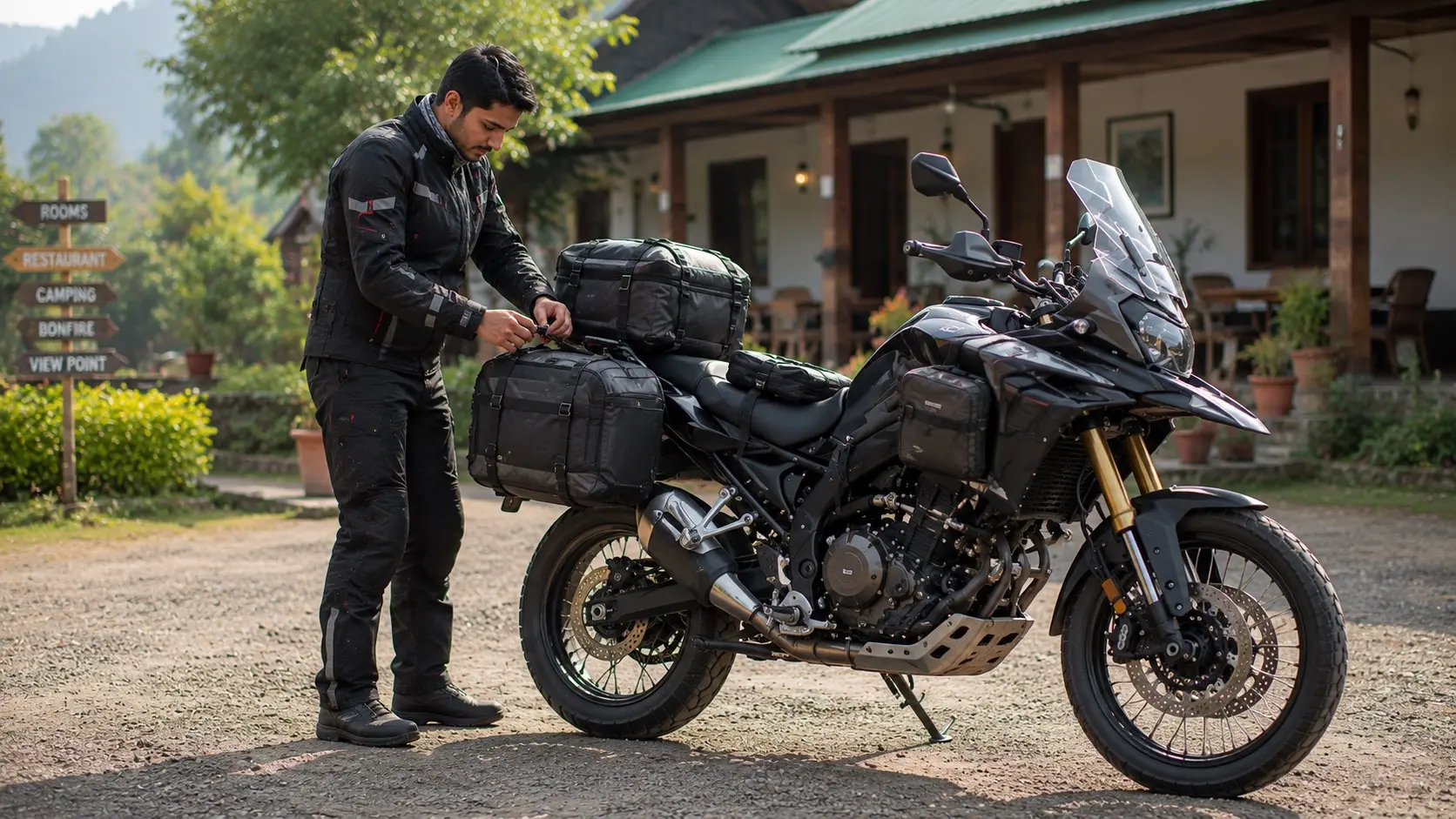
Packing efficiently begins with choosing the correct luggage.
Common options include:
- Soft panniers
- Hard panniers
- Tail bags
- Tank bags
- Dry bags
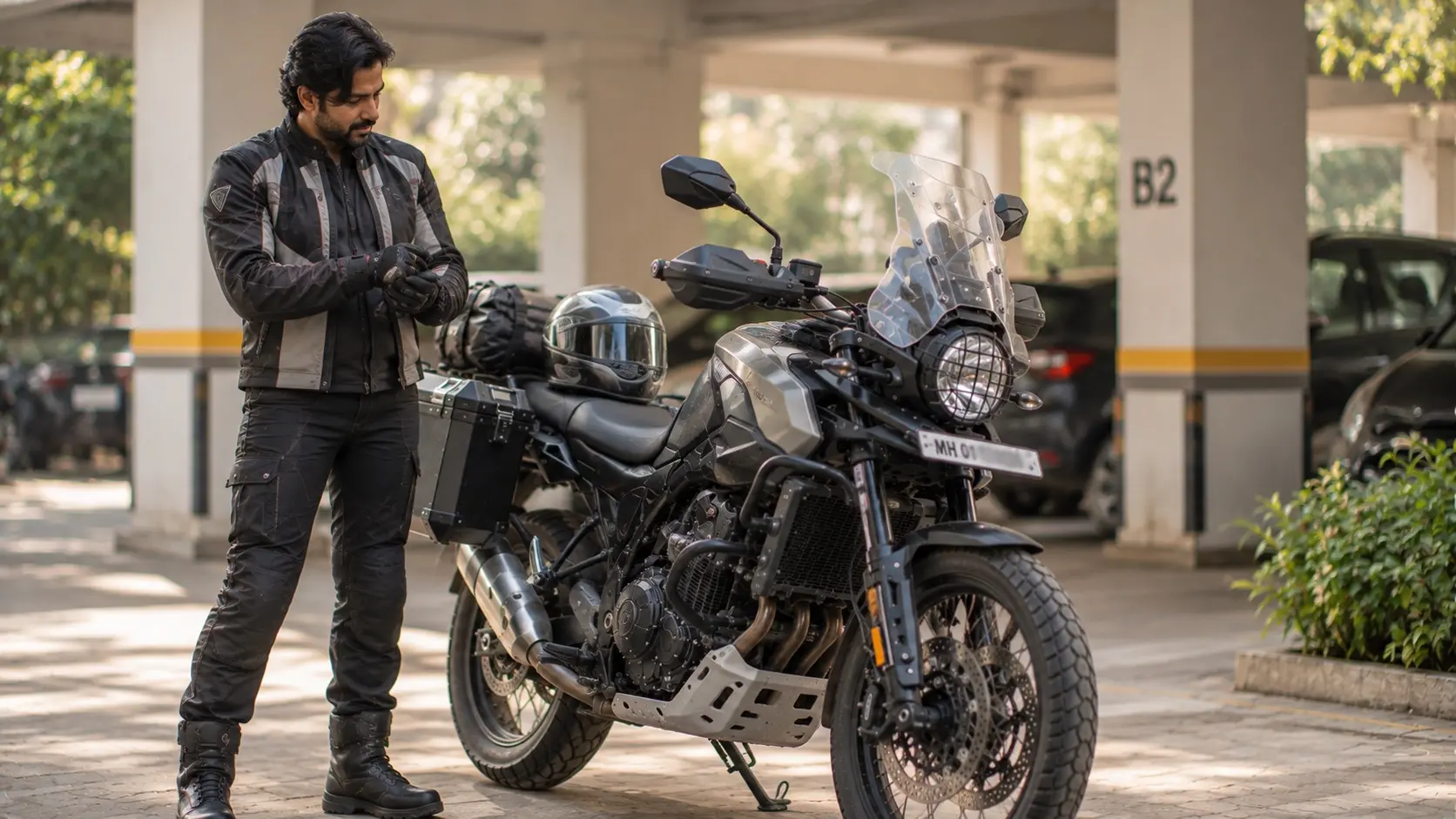
For most riders, a combination of soft panniers and a tail bag provides an excellent balance of capacity, flexibility, and weight.
Avoid buying luggage based purely on capacity. Larger luggage often encourages unnecessary packing.
Follow the Heavy Low Light High Rule
This simple principle improves motorcycle handling.
Pack:
- Heavy items low
- Medium weight items in the middle
- Light items higher up
Examples:
Heavy:
- Tools
- Spare parts
- Inflator
Medium:
- Clothing
- Electronics
Light:
- Rain gear
- Gloves
- Small accessories
Keeping weight low improves stability and confidence, especially at slow speeds.
Separate Items Into Categories
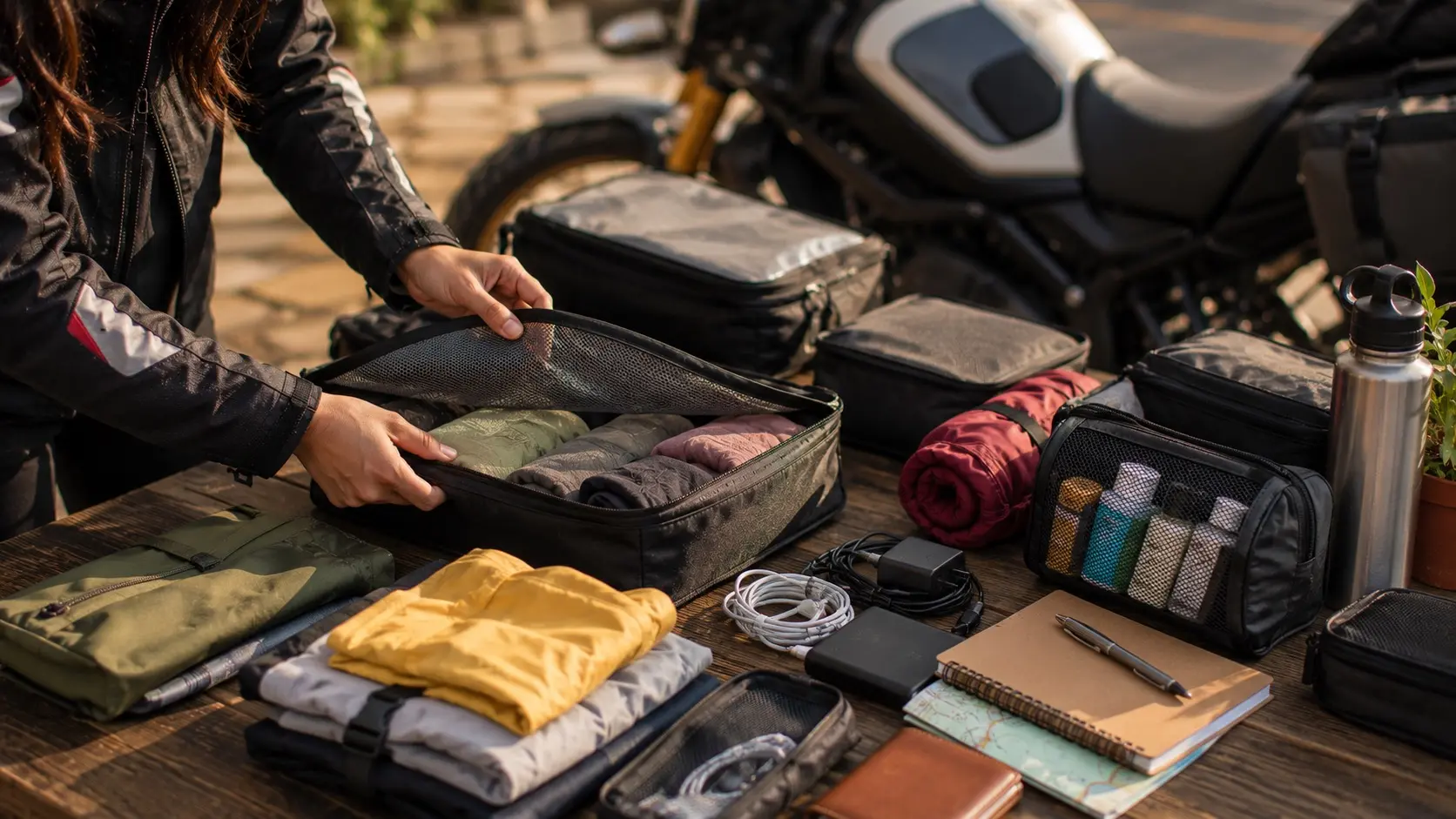
One of the biggest touring mistakes is throwing everything into a single bag.
Use separate storage areas for:
- Clothing
- Tools
- Electronics
- Personal items
- Documents
Packing cubes and small organizers make a huge difference.
Finding a charger should not require unpacking half the motorcycle.
Carry Less Clothing Than You Think
This is one of the hardest lessons for new tourers.
Most riders pack too many clothes.
A practical approach:
- Riding clothes
- Evening clothes
- Undergarments
- Lightweight rain layer
Laundry is usually easier to find than additional luggage space.
Focus on versatile clothing that can be reused throughout the trip.
Keep Frequently Used Items Accessible
Not everything belongs deep inside your luggage.
Easy access items should include:
- Wallet
- Phone
- Documents
- Sunglasses
- Water bottle
- Rain gear
A tank bag often works well for these essentials.
The less time you spend searching for items, the more enjoyable the ride becomes.
Plan for Weather Changes
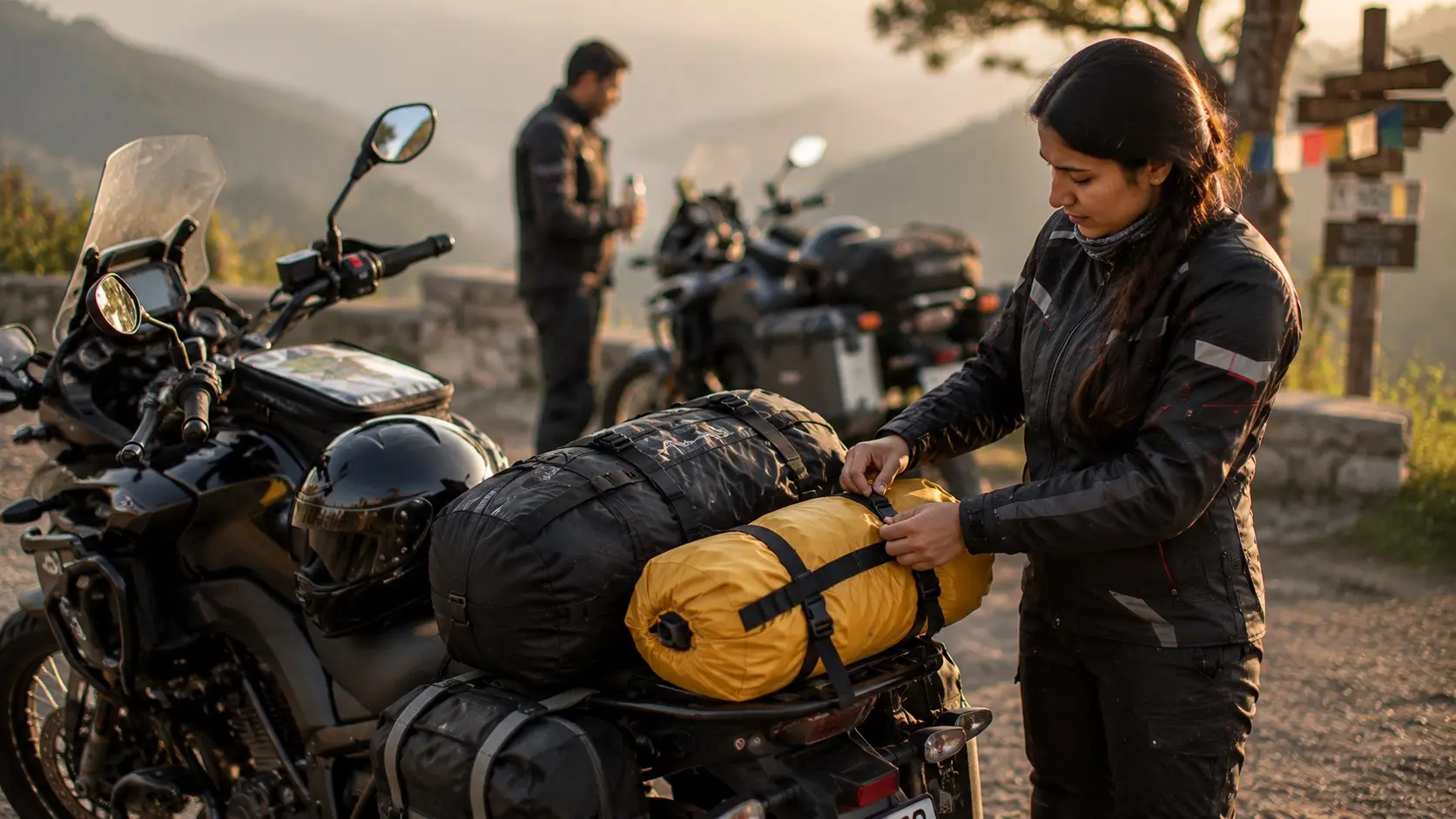
Weather can change quickly during a motorcycle trip.
Keep rain gear accessible.
Do not bury it beneath clothing and luggage.
If you need to stop in a sudden downpour, having quick access to waterproof gear saves time and frustration.
The same principle applies to cold weather layers.
Avoid Duplicate Items
Many riders carry multiple versions of the same thing.
Examples include:
- Multiple flashlights
- Extra tools already included elsewhere
- Several charging cables
- Excessive clothing
Every item should justify its space.
If it serves only one unlikely purpose, reconsider whether it needs to come.
Think About Daily Routine
A useful question is:
What will I need during a typical day on this trip?
Pack around that routine.
Most touring days involve:
- Riding
- Fuel stops
- Meals
- Photography
- Accommodation
Build your luggage system around these activities.
Test Pack Before Departure
Do not wait until departure morning.
Pack everything a day or two before the ride.
Then:
- Check luggage security
- Verify weight distribution
- Ensure bags do not interfere with controls
- Take a short test ride
This often reveals issues that are easy to fix before leaving.
Final Thoughts
Efficient motorcycle packing is not about minimalism. It is about prioritization.
The goal is to carry everything you genuinely need while avoiding the clutter that adds weight and complexity.
Over time, every rider develops their own system. The best touring setups are rarely the biggest. They are simply the most organized.
A well-packed motorcycle allows you to focus on the journey rather than constantly managing your gear.